
An engineer working in CAD is typically doing two kinds of work at once. The first is what most engineers got into the field to do, defining the system, running analysis, weighing tradeoffs, finding designs that are lighter, stronger, cheaper, and better performing than what came before.
The second is everything that turns that design into something manufacturable, including defining details, drawings, tolerances, BOMs and handling dozens of other project management tasks.
Both are real engineering. But over decades of adoption, the second has steadily grown into the largest claim on engineering time.
The most useful thing AI can do for design and manufacturing today is hand that time back. Better products come from engineers spending more time on design and analysis, not less. That is what we are building toward in Fusion.
AI embedded inside the workflow, operating on the same editable geometry the engineer is creating, held to the same engineering rigor as everything else in the model.
The aim is for automation to reduce drag and create more room for the harder problems where engineering judgment leads to better products.
Automation that keeps experts in control
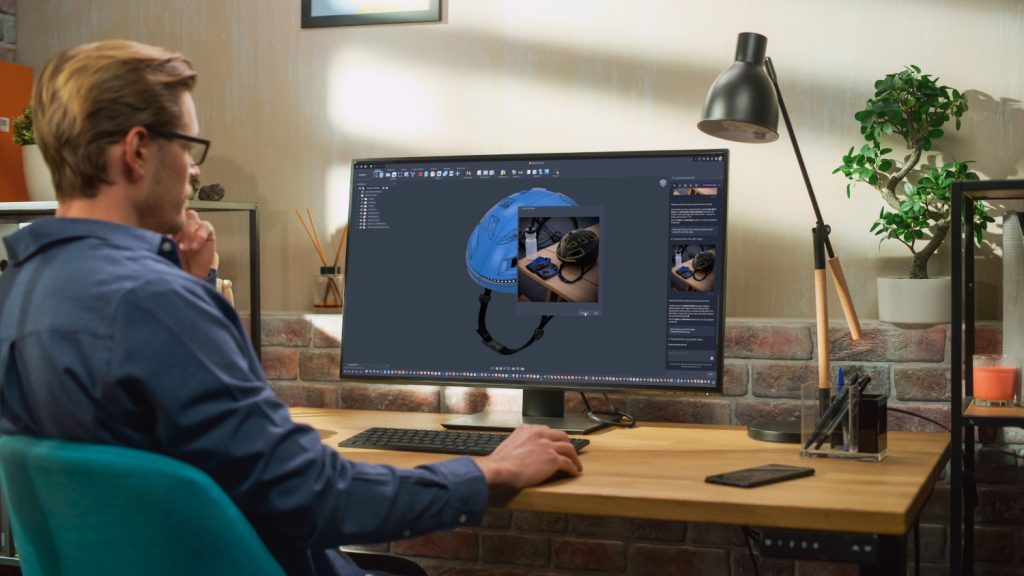
For an AI tool to earn a place inside a CAD workflow today, it must respect design intent and keep the engineer in control. Autodesk Assistant in Fusion reflects that principle. It helps users create and modify designs using natural language, manage projects and collaboration, get manufacturing guidance, learn Fusion tools and workflows, and connect with support.
Autodesk Assistant can generate native, editable 3D CAD geometry that behaves just as a standard Fusion model does. When a user describes the change they want, the Assistant translates their request into the same modeling operations a competent engineer would have selected by hand. The geometry it produces is native and editable, with changes made following the engineer’s consent.
Eliminating the work that slows teams down
If you want to see where AI delivers measurable value first, look at the work that repeats across every design‑to‑manufacturing cycle. Sketch constraints and documentation are obvious starting points because they are essential to product development and often follow repetitive patterns where AI can free up more engineering time.
Fusion includes capabilities that automate sketch constraints and generate drawings directly from 3D models, reducing manual effort. Adoption in these targeted, high impact applications has been strong, with millions of automated dimensions and constraints applied since launch, saving valuable engineering hours and cutting time to market.
Beyond eliminating sketch and drawing busy work, AI can help with a lot of the project coordination that pulls engineers out of the model, like spinning up projects, onboarding teammates, and chasing down permissions. That overhead can add up and be compounded when working in traditional tools across mechanical, electronics, simulation, manufacturing, and other domains.
In Fusion, you can loop in collaborators and set permissions directly through Autodesk Assistant. Once your team is in, collaborators can work on the model in a shared space with changes propagating automatically, avoiding translating files and reconciling versions across separate applications.
Embedding AI in the core
Fusion has been built to be open and extensible so engineers can fit it into the way they want to work, now and in the future. The foundation includes a Python API and an architecture designed to connect across the design and manufacturing lifecycle, end to end. The most recent addition is an embedded Model Context Protocol (MCP) server, which lets third-party AI systems integrate directly with Fusion through a trusted, secure, and always up-to-date interface. Whereas Autodesk Assistant provides an out-of-the-box agentic capability, the MCP server gives engineers the flexibility to integrate and extend Fusion as they harness AI capabilities across their company. For example, engineers who use Anthropic’s Claude can pull Fusion into a workflow where the agent captures information and drives model changes directly, in concert with productivity apps, PLM, ERP, and other enterprise systems. It is still early, but the market is clearly moving toward AI-orchestrated workflows, and Fusion is built to meet engineers there.
The shift
AI can earn its place in design and manufacturing in three ways. It clears the arduous, repetitive tasks that bog engineers down, so the day belongs to innovation rather than busy work. It connects engineers across mechanical, electrical, simulation, and manufacturing so collaboration runs at the pace of the thought rather than the pace of the handoff. And it opens the door to broader integrations across enterprise systems, today through MCP and perhaps tomorrow through deeper AI orchestration.
This version of AI in design and manufacturing is quieter than the headlines suggest, but it puts far more power in the hands of engineers.
The hours it gives back are how organizations invest in what customers notice: better products, deeper innovation, and the ambition to pursue designs the schedule would otherwise have ruled out.
The point of automating the work no engineer wanted to do is to make room for the work every engineer became an engineer to do, and through that, to amplify the impact engineers have on the world.

Jon den Hartog leads global teams at Autodesk responsible for Fusion, Inventor, Tinkercad, and its simulation portfolio – products used by people around the world to turn ideas into reality