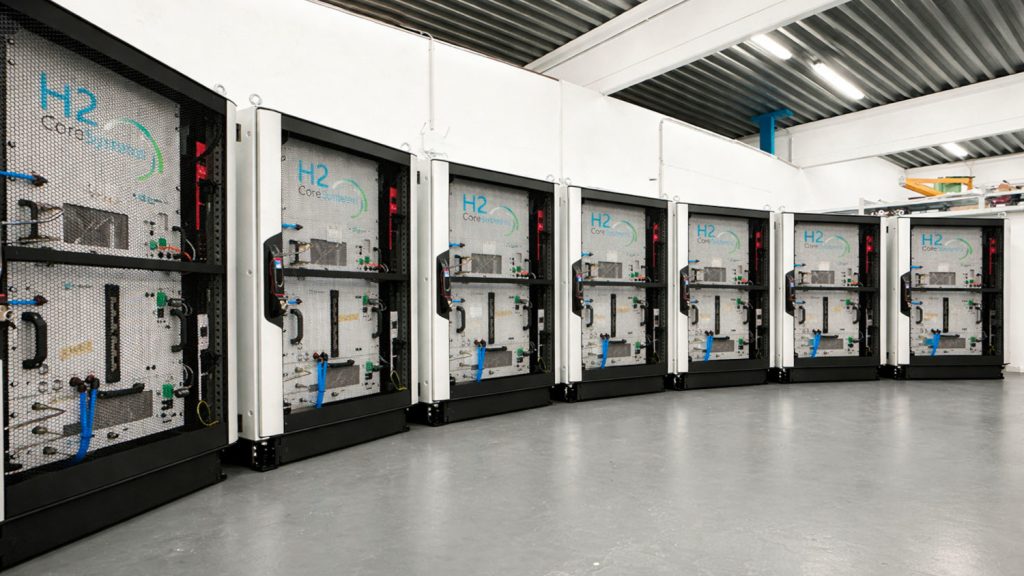

At the heart of H2 Core Systems’ goal to transform off-grid industrial power supply lie modularly scalable plug-and-play hydrogen generators. Stephen Holmes hears how visualising entire assemblies in 3D ahead of any physical production ensures a perfect fit for components every time
Industrial sites that are not connected to the conventional power grid face significant challenges when it comes to keeping essential infrastructure up and running. Doing that sustainably introduces further hurdles. The most common solution is diesel generators, but these can be expensive to run, logistically complex to refuel, vulnerable to fuel theft and demanding when it comes to routine maintenance. As industrial companies increasingly prioritise clean energy, alternatives to diesel for providing independent and reliable power are needed.
H2 Core Systems recognised this gap and set out to deliver a modular hydrogen generator capable of powering a diverse range of remote, off-grid installations, from telecom stations to research facilities to manufacturing sites. The objective was to design compact, highly efficient hydrogen energy systems that could generate and store clean energy locally.
Based in Heide in northern Germany, H2 Core Systems was founded in 2020 as a spin-off of the established fluid system technology company, TC Hydraulik. With its goal of creating modular, turnkey electrolysis systems for producing, storing and using green hydrogen, the company is able to lean on 35 years of industrial experience from its parent company, as well as putting to work exciting new ideas in renewables.
Off-grid demands
Designing these systems posed considerable engineering challenges. Every component – electrolysers, compressors, fuel cells, storage tanks, piping and sensors – needed to fit precisely within compact cabinets. Additionally, technicians needed to route hydrogen and cooling lines accurately to ensure operational safety and efficiency.
The company also wanted to offer its customers flexibility, enabling them to choose between its standard solutions and its fully customised systems, according to their requirements. Integrating parts from multiple suppliers, details of which are often delivered in STEP file format, adds yet another layer of complexity.
“We serve customers with very specific needs, from storing excess solar energy for winter use to powering off-grid telecom antennas during blackouts that can last more than 72 hours,” says Thorsten Claussen, head of mechanical engineering at H2 Core Systems.
To address these challenges, H2 Core Systems relies heavily on Siemens Digital Industries Software’s Designcenter suite. The X Solid Edge software, meanwhile, provides the backbone of its product development process.
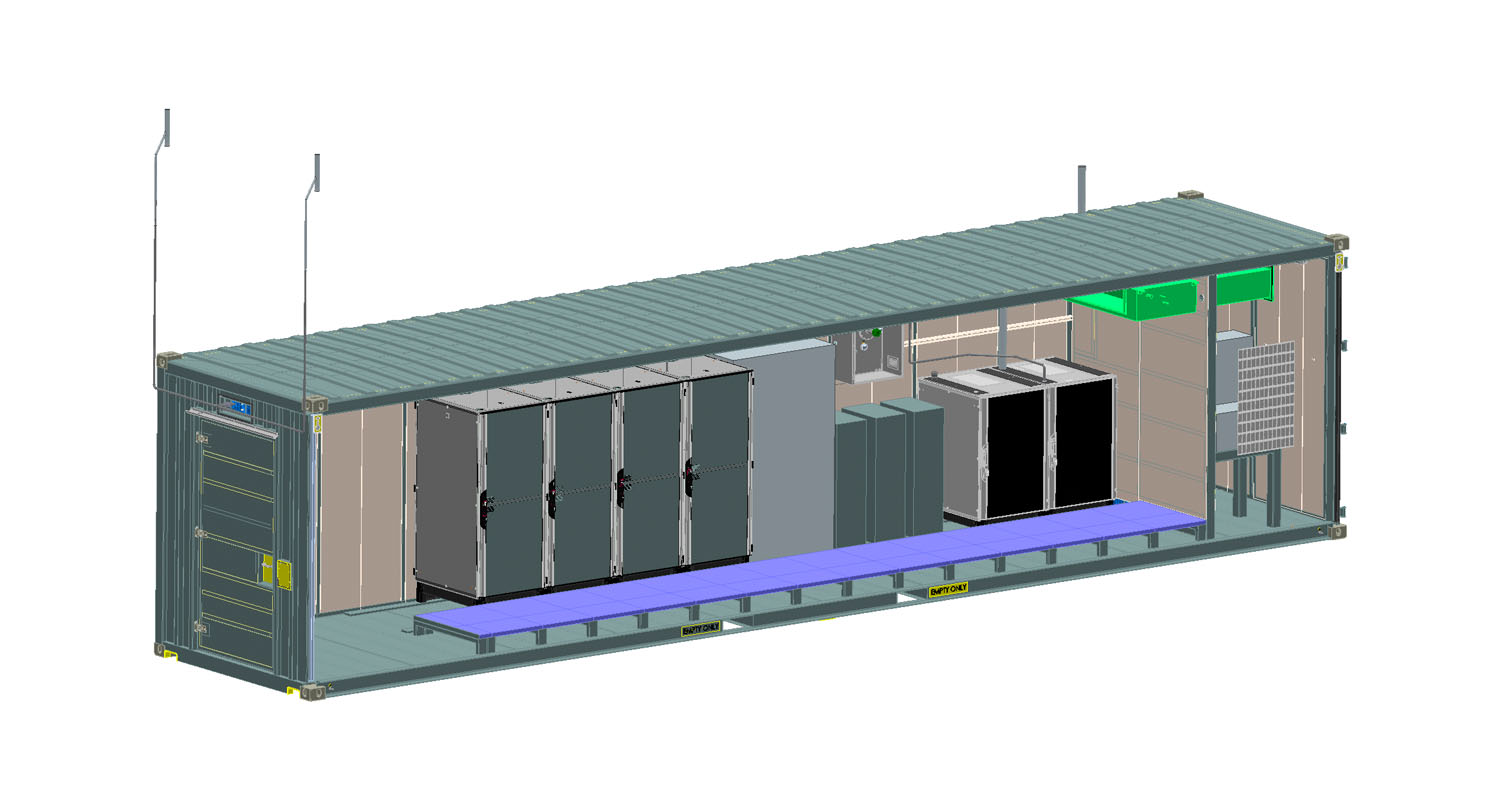
Using Designcenter X Solid Edge enabled H2 Core Systems’ engineers to visualise entire assemblies in 3D before physical production, ensuring every component, pipe, valve and sensor fit perfectly and eliminating costly errors.
By leveraging the software’s synchronous technology, the team could make on-the-fly adjustments to 3D models. This was essential for customising standard systems to meet specific customer requirements, such as adding additional electrolysers, rerouting pipes or integrating new sensors.
The ability to import and incorporate parts from multiple suppliers also proved invaluable. Engineers could quickly assemble these components into larger system models without extensive manual adjustments. Additionally, H2 Core Systems leveraged KeyShot, which is integrated within Designcenter X Solid Edge, to create highly detailed, realistic renderings of its hydrogen systems.
These visualisations proved to be excellent resources as marketing materials, and for technical publications and user manuals, helping communicate complex design concepts clearly to customers, stakeholders and internal teams.
Cloud-based collaboration further enhanced productivity, enabling multiple engineers to work simultaneously on the same project while keeping design data, drawings and quality management documentation centralised and secure.
“Everything is digital now,” says Claussen. “We don’t rely on paper drawings anymore. All design, quality management and documentation lives in the cloud.”
Built right, first time
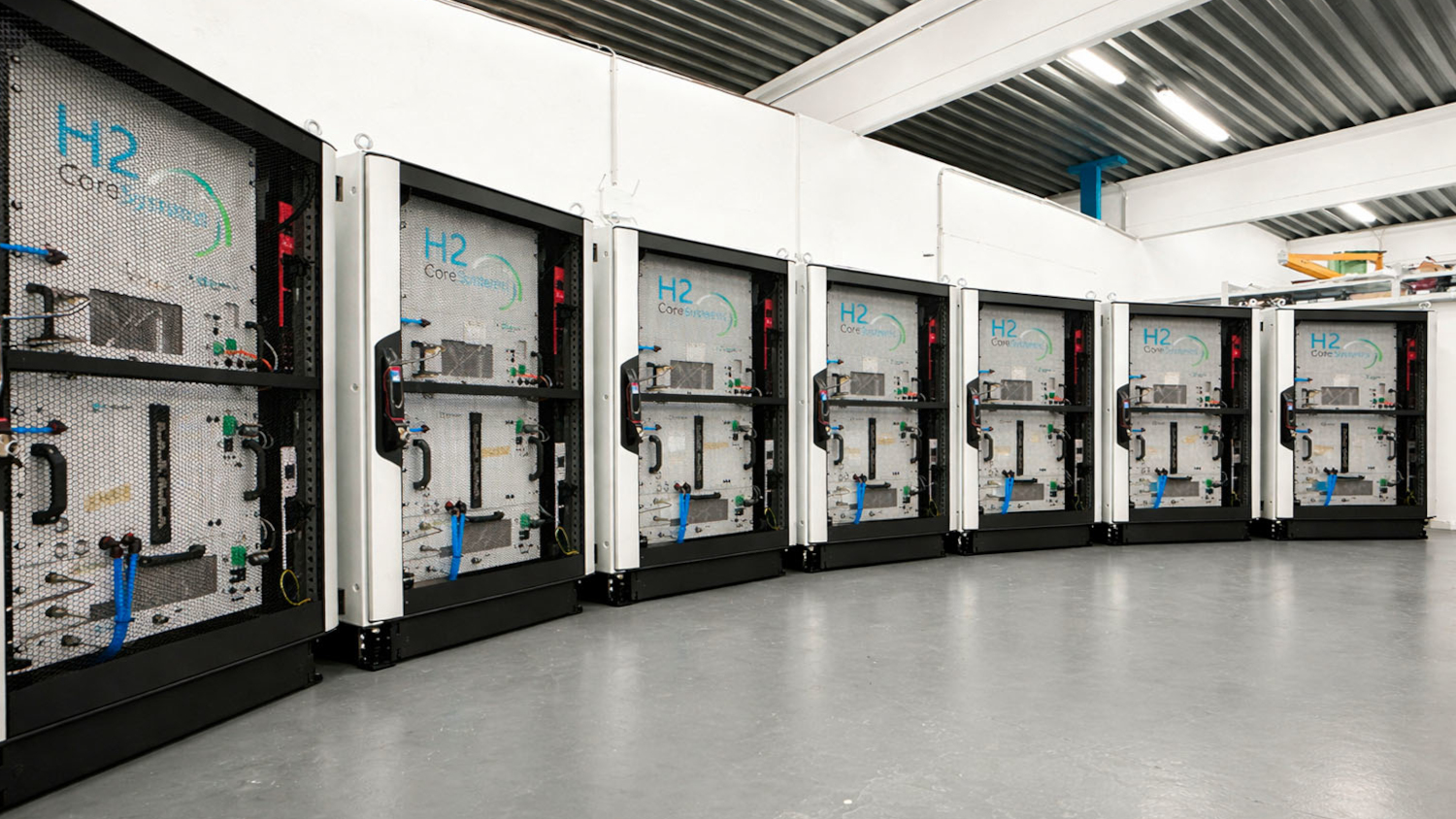
At the time of writing, H2 Core Systems is capable of producing and shipping standard systems within days. Time to delivery of fully customised units has also accelerated, thanks to a combination of cloud-based collaboration, flexible 3D modelling and integrated visualisation tools.
These enable engineers at the company to focus on optimising designs rather than manually revising drawings, helping to reduce production time by 50% and speed-up design and customisation cycles by 20%.
With the development of smaller products, the team needs to be particularly sure that all components can fit safely and comfortably in the limited space available, explains Claussen. “Leveraging Designcenter Solid Edge gives us a good overview of a system before we build it in real life. We fit all the components in 3D, route our piping and run collision checks to ensure everything works, eliminating any manufacturing surprises.”
Using digital 3D visualisation and collision detection has helped reduce manufacturing errors by ensuring that systems are built correctly the first time.
Each system integrates electrolysers, compressors, fuel cells, energy storage units and water purification systems into compact, transportable units. This flexible design supports highly customised solutions, from additional outputs to modified power supplies to extra sensors.
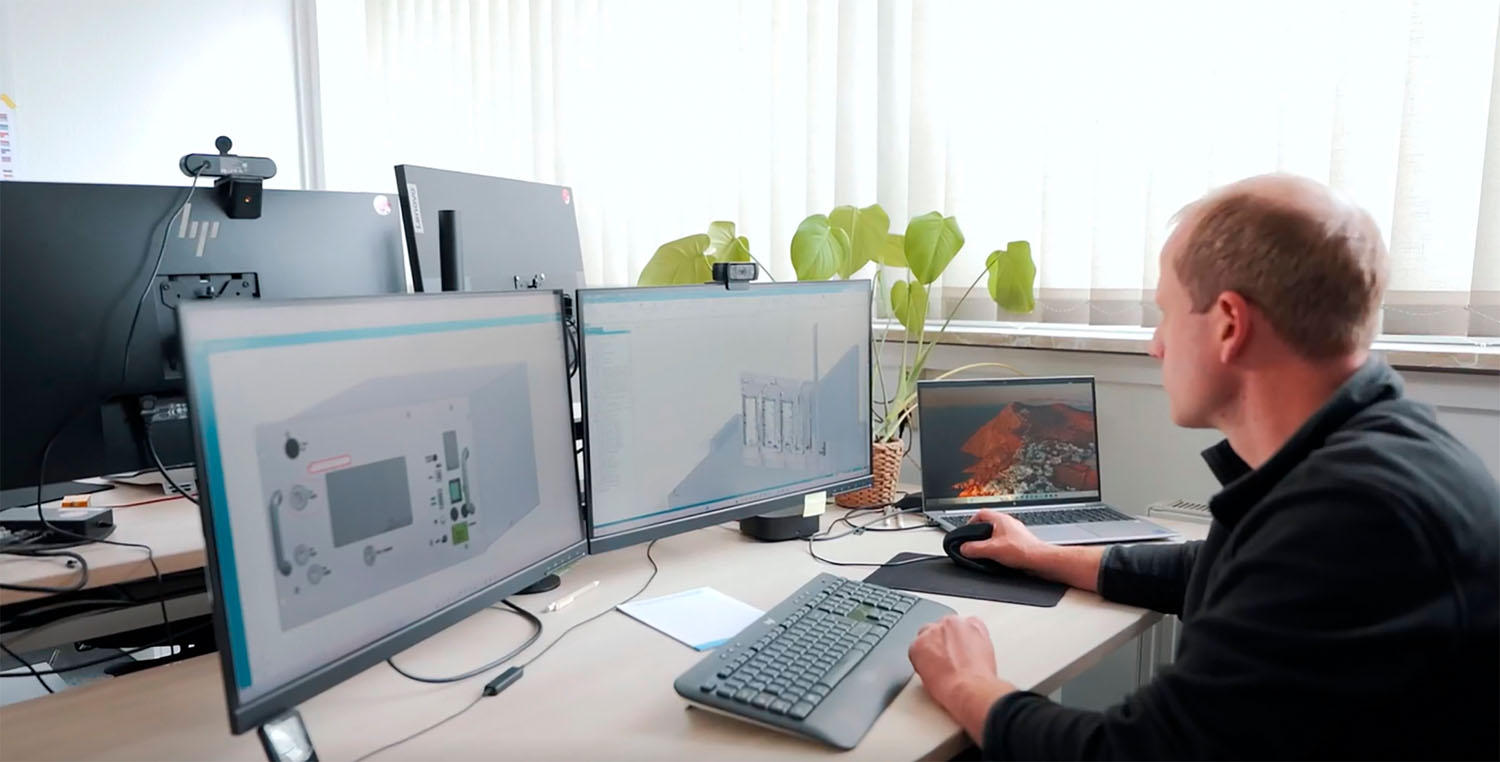
For sales staff , that means being able to communicate individual customer requirements to engineering teams, who must be able to respond promptly to these requests. By leveraging the full digital collaboration abilities of Designcenter Solid Edge, members of staff from the sales, engineering, production and documentation teams can all be kept in the loop, significantly reducing time-to-market.
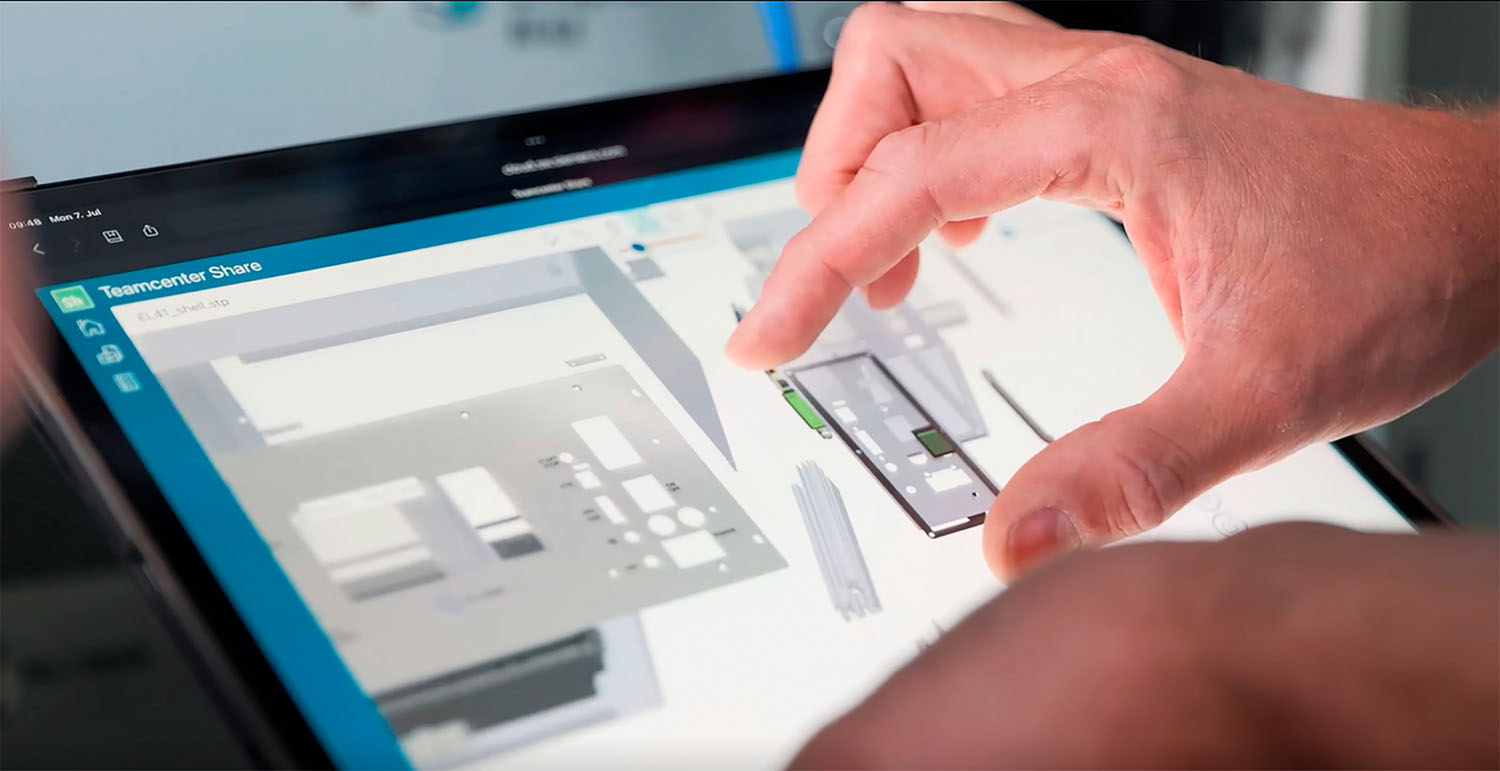
“What we especially appreciate about Designcenter X Solid Edge is the ability to collaborate on the same project from anywhere, its strong performance and how quickly we can edit assemblies,” says Claussen. “Plus, with Teamcenter Share, we can easily send parts to production or customers, who can then verify measurements directly.”
Using Teamcenter Share makes it easy to quickly send small assemblies to production or to customers, he adds. And the ability to create full 3D assemblies as a digital twin is extremely important to H2 Core Systems, “because we plan our systems down to the smallest detail. This allows us to speed up workflows, prefabricate piping and detect potential collisions early in the design phase.”
With over 200 of its hydrogen energy systems installed worldwide, including in South Korea, Australia, Brazil, India, France, the United States and Canada, H2 Core Systems has already generated global interest.
This article first appeared in DEVELOP3D Magazine
DEVELOP3D is a publication dedicated to product design + development, from concept to manufacture and the technologies behind it all.
To receive the physical publication or digital issue free, as well as exclusive news and offers, subscribe to DEVELOP3D Magazine here