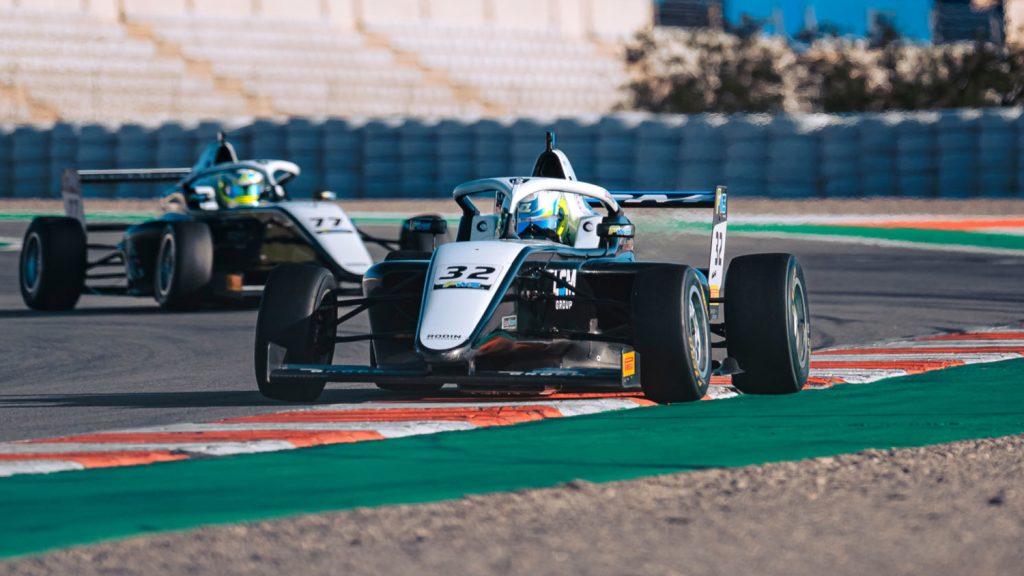

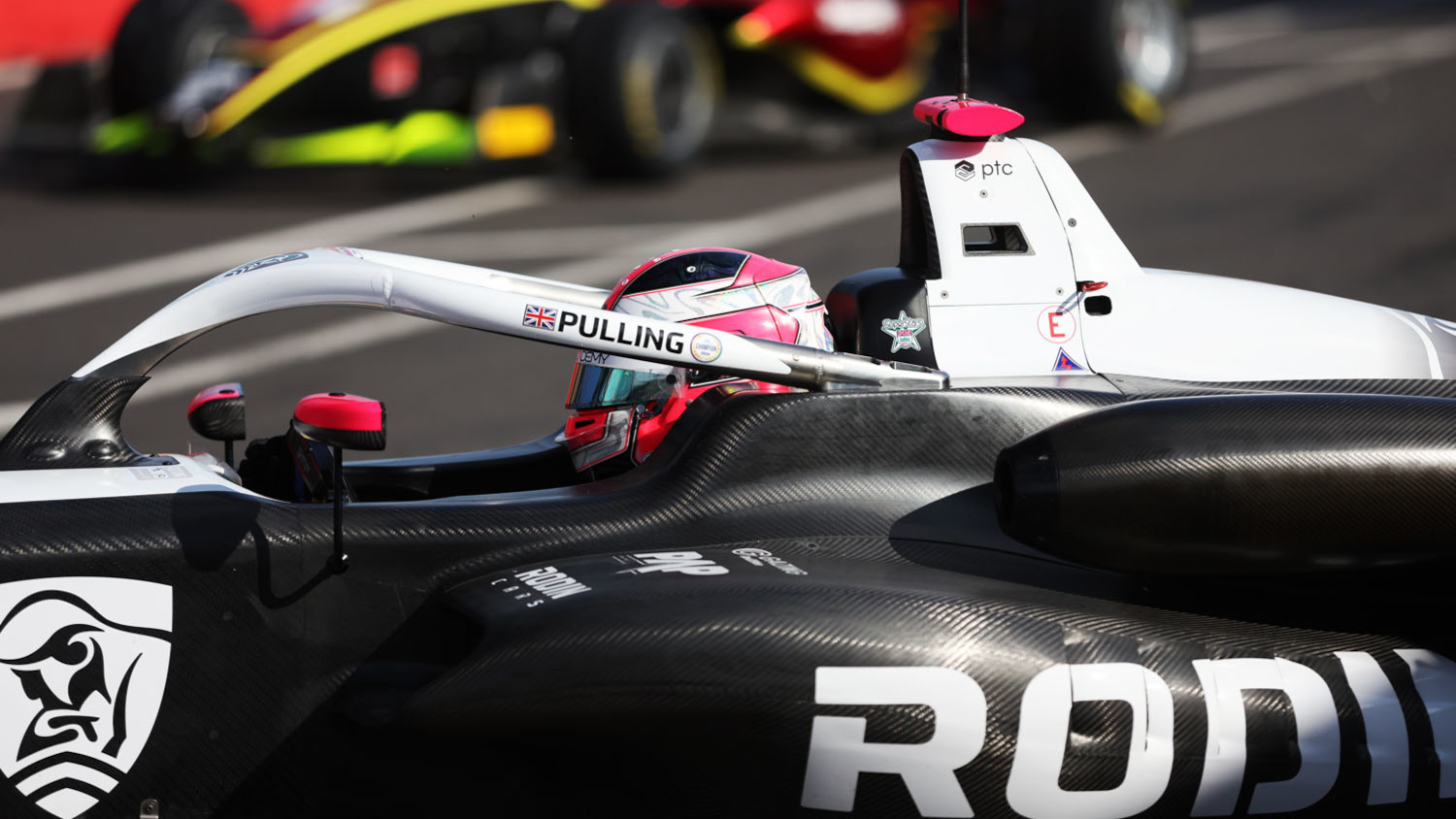
Using integrated CAD and CFD in PTC Creo, Rodin Motorsport has optimised its FIA F3 car to tackle the Macau street circuit, famous for its tight corners and rapid straights
Macau’s Guia Circuit, located on the southeastern edge of China’s Macau Peninsula, is a demanding, citybased race track that winds along the waterfront and through streets typically thronged with more conventional traffic, past casinos, hotels and UNESCO World Heritage sites.
With an extreme lack of run-off , unforgiving barriers and rapidly changing environments, the circuit presents distinct challenges for an FIA F3 car, with tight, technical sections that demand downforce, but a 1.2 km main straight that rewards low drag.
The F3 category is tightly regulated. Competitors aren’t permitted to make new rear-wing parts specifically for the circuit. They must instead adjust existing parts within small, legally permitted limits and to account for natural variations in those parts due to wear and tear.
“Design is ultimately about finding lap time – improving performance, increasing driver confidence and extracting every advantage the regulations allow,” says Benn Huntingford, sporting director at Rodin Motorsport, one of the most successful development teams in modern single-seater car racing. “We will always go above and beyond to push the boundaries of great design within these regulations and help our drivers get the edge.”
Rodin Motorsport operates seven racing teams and has helped to launch the careers of many stars on their way to Formula 1, including George Russell, Carlos Sainz, Sebastian Vettel, Daniel Ricardo and Lando Norris.
Formerly known as Carlin, the team rebranded as Rodin Motorsport in 2024, building on Carlin’s legacy of nearly 450 race wins, capturing major titles across the junior formula ladder, and winning races in every series it competed in last season.
Across two decades of engineering work, the team has taken advantage of advanced 3D design and analysis to accelerate innovation on hundreds of components and development projects, from suspension concepts to test car integrations.
Tight timelines
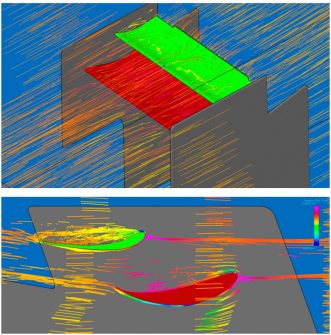
For the Macau Grand Prix, the Rodin Motorsport team needed to understand how its car behaved both when the rear-wing flap was closed and when it was opened using the Drag Reduction System (DRS). From there, the job was to figure out how those differences in airflow and speed would affect overall lap time on a track like Macau that has both tight corners and a very long straight.
“In motorsport, speed, accuracy and reliability all matter, but timelines for any iterations are always tight,” says Rodin Motorsport technical director David Brown. “The challenge was finding the right compromise between downforce for the twisty sections and drag reduction for the straight, within the strict FIA limits.”
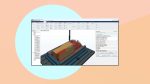
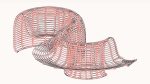
First, the team created a detailed 3D model of the rear wing in PTC Creo. It then used Creo Flow Analysis to capture pressure distributions across the mainplane and flap and Creo Simulate to translate those pressures into downforce and drag values for both DRS states, closed and open. This enabled the team to understand how air would flow around the wing and how that airflow would affect overall balance, grip and straight-line speed.
With Creo Flow Analysis, Rodin Motorsport engineers ran high‑fidelity CFD simulation directly inside their CAD models in order to spot any aerodynamic issues early. Creo Simulate then added built‑in FEA to test structural performance at the same stage.
The combination gave Rodin’s engineers a single environment in which to optimise aerodynamics and strength simultaneously, accelerating development and improving on‑track correlation. The results were faster decisions, fewer redesigns and components that behaved exactly as the data predicted when the car hit the street circuit.
Once the main model was ready, the team tested 10 wing-flap angle variations in half-degree increments. Because everything was set up inside a single integrated environment, each scenario only took around 15 minutes to generate, enabling rapid comparison across the full range of options.
“Without Creo, this would have required building physical parts, booking wind-tunnel time and re-running the test for every minor adjustment,” explains Brown.
“Instead of ten iterations in an afternoon, we’d be facing days or weeks. Creo allowed us to analyse every halfdegree change with both open and closed DRS.”
The team then fed drag and downforce outputs into a lap-time simulation tool to determine whether gains on the straight would outweigh the loss in cornering performance.
“Creo handled the modelling, pressure distribution and load calculations. Then we tied the results directly into our lap-time model,” says Brown. “The goal was simple: make a fully data-driven set-up decision. Creo made that possible.
” This project extends Rodin Motorsport’s use of Creo, which has supported multiple programmes across the company’s teams, including the redesign of the IndyCar IR-12 rear anti-roll bar, real-time stiffness modelling, system-level mass optimisation and fuelling improvements.
Faster learning curves
Using Creo gave Rodin Motorsport a clear, quantifiable understanding of how very small adjustments to the rear-wing flap would affect the car’s behaviour. Analysis showed that increasing the flap angle by just half a degree slightly reduced grip but also reduced drag, helping the car travel faster on Macau’s long straight.
Combined with lap-time simulations, it became clear that the extra straight-line speed could more than make up for the small loss of cornering performance.
“Everything comes back to improving lap time,” says Huntingford. “Our lap simulation indicated a potential improvement of up to 0.25 seconds, which is significant when every fraction of a second counts. Working with PTC has helped us give drivers a more responsive, more tuneable car, and that builds confidence and performance, which wins races.”
According to Brown, Creo’s combination of 3D modelling and built-in simulation has transformed the speed at which the Rodin Motorsport team can engineer solutions. “Because the analysis lives alongside the model, we move faster and make better decisions between races. The data let us pick exactly the right aero compromise for Macau. Creo’s computational fluid dynamics capabilities expose marginal gains quickly, and they correlate with what we see on the track. Add those marginal gains together and you move the car forward,” he says.
“A simulation can whisper all the right answers, but if the car doesn’t echo them in the real world, it’s meaningless. The win isn’t in the spreadsheet. It’s in seeing the model’s predictions show up in lap time, grip and confidence.”
The new workflow is also enabling Rodin Motorsport’s younger engineers to develop solutions faster, with reusable templates and consistent processes making advanced simulation accessible across all seven teams within the business. “We’re opening up more licences for younger engineers and standardising a common approach across every program,” says Brown.
The power delivered by Creo sees Rodin Motorsport continue to extend the software’s access to a wider group of engineers, as it expands into new race categories while continuing to scale its integrated design and simulation approach. The team has added the Formula Regional European Championship to its 2026 racing schedule and will also enter GT racing.
Rodin Motorsport will continue using Creo to iterate rapidly, run targeted simulations inside CAD and make evidence-based setup decisions within the strict FIA regulations.
“We’ve used Creo for everything from wind-tunnel models to suspension and gearbox internals. It lets us think bigger because we’re not afraid to try new ideas,” Brown concludes.
Challenging for titles across multiple championships with a broad set of cars, regulations and engineering challenges, Rodin is setting itself up to tackle the sharpest turns with the greatest of fluidity.
This article first appeared in DEVELOP3D Magazine
DEVELOP3D is a publication dedicated to product design + development, from concept to manufacture and the technologies behind it all.
To receive the physical publication or digital issue free, as well as exclusive news and offers, subscribe to DEVELOP3D Magazine here