
Space travel is changing, layer by layer, as additive manufacturing becomes more central to aerospace engineering. Gabrielle Brown speaks to Philipp Stich, aerospace industry manager at EOS, about why engineers should explore AM’s full potential
Everyone can remember the first time they saw a rocket launch, whether it was Apollo 11 or Artemis II: the excitement, the anticipation and the silence as everyone in the room anxiously anticipates those three little words: “We have liftoff .”
Space travel has come a long way since chemical rockets bearing less computing power than a smartphone, and additive manufacturing (AM) has become pivotal in changing not only how rockets are constructed, but also the design process behind each component.
“Each of those rockets flying into space has 3D printed components,” says EOS industry manager for aerospace, Philipp Stich. His employer, Munich-based Electro Optical Systems (EOS) is setting the trajectory for 3D printed metal components for space travel, from AI to prototyping to regulation.
AI for rockets
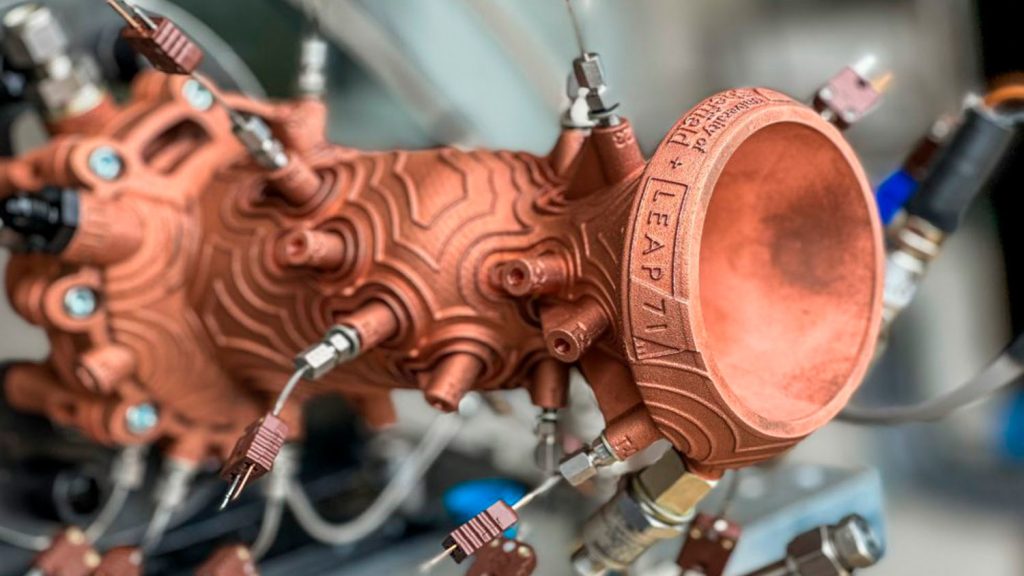
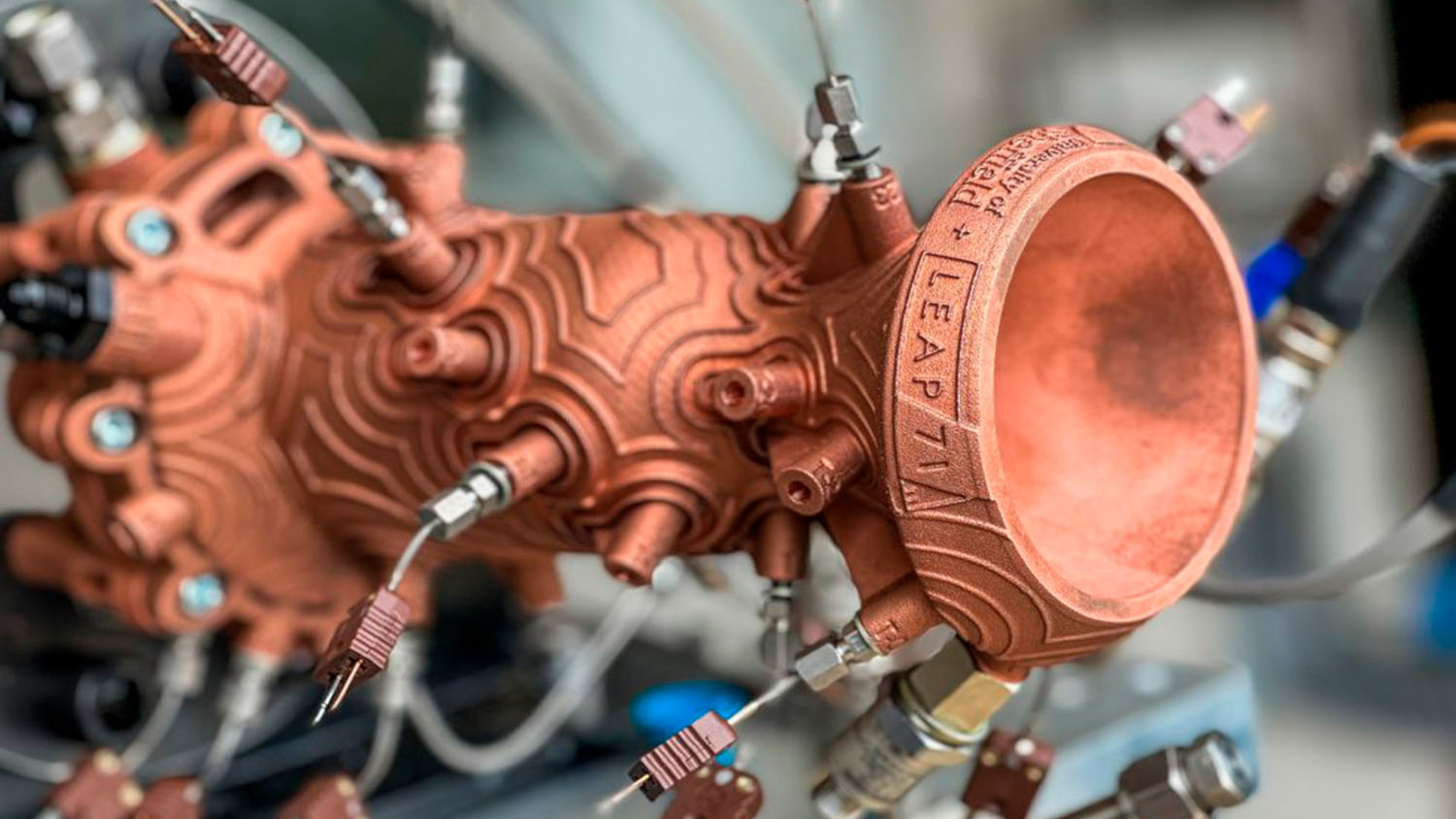
EOS is embracing the possibilities of AI with the first rocket engine built entirely through a computational model without human intervention.
Printed using the EOS M290 and designed by Dubai based AI start-up LEAP71, in partnership with the University of Sheffield and Airborne Engineering, the design of the thruster from final specification to manufacturing took two weeks as opposed to months, and no CAD was used in the design process.
Stich explains that EOS engineers would have never designed a thruster that way – but in hot fire testing, the engine performed as expected. It achieved a steady state, essentially meaning it can be operated for as long as needed, and the burn time was only limited by the fuel supply at the test site.
Testing produces data-driven results, which AI then uses to generate changes. Stich reveals how this takes the emotion out of designs. It’s understandable that when designers spend weeks (if not months) on a design, making changes can be hard, but AI makes changes purely driven by data. “This is going to be the absolute future, in space,” he says.
Rapid prototyping
For rocket launches, prototyping needs to be fast. “We iterate in months, sometimes weeks, not years. From the idea of us producing it and then going into the testing, it’s weeks. You iterate your design. We press play, test it and that’s it,” says Stich.
When it comes to putting automation to work, EOS is no longer in the proof-of-concept phase, but already exploring how to scale up.
“The good thing about having AM technology is that you scale per printer. You don’t have to reinvent the wheel every time. If you need a higher capacity, you just have more printers,” explains Stich.
“If you want to shoot up double the amount of rockets, you need double the amount of printers. You don’t even need to place them in your facility. Place them anywhere in the world, press play there and get the components sent over.”
A key point to automation for EOS is increasing the number of parts produced per machine. Traditionally, an operator would need to remove a finished part and reset the machine, leading to slower manufacturing overnight. EOS, by contrast, has automated the operator role and can have the machine up and running again after just an hour. Reducing the time between laser activations means that the printer can continue producing parts with limited staff .
Stick the landing
Manufacturing regulations for components relating to space travel are stringent, safety-critical and highly specialised. AM inherently must be produced on the micrometre scale, which means additively manufactured components often meet qualifications first time round.
EOS employees are advising regulatory bodies on the capabilities of AM and helping to set standards for manufacturing quality. There is a huge advantage, they argue, in being able to prove a component meets all qualifications before it’s sent off to be analysed. That means much less post-processing, saving time and money.
Another benefit of AM is component strength. Parts that have been 3D-printed can be recycled and reused. According to Stich, one part made by EOS has already been through 33 rocket launches.
“This is scalability in space. Reusing the same rocket 33 times, over and over, is insane when it comes to the cost calculation behind it,” he says.
Additive manufacturing, he says, is completely changing the way that engineers approach spacetravel challenges and, along the way, offers new opportunities for innovation and creativity.
“There are a lot of engineers who can make a huge difference, but you need to train them right, and this is the homework of the whole industry.”
This article first appeared in DEVELOP3D Magazine
DEVELOP3D is a publication dedicated to product design + development, from concept to manufacture and the technologies behind it all.
To receive the physical publication or digital issue free, as well as exclusive news and offers, subscribe to DEVELOP3D Magazine here