
The vehicle wrap industry, where a vehicle’s original paintwork is covered with a thin, durable vinyl film to change your car’s colour or finish, while also protecting the underlying paint, is booming, yet the perfect tools to complete the job are still being developed.
WrapOn Tools designs, manufactures and distributes products specifically for the vehicle wrap industry and has been hard at work developing hand tools to make the vinyl applicators lives easier and the process faster and more detailed.
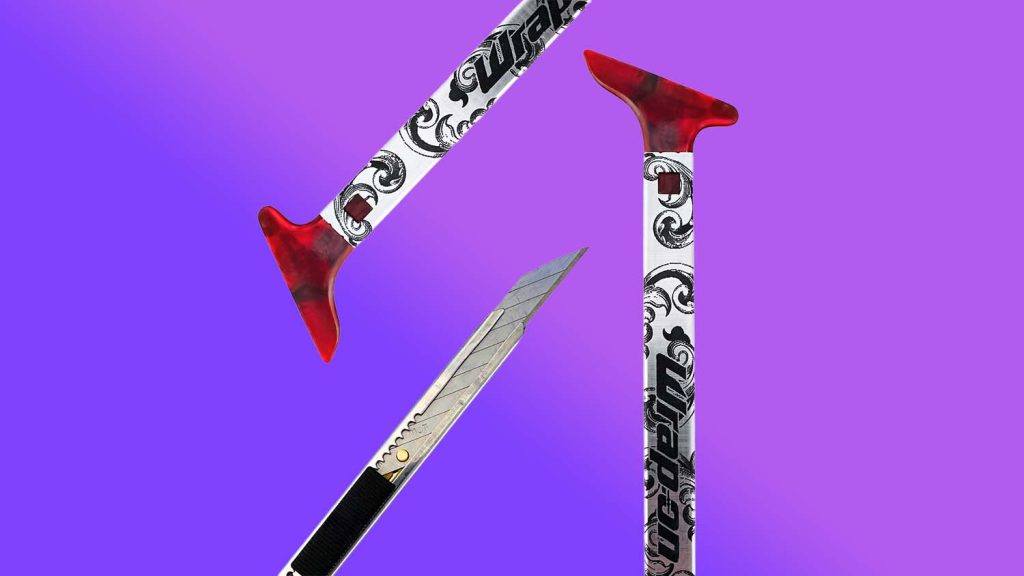
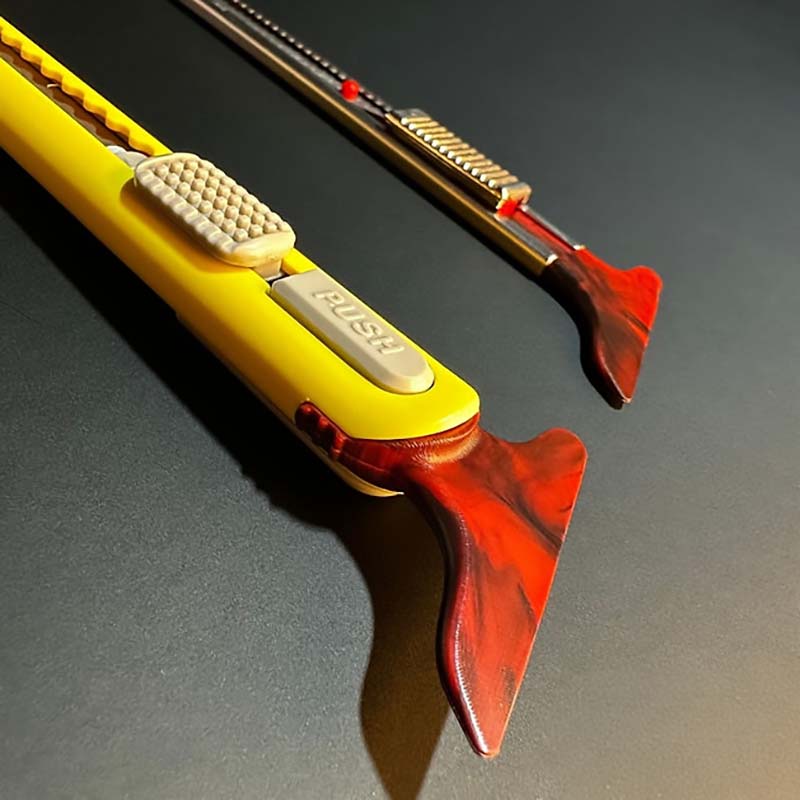
One of its core products is the patent pending KnifeTucker, a tool designed to help the installers tuck vinyl around edges during the finishing stage of a vehicle wrap that stays attached to the base of the installer’s knife.
The product began as an idea from inventor Scott Decker, but it required extensive design and development before it could become a reliable production part.
Decker initially explored FDM 3D printing, but the process was not strong enough for the application. Because the tool is used under pressure, the layered structure of a 3D-printed part created the risk of snapping or breaking during use.
Decker decided to experiment with a homemade injection moulding set-up, using plans from a builder in Switzerland. That early set-up proved his concept, but was only able to produce 2–3 parts every 10 minutes, nowhere near enough to keep up with demand.
With no formal manufacturing background, the team began looking for a practical way to move from prototype to production while keeping everything in-house.
Because WrapOn Tools already had experience with desktop 3D printers, the idea of using a desktop injection moulding machine felt familiar and achievable, so the company invested in an APSX-PIM V3. At only 1,092 × 254 × 381mm, the smaller format made the equipment less intimidating and gave Decker and his team the confidence they could learn the process, while the cost of $13,500 took the pressure off the team getting to grips with the new hardware.
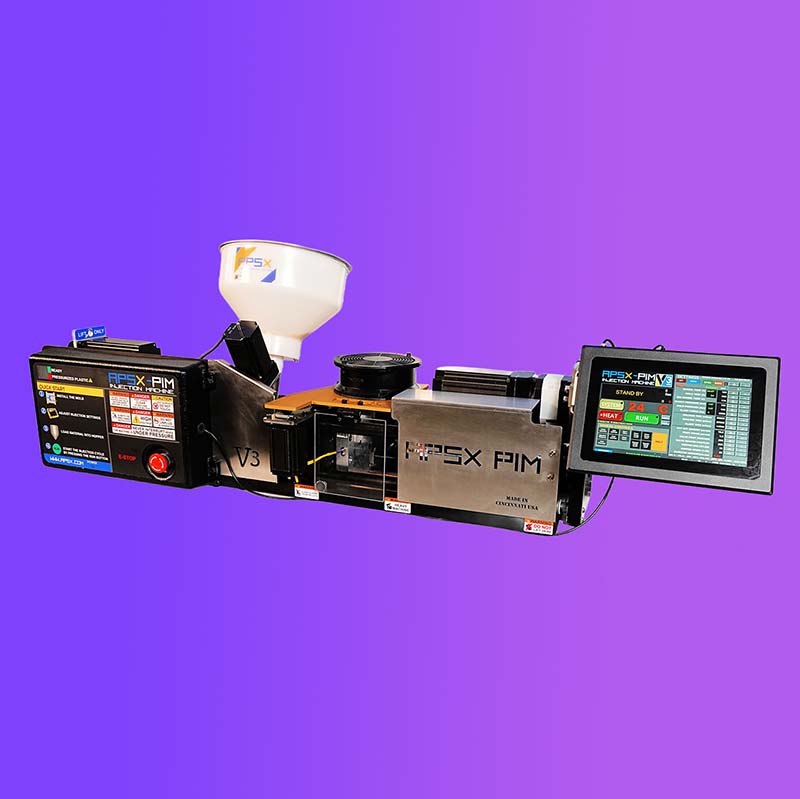
The machine uses aluminium moulds produced with standard CNC milling, supports rapid re-machining for dimensional refinements, and can accommodate 3D-printed trial inserts for early-stage validation. Capable of working with polypropylene, polyethylene, nylon, polycarbonate, acetal, ABS, and blends that meet its melt-flow guidance, it offered a fast and cheaper option to test different materials.
With no water-coolant system and running on mains power, the PIM V3 provides a high level of automation for such a compact system, using precision sensors, electronic temperature control, injection speed control and delay control between cycles. A touchscreen charts injection performance showing pressure and volume over time.
Once the process was dialled in, the WrapOn team could produce a batch of four parts in about 90 seconds and roughly 200 parts in a day that require little post-processing, allowing them to be packed and dispatched within minutes of coming off the machine.
With production continuing to scale, Decker expects the PIM V3 to still see plenty of use to support small runs, material trials and further R&D as its range of specialist hand tools and peripherals continues to grow.