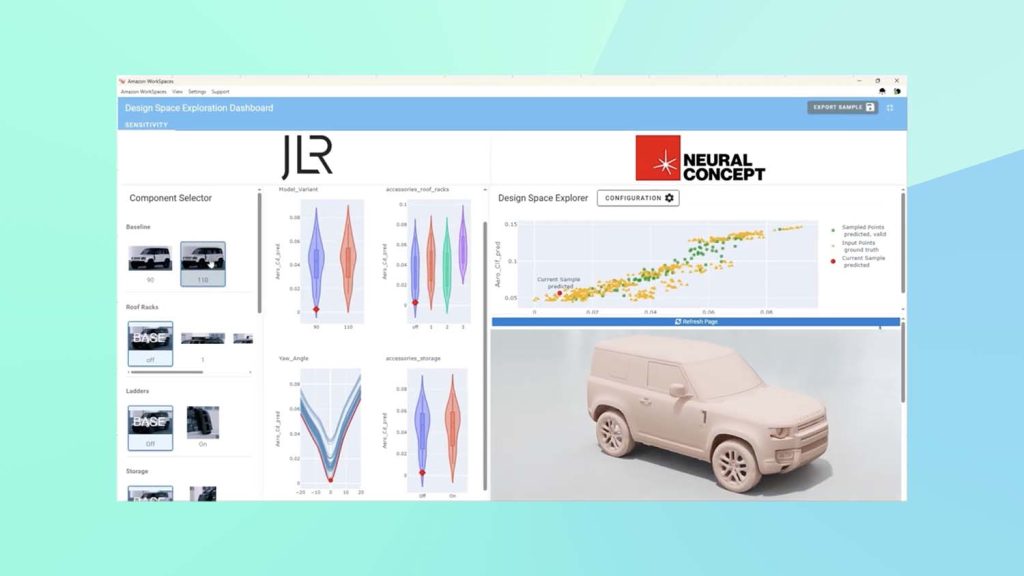

Founded in 2018 at EPFL, the Swiss Federal Technology Institute, Neural Concept’s platform aims to bring together data scientists, CAE and CAD designers on a single platform for deep-learning simulation capabilities.
Users can swap quickly between different AI models – establishing model training and retraining strategies to harness the large amount of engineering data available within an organisation – allowing teams to move beyond isolated tools and manual iteration toward continuous, AI-augmented decision-making.
DEVELOP3D sat down with CTO and co-founder Théophile Allard to discuss the landscape for AI in CAE, the big challenges, changing attitudes, and where the focus lies for Neural Concept over the next few years.
DEVELOP3D:
AI has now impacted much of design and engineering, but Neural Concept has its beginnings in machine learning – tell us a little about how that has helped shape your approach?
Théophile Allard:
We started in 2018, before the word ‘AI’ was even cool! We started really focused on 3D deep learning surrogates. Some of our early case studies we did a lot of things around aerodynamics optimisation, shape optimisation for external flows, active learning strategies, sort of algorithms that explore a design space autonomously to find the best shape, predicting and learning and predicting over time the complex flow and the complex physics of the whole part.
And quickly we’ve moved towards multiphysics – so fluid structure interaction with some of our aerospace customers. We’ve also explored aeroacoustics, so looking at the flow, but also so how the vibrations create some noise and the footprint of that for a given flight trajectory, for example, because for certain types of aircraft and helicopters particularly that’s a big topic.
Then following the general progress of AI, we’ve extended our core 3D physics prediction and 3D geometry generation technologies with agentic workflows.
Today, what we do with our customers is really leverage these deep technologies, integrating them as part of agentic workflows, and working with agents that not only know how to do the detailed hard tasks, but also reason at the level of the whole engineering planning and process orchestration to accelerate the engineers and designers’ workflows end to end, because, at the end, that’s the complexity we’re after.
A lot of the legacy tools are so complex, and a lot of the complexity of building a product is pushed onto the human organisation. What we hear all the time is the main pain point for engineers is the time spent in meetings and iterations and aligning specs, what we’re doing is contributing to this overall streamlining and automation of processes.
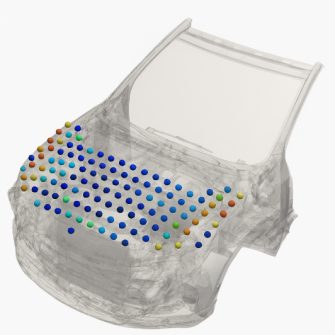
There’s a lot of hype at the minute about using surrogates and bringing this into more mainstream engineering – where do you see the benefits?
The benefit of surrogates is really the automation. I think there’s a lot of miscommunication around surrogates, that surrogates are here to replace simulation. My opinion is that surrogates are just a way to use the information from your simulations in a more effective way, in a more optimal way. So, simulation is not going anywhere.
I think AI is just here to help us do more with simulation rather than replace simulation; to orchestrate your simulations more intelligently, automate their launch and the preparation before the launch.
Surrogates are a way to extract the information contained from your simulations and use this information as effectively as possible to drive optimisation algorithms, to detect when you’ve already run certain cases to avoid rerunning the same cases.
Extracting this information and distilling it to your agentic processes to optimise their actions, their decisions, so that you don’t rerun the simulation if you already have the information.
Neural Concept is still a very young company compared to a lot of the big incumbents with decades of experience – how do you get around that and accelerate so fast that you’re ahead of the competition?
Our view is that the best know-how out there is in the hands of the industrial companies themselves. The people who know best how to build helicopters are the helicopters OEMs. The ones who know best how to build a plane are the aircraft OEMs and then in automotive we work with suppliers who have like really specialised knowledge.
All of this ‘industrial tissue’ is blended with deep expertise. The software vendors, yeah, they accumulate some of this expertise over time, but I think what matters from an industrial space perspective is that each company manages to make the most of their expertise for themselves, and that they build and they reinforce their competitive edge in the era of AI.
We see ourselves as building an operating system that we can give to companies, so that they build their engineering brain, their own engineering brain, not one engineering brain that is the same for every company.
I’m surprised how often I hear that it’s still a major challenge that specialised engineers with decades of experience they retire and then that’s a problem for the company because the companies still struggle. They have very deep knowledge internally and they struggle to capitalise on this knowledge and compound it over time, because there’s also so much knowledge yet to discover.
We’re here to help them [with] the knowledge they already have and discover new knowledge faster.
What do you see as the bigger challenge for companies – retaining knowledge that is heading out the door, or the search for new knowledge? Do older companies have more issues given they’re likely pressured by both?
I think even the modern companies have this problem as well because there’s this extreme of someone going to retirement, but even in more modern companies, you typically have individual persons on very critical parts of the process and that forms a bottleneck. Even if a person doesn’t go in retirement, they can still be absent through sick leave, or whatever.
I think the two problems you mention are really coupled; there’s reaching for new things and there’s capitalising on existing knowledge. Reaching for new things, it’s a matter of ‘How fast can you do iterations?’.
Typically, when you develop a new airplane, I mean, there’s little innovation – if you look at the planes you see on the market they all look alike, and they’ve been looking alike for decades. The thing is, these processes, these iterations between design, evaluating all the disciplines, checking with the manufacturing certification, all of these disciplines around one design iteration. This loop is so slow. It’s so complex.
The stakes at the end and the timelines are relatively short, given how lengthy each iteration is. So, at the end, you have to make really critical decisions with limited information, and so you take little risk. And little risk means little innovation in the end.
So, if you can like automate a lot of these loops and connect insights together, you go much faster in these loops and you start to explore more. And that’s how you unlock more innovation.
But the problem is, if you unlock more innovation at the cost of simplification and at the cost of ignoring certain pieces of knowledge, you’re just going to create issues down the line. And when you arrive to manufacturing, this one person who’s forming a bottleneck will give negative feedback, and you can’t get your innovation through. There the challenge is how, while you’re doing this automation, how can you capitalise on the knowledge and inject it into the automated agentic loops, basically. So, it’s a matter of absorbing and sitting down with people and transforming this knowledge into automation and memory.
And so, when I talk about this AI operating system it’s designed in a way to allow people across the organisation to inject and structure their knowledge about the process, so that the things that typically happen really down the line of the process get front loaded with all the information, and that’s very different for agents and humans.
I think agents are still bad for certain things, but one thing they’re really good at is scanning a lot of information quickly. If you have 1,000 rules, it’s simple for an agent. For a human… you can do it out of intuition, and that’s why people with a lot of experience are valued because they see the things. But if you have someone who’s really smart, but young and every time must go through the thousands of rules, they will be slow.
With all the buzz around AI enabling ‘intent-driven design’, do you believe we’ll see better designs delivered faster?
Yeah, definitely. Intent-driven design aligns well with how we see things; that this rigid set of rules and activities can be packaged and front-loaded, so that the engineer’s mental load refocuses on intent, and then that accelerates [designs].
For things to move fast over the next couple of years there’s something important: thinking about organisations and engineers. How do people train? How do people reshape their own roles? There’s a lot about organisation transformation and change management and that’s something we’re working a lot on with our customers. We organise training [sessions] for engineers because that’s going to become the bottleneck, the technology is moving so fast.
For leaders, C-suite levels and VPs of engineering in these large companies, their obsession should really be about ‘how can I have my organisation evolve fast enough to stay cutting edge with the progress of these technologies?’, because there is also a new generation of companies.
When we talk about modern companies, there’s the Teslas, for example, and then there’s a lot of more recent companies. It’s a really hot topic at the moment. These new industrial companies will grow quickly and will grow based on AI native premises, so it’s important for companies who carry a lot of this deep expertise, and which need to stay competitive, also adapt themselves to this new reality.
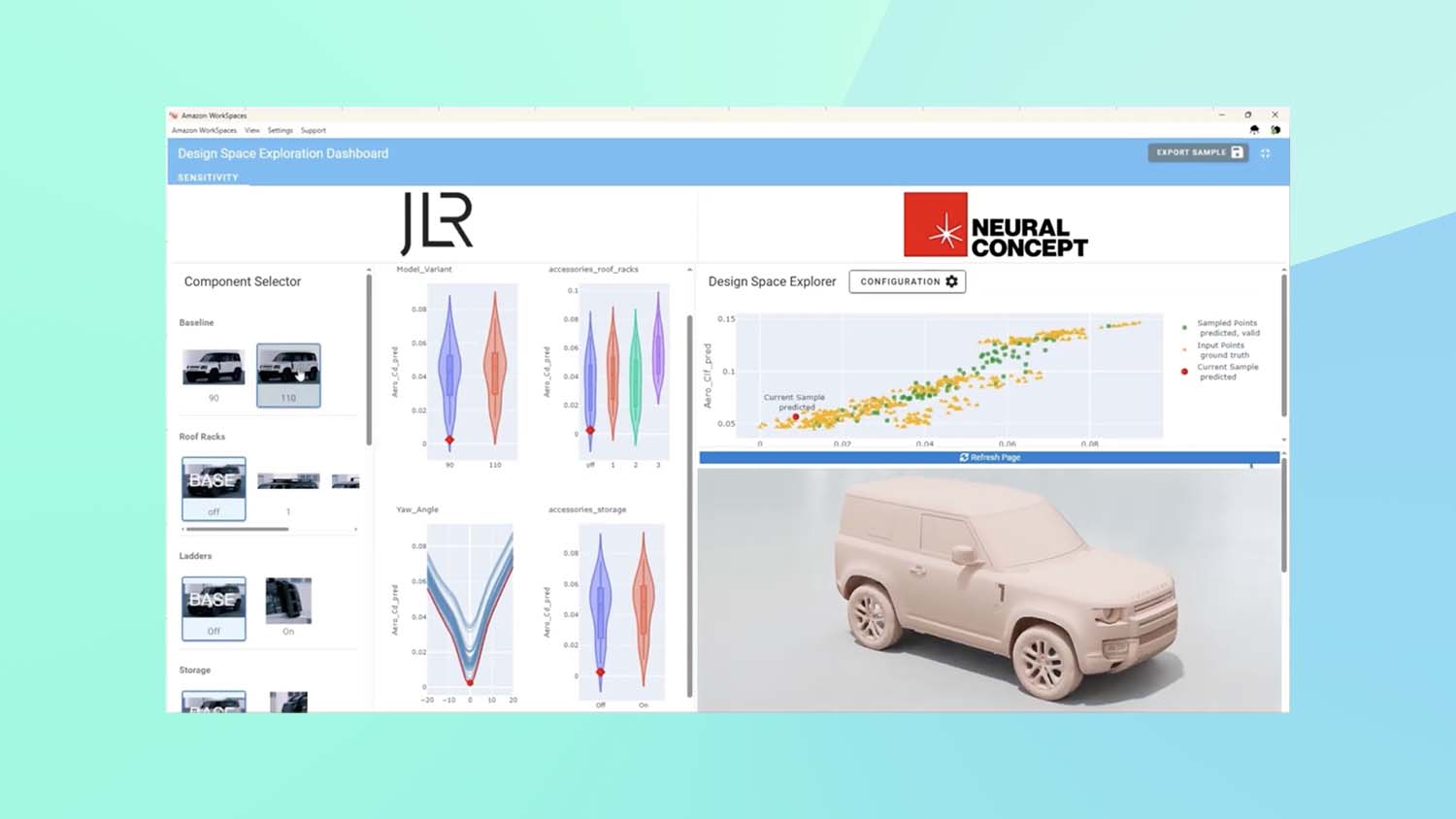
Neural Concept is a cloud-first product that can work on a private cloud – with a lot of your bigger customers operating their own. How do you ensure that they’re working with the most up-to-date software, and how receptive are they to frequent updates?
Indeed, it’s key to send updates quickly because of the progress of technology. We don’t force them to take updates, we have a tiered update system… there are long term releases, but we also ship nightly versions. Every day there is a new version that our SaaS customers can use.
But then customers can control their update cadence, and we work with them to transition from a world where they are used to two updates a year to a world where they can adapt their processes to ingest updates daily. This is also a part of what I’m describing when I talk about change management. It’s all these processes that need to adapt to these AI-native, very fast-moving systems.
IT needs to be rethought, and some of the rules need to be redesigned. Some customers, for example, they have the rule today that the same software version needs to be used across a whole development program. When you look at how long a development program is, you can’t upgrade very often, so we’re working with them on how we together define the new rules of the game, so you can benefit from all of these updates, and what guarantees do we give you so you adopt these updates seamlessly as part of your development program.
How important is it for your software that your users are using the most up to date versions of other softwares as well?
We have a very flexible integration system to support software from different vendors and also different versions from the same vendor.
This is typically not a major issue because when in a workflow you have well-defined integration points, and then as part of the migration path in the platform, you will have targeted actions to perform once you migrate. You are migrating to a new version, so you have a few connectors you need to update, and we don’t restrict here.
Some customers we work with to connect to their in-house codes, their proprietary codes. We have a lot of flexibility around these integration interfaces, so we can support this this diversity confidently.
Is the move to more cloud-based software giving some CIOs a push to be more flexible, to modernize?
Definitely, we see it a lot more. Also, because of this AI wave, it’s putting pressure on organisations to rethink IT in general. And these upgrade processes are part of that.
Even if it’s not the focal point of this strategic reflection, people understand it’s a big part of it, and there’s a lot of more drive than a few years ago.
Now, our stance is to not build on a utopia of the future. We acknowledge that engineering processes are extremely complex, and sometimes it’s a messy reality. And once you accept it’s a messy reality and build your solution for this and show that it is robust to this messiness, everything becomes easier in the end because you make better trade-offs, better decisions in how you design it.
Sometimes it means some capabilities you build a bit differently or a bit less powerful, but it’s better to have a capability a bit less powerful that works everywhere than a powerful capability that only works in an ideal SaaS environment.
So, for example… a lot of people still work with Catia v5 and we commit to supporting Catia v5 for as long as people are going to continue using it.
What do you see as being your strength going forward and the standout focus for you over the next couple of years?
Our main focus is to work with these large organisations. If you look at our customer list, we really work with large OEMs, tier one suppliers across aerospace, automotive and electronics. And we focus on the landscape and integrations needed to support processes in these companies – it’s very different from some smaller companies because the needs in terms of IT environment, etc. So, in a way we prioritise the development of the integrations of the connectors and so on.
I think the stance we have is we commit to being an open operating system as part of this environment – we work with all the different vendors, and we work backwards from the process that needs to be enabled and automated.
All of these processes today, they work with a diversity of tools from different vendors, including proprietary code, specific know-how or customisations on top of these commercial solutions. We focus on being a connective tissue to bridge the capabilities and the engineering automation in this process.
We work backwards [from key questions]: What are the top engineering priorities today? What are the problems you are having? Where do they have difficult engineering decisions they need to make? Where do they have uncertainty? Where have they seen programs fail before, or be too costly, or whatever? And we work backwards from these pressing engineering challenges and implement the right building blocks to enable these processes end to end.
Our focus is really on all the expertise feeding back into the customer’s own engineering brain. The first thing we do is we share our expertise on how to do that: We have something called an Engineering Intelligence Value assessment.
It’s like sitting down with a customer and identifying the opportunities, the processes where there are frictions and so on, and helping them prioritise that based on our experience and proven successes, so then they can take over.
We align with them as well and provide guidance on what is needed from a change management perspective, and then they can take that over and execute on that roadmap. With our support, but all the time they own the outcome and the system that forms this engine.