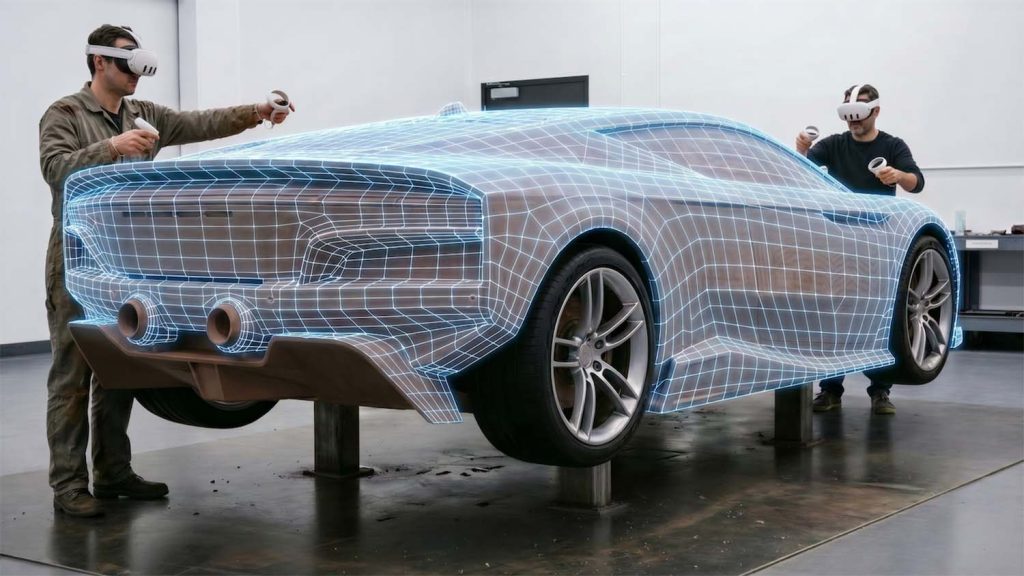

New AR-focussed updates have been added to Gravity Sketch, allowing users to lock 3D data onto the real-world content for ideation, review of models in situ and to gain a better understanding of scale and design constraints.
The Gravity Sketch AR updates allow spatial alignments to be created, edited and saved, with a virtual room and its contents – including 3D models, wireframes and sketches – able to be locked to the real world, including overlaying digital models over simple physical volume prototypes or clay sculpts.
These alignments can be made available to anyone else in the same virtual room and physical place, from the environments panel in the Gravity Sketch VR environment.
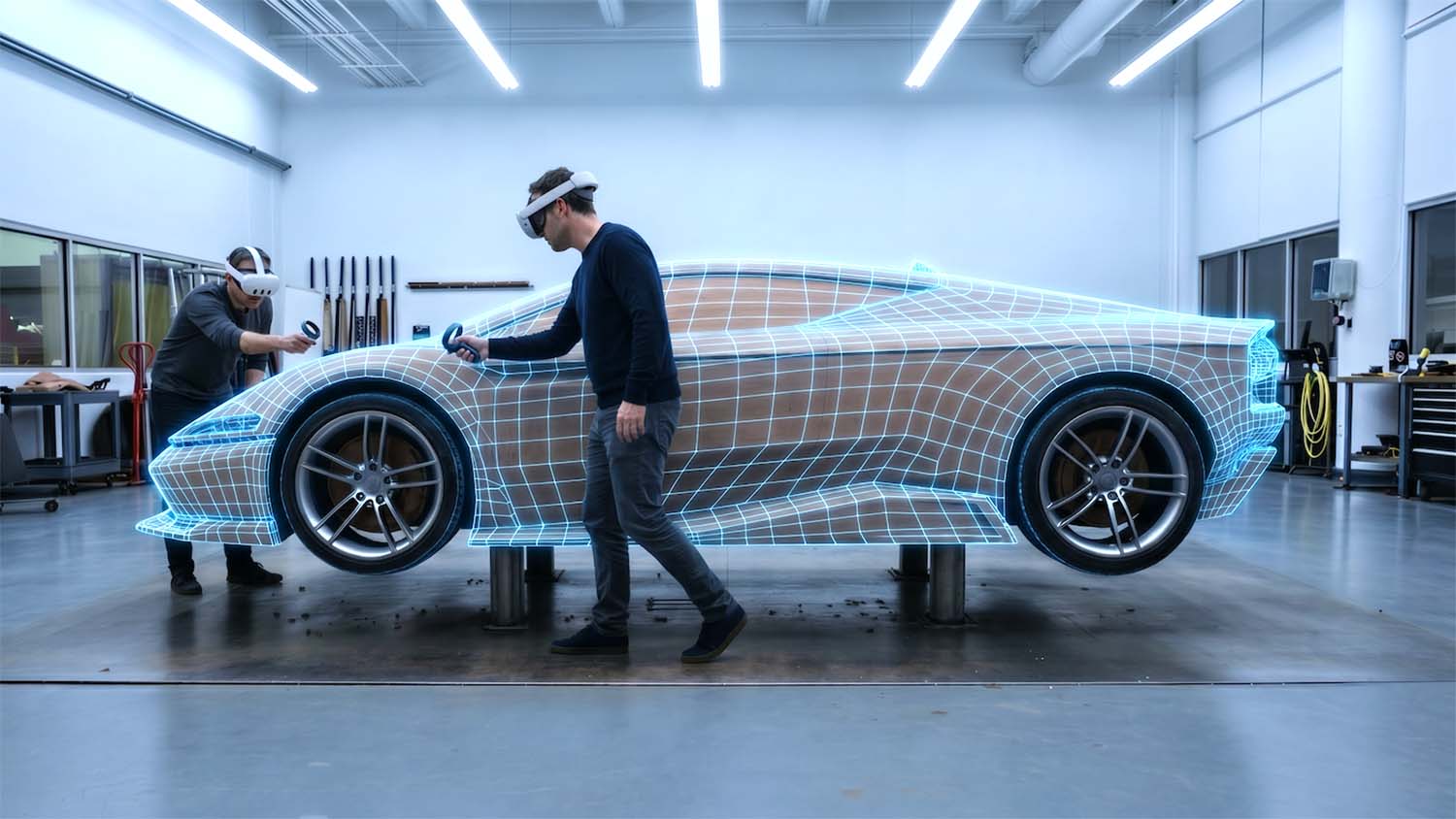
The updates have been made possible by recent advancements in hardware, such as new in-built depth cameras on XR headsets, which have eliminated previous issues with environmental meshing and positional tracking.
Through better alignment between virtual and physical design, Gravity Sketch says the updates will help users reduce the number of physical prototypes needed, without increasing errors or compromising on quality.
“It is very hard to read scale and proportion on a flat screen, even in CAD, so people add humans to images and still rely on individual spatial reasoning, which varies from person to person,” said Gravity Sketch CEO Oluwaseyi Sosanya.
“Seeing designs in 3D with true depth perception makes it much easier to judge things like ceiling height, vehicle interiors, how a hand wraps around a tool, or how a worker’s body moves when reaching into a crate – leading to better ergonomic, layout, and productivity decisions before anything physical is built.”
Sosanya added: “Teams in Detroit can be looking at the same full-scale virtual prototype as a team in Tokyo. Instead of flying people in for every review, or building a new prototype for every option, teams can do far more iterations virtually. You can even walk away and come back to it and the digital object will still be correctly aligned. This reduces costs, saves time and mitigates the risks of virtual reviews and costly prototypes without impacting the quality or innovation of the final product.”