
AMCM, the large format metals 3D printing subsidiary of EOS, has integrated PanOptimization Pan X, used for the physics-based simulation of large scale metal 3D printing, into its software EOSPrint.
The new integration should prove beneficial for all EOS users, from those running M290-class systems through to users of the AMCM M 8K. However, with the scale, complexity and costs of some of the large parts being produced on AMCM 3D printers – like the M 8K Series, with a build volume of 800 × 800 × 1,200mm – both parties are describing the announcement as an important step toward making physics-based simulation a practical, embedded part of industrial metal additive manufacturing workflows.
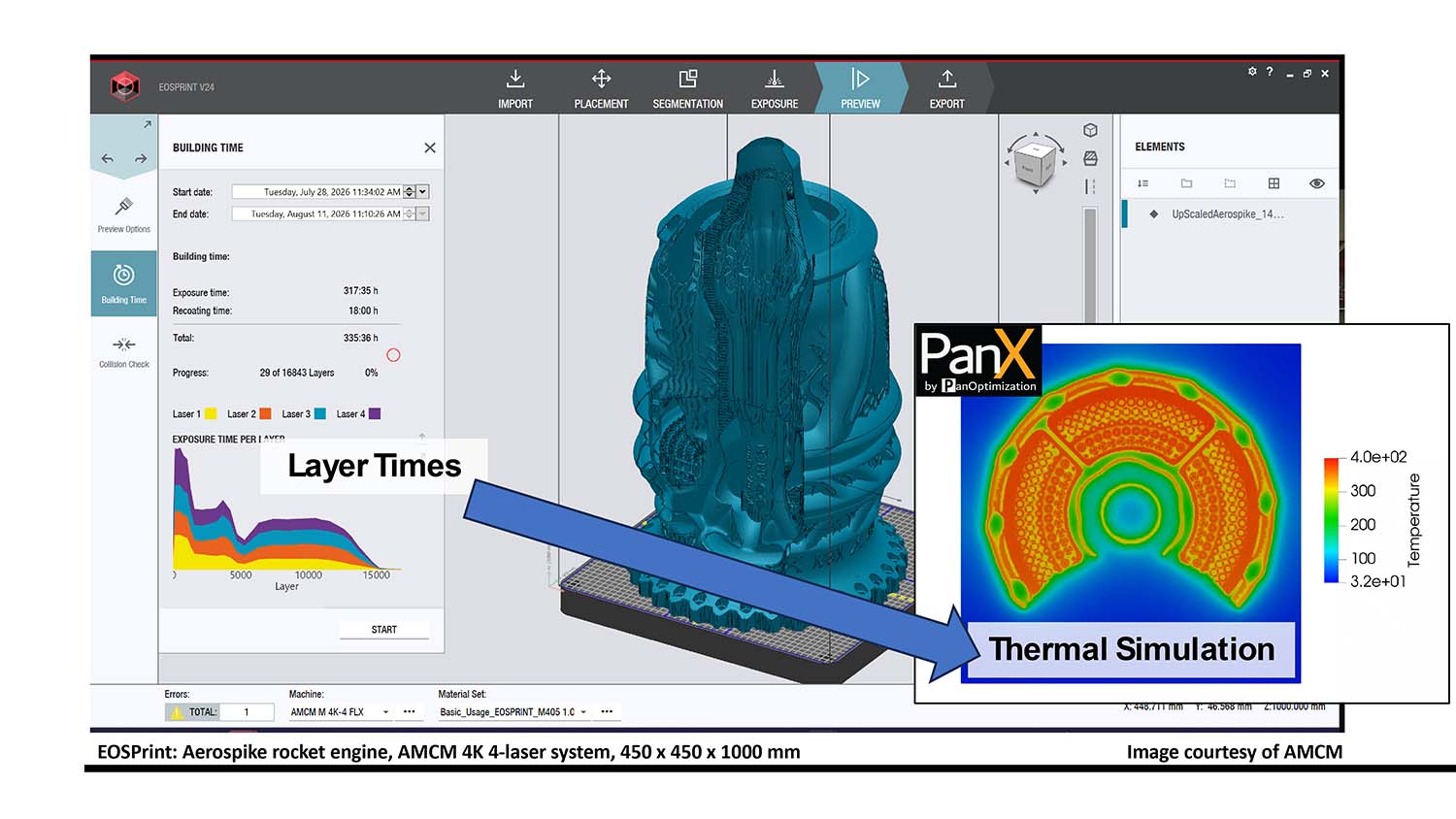
Panoptimization PanX can be used as a standalone thermo mechanical simulation tool alongside any metal 3D printing system. However, integrations such as the link between EOSPrint and PanX are deemed especially important as they bring simulation directly into the build preparation workflow.
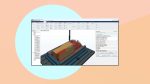
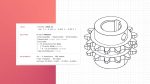
The integration works by first reading an .openjz file from EOSPrint into PanX and extracting all build setup information, including the geometries, build plate layout and processing parameters needed for a simulation.
Additional information not included in the .openjz, but still needed for accurate simulation (e.g. processing time per layer) are brought into PanX by use of the EOSprint API. This removes redundant and error-prone set-up work, allows for a turnaround times measured in hours rather than days, and makes simulation more accessible to design and manufacturing engineers rather than only dedicated simulation experts. It also improves model accuracy by incorporating high-fidelity printer-specific information.
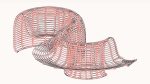
Once the simulation is complete, optimised dwell times, compensated geometries and optimised laser powers (written as a TIFF image stack and corresponding Smart Fusion Replay file) are automatically written back into the .openjz file where they can be implemented on the 3D printer.
“Especially for the large and complex applications our customers manufacture on the AMCM M 4K and M 8K, thermomechanical simulation is a key tool to counteract overheating and thermally induced distortion. By integrating PanX directly into EOSPrint, we can seamlessly optimise thermal management and build strategies before production begins,” said AMCM application specialist Tobias Petzinger.
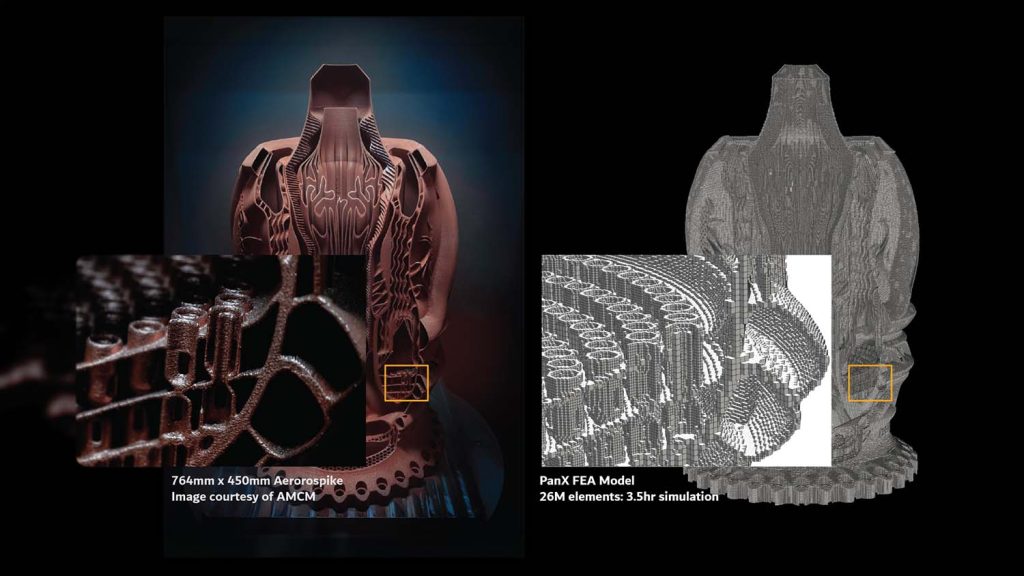
AMCM recently demonstrated the benefits on a large M 8K build, highlighting how local heat accumulation can lead to distortion and dimensional deviations, residual stress and internal defects, reduced part quality, partially sintered powder, and difficult de-powdering.
Thermal simulation helps identify hotspots before the build starts, makes critical areas visible, and enables overheating to be addressed before it impacts part quality. “No amount of density-cube or tensile-bar testing can solve these problems, as they are highly geometry- and thermal-history-dependent,” explained PanOptimization chief engineer Erik Denlinger. “That is why simulation is needed .”
“AM is moving into a phase where simulation has to become a standard part of the manufacturing process. If manufacturers want to print and qualify high-value metal AM parts with confidence, they need physics-based models that help them understand and optimise what will happen before the build begins.”