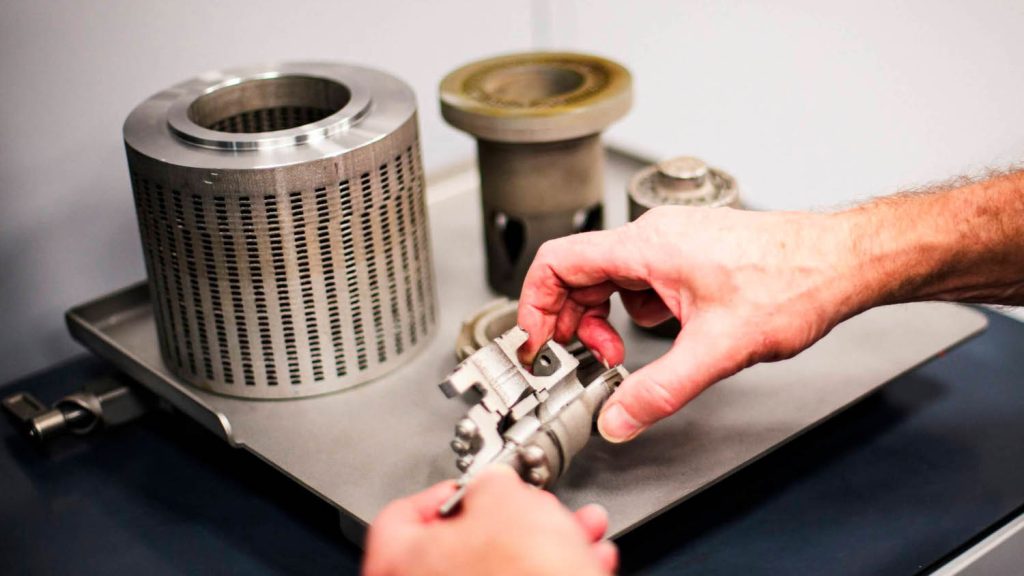

Designs intended to disrupt complex valve trim manufacture in the oil and gas industry face more verification than most additive manufacturing use cases. Stephen Holmes learns how Kent Introl ticked all the boxes and expanded its business as a result
Valves in the oil and gas industry operate under severe, high-pressure conditions. The consequences of failure can be catastrophic, not only for the system of which they form a part, but also for the safety of personnel and the wider environment.
The resulting list of strict global regulations pertaining to valves destined for these environments is extensive and the pressure is on tier-one suppliers including Kent Introl to amply demonstrate the robustness of their products.
Part of the global industrial solutions company Koso Group, Kent Introl has been operating for nearly 60 years from the UK’s ‘valve valley’ in West Yorkshire.
The company manufactures and supplies valves all over the world and these are used in all kinds of applications – some of them subsea, some ‘topside’ – as well as all kinds of operating conditions.
It’s these conditions that drive the use of high-temperature, high-corrosion-resistant materials, along with a relentless product testing and validation regime.
When it comes the valve ‘trim’ – the removable internal parts of a valve that come into direct contact with fluid while controlling its flow – tough materials and fine details must coexist in challenging juxtaposition.
Fine fluid channels, for example, form a labyrinth designed to reduce the velocity of fluid by staging pressure drops and gradually increasing flow areas – but the standard manufacturing method, while time-tested and verified, is layered with pitfalls for short lead times or fast replacement.
Between the top and bottom plate of a trim, multiple discs are sandwiched in order to contain flow paths of varying complexity. When this stack is assembled, the required flow coefficient is achieved.
The manufacturing method associated with this kind of structure is time-consuming and complicated. Just like the rest of the valve, each disc must also be manufactured from high-temperature, high-corrosion-resistant materials, but these can be subject to availability and supply challenges, as well as rules around traceability and quality control.
Once sourced, each plate is electrochemically machined to produce the required labyrinth, with each plate’s design constantly changing in geometry and direction. Following an inspection, the resulting stack of plates is vacuum-brazed together and machined to size.
Each and every completed part involves hundreds of operations and each operation provides an opportunity for errors to creep in. Individual plates can be remade, but once the vacuum-brazing and final machining are underway, any error means starting again from scratch.
In short, lead times for material supply, initial machining, brazing, final machining, inspection and testing all combine to make these complex and costly assemblies a serious potential bottleneck in the production of any valve.
Seeking a way to streamline the process – and make it faster, more efficient, less wasteful and less energy-hungry, Kent Introl determined to try a new approach using additive manufacturing.
Closing the gap
Kent Introl’s key goal for 3D printing was to build all the individual plates in a valve trim as a single component, with the required internal labyrinth running throughout its interior.
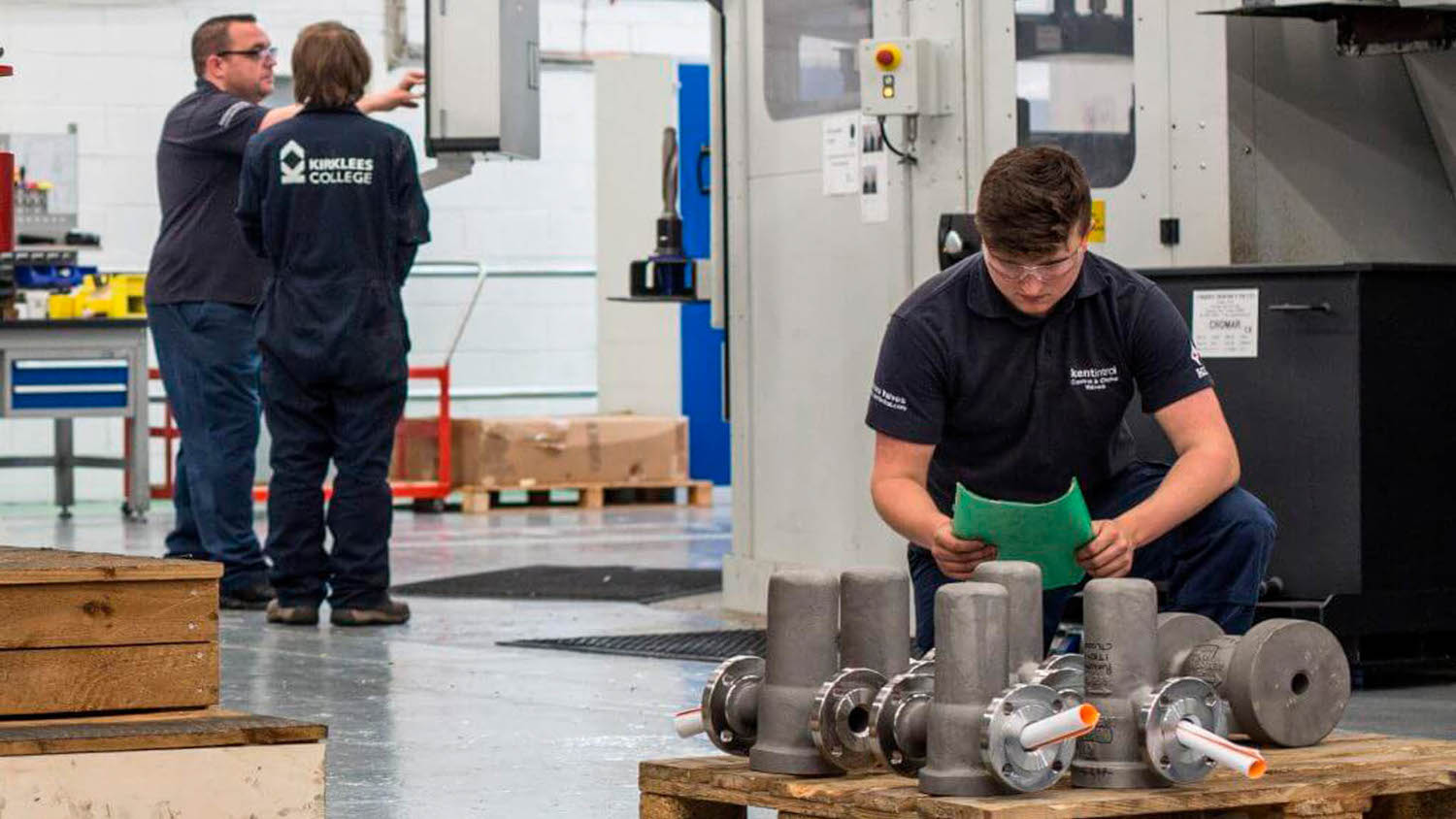
“We didn’t jump into this blind,” says James Ashby, additive business development manager at Kent Introl. “Our R&D department spent a long time assessing various additive machinery and metal powder suppliers with the same rigour as [they would for] any other part of our valve manufacture.”
The team also investigated the technical support available from suppliers, along with their willingness to help assist in the development of processes and parameters vital to making safety-critical parts for the oil and gas industry.
As a result of its search, a Renishaw RenAM 500Q Flex was installed. Its laser powder bed fusion system uses four 500W lasers to build the necessary intricate structures of the valve trims, while an automated materials set-up added flexibility of choice.
“We’ve qualified S316, Inconel 625 and Inconel 718 for use in the oil and gas valve components that we make for ourselves,” states Ashby.
“The machine is also capable of processing titanium, Scalmalloy, tool steels, cobalt chrome and more.”
Training provided by Renishaw means that five members of the Kent Introl team are now qualified to run the machine on site. Changes to the material supply chain have also been beneficial, although specific accreditation means that the company uses a single specific provider for the metal powders.
The team’s guiding principle here is ‘TRAV’ – Traceability, Repeatability, Accuracy and Verification. This ensures that 3D printing is subject to the same engineering discipline as any other critical production process. The traceability element of the acronym demands full material and process parameter logging, alongside the creation of comprehensive build histories.
Likewise, testing (both digitally and physically) is a rigorous process. In this case, the Kent Introl engineering team is able to validate physical flow rates within 1% of its CFD predictions.
Process payoff
Kent Introl’s Renishaw machine and materials have now been in use for over three years. Having confirmed that its print parameters, materials know-how and traceability requirements are up to scratch, the company is opening these services to companies from sectors outside of oil and gas. In particular, its AddLab division assists designers and engineers facing similarly complex engineering challenges, producing parts to the same exacting standards as its core valve business. “It’s not just because we have the machinery – that’s the easy part,” laughs Ashby.
“It’s because we have a whole ecosystem of experienced, trained people behind it. People who have solved real-world problems in one of the most highly regulated industries on the planet.”
Having completed the hard yards of qualifying and verifying metals 3D printing for oil and gas, Kent Introl offers its customers the opportunity to sidestep the long lead times and significant costs associated with conventional manufacturing methods. Meanwhile, the design freedom afforded by additive manufacturing, when combined with real-world in-house experience, means that Kent Introl’s engineers are able to experiment with innovative designs at a faster pace than competitors. Finally, with AddLab, it’s built an additional revenue channel – one that will hopefully provide an optimum rate of flow.
This article first appeared in DEVELOP3D Magazine
DEVELOP3D is a publication dedicated to product design + development, from concept to manufacture and the technologies behind it all.
To receive the physical publication or digital issue free, as well as exclusive news and offers, subscribe to DEVELOP3D Magazine here