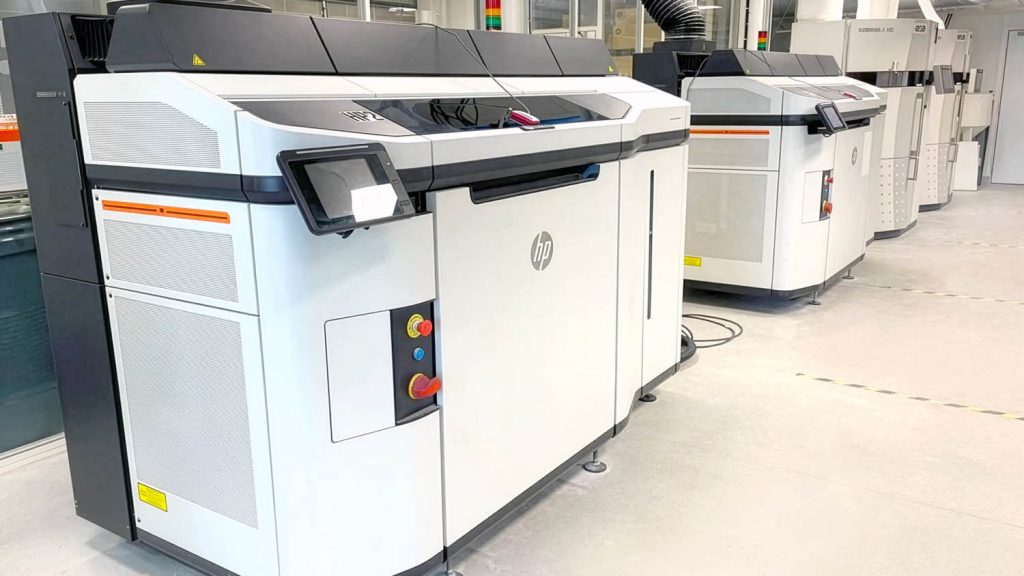

Suppliers of selective laser sintering (SLS) 3D printers hope to broaden their appeal among entry-level buyers – but is your company ready for this technology?
Selective laser sintering (SLS) 3D printing – also known as powder bed fusion (PBF) where chemical binders replace lasers – is targeting new market opportunities as key vendors increasingly look to sell machines to entry-level buyers.
With industrial-class SLS 3D printers typically costing upwards of £200,000 and requiring total investments often in excess of £500,000, the launch of models from established brands for under £100,000 may offer smaller customers a viable alternative to outsourcing this work to third-party suppliers.
Workshop-friendly units at more attainable prices mean robust nylon prototypes for design verification and even low-volume production can be brought in-house.
But would-be buyers should be aware that while the hardware itself might be easier than ever to access and use, peripherals, maintenance, post-processing and getting to grips with build software will all play an important part in getting the most from your investment.
To give you extra insight, we’ve enlisted experts from 3DPRINTUK, a company that has been running industrial PBF machinery around the clock for over 15 years, to offer points that you may need to consider.
Formlabs Fuse X1
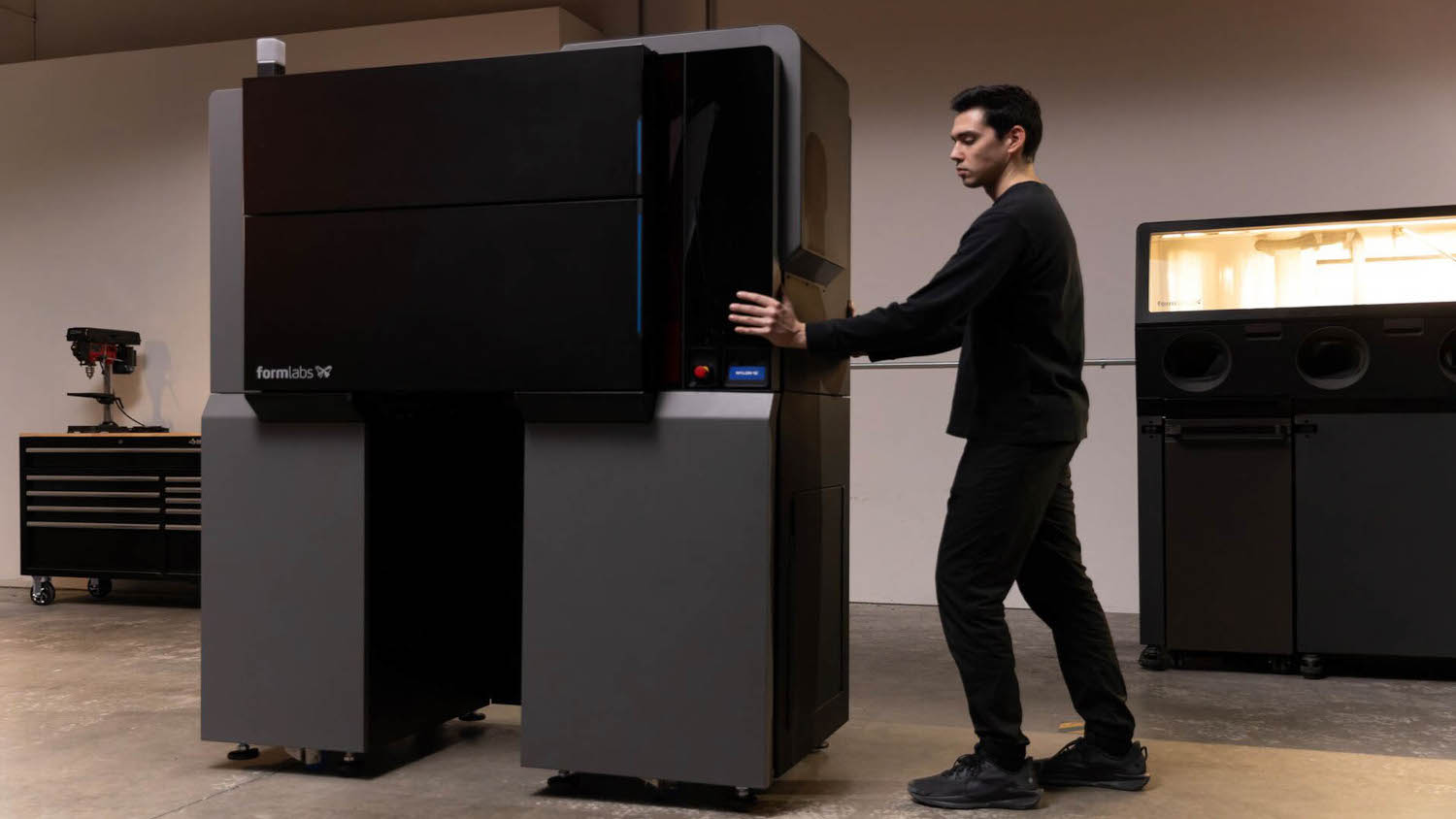
Formlabs is a brand familiar to many from its desktop SLA 3D printers and 2021 move into SLS with the benchtop Fuse models.
With software and a user interface with which many studios are already familiar, the Fuse X1 offers a comfortable route for those looking to increase throughput when compared to learning another software.
Yet the brand has more to offer than mere approachability, with Formlabs going after more established industrial PBF machines that are priced way beyond its own price bracket.
The company claims production-quality parts in under 24 hours with up to 50% lower costs per part and three times the throughput of comparable industrial powder bed fusion systems.
The Fuse X1 is, however, the largest system here, and once you factor in accommodation for the Sift X1 unpacking station, automated cleaning and polishing in the Fuse Blast unit, and any other postprocessing devices, the overall footprint is likely to be substantial.
Materials: Nylon 12, Nylon 11, Nylon 12 GF, TPU 90A (Open Material Mode allows any 1064 nm powder)
Software: Formlabs PreForm and Formlabs Dashboard for fleet management
Build chamber: 330 × 330 × 565 mm (Total: 61.5 litres)
Machine dimensions & weight: 1,570 × 830 × 1,930 mm, 570 kg
Build speed & layer thickness: ~1.5 to 2.2 L/hr, 110 μm
Price: Starts at $84,999 (approx. £63,499)
HP MJF 1200
HP’s MultiJet Fusion technology has demonstrated its chops at handling volume for over a decade and its original MJF machines are giant units built with service bureaux and contract manufacturers in mind.
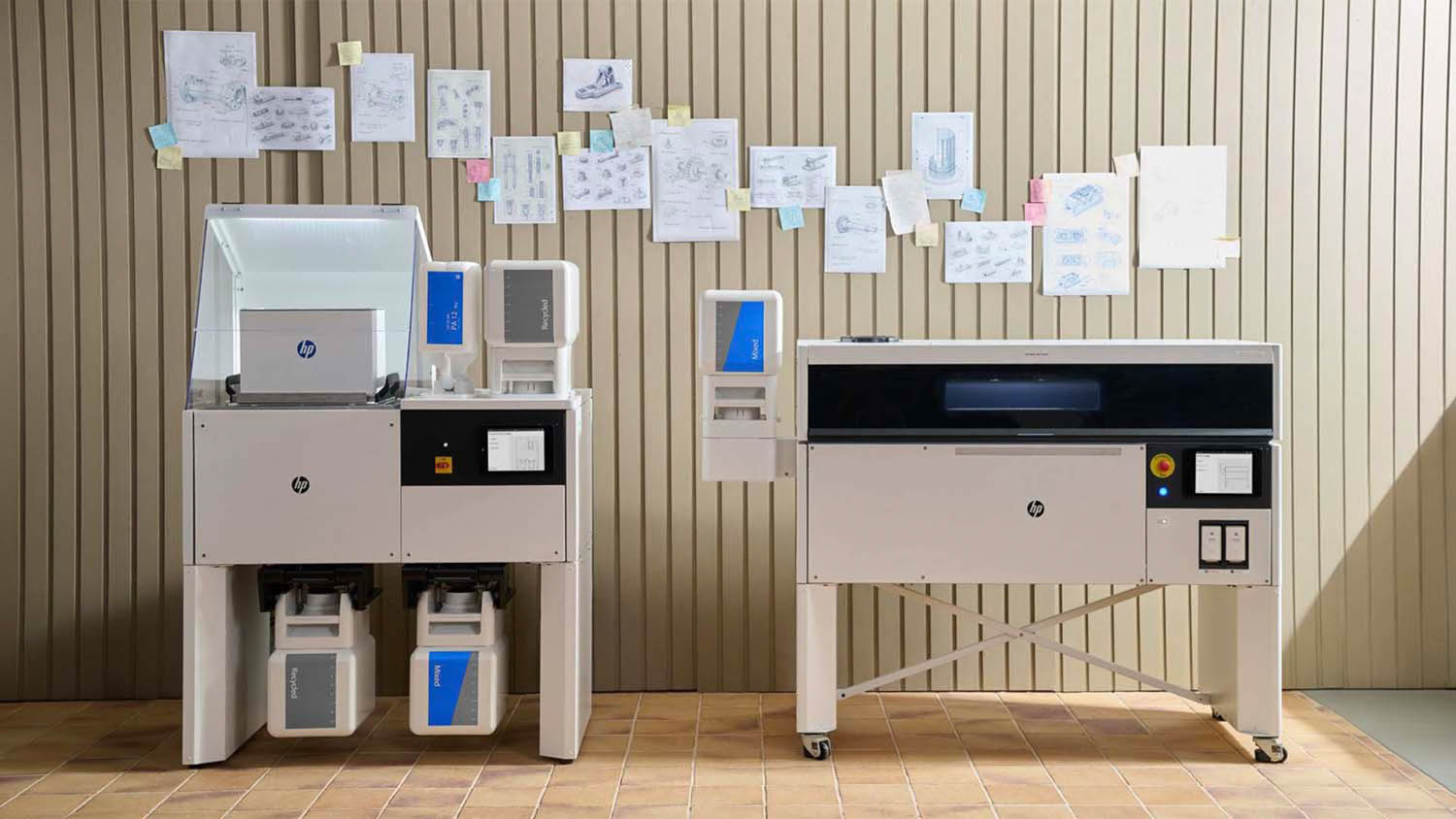
By scaling down its footprint to create the comparatively dinky MJF 1200, HP gives product design teams the chance to prove designs in-house and even run low volumes before outsourcing production to fleet providers or suppliers of traditional manufacturing services.
While HP’s industrial clout in this area is undeniable, the MJF 1200 package as a whole is still appealing to those unfamiliar with the technology. The software, developed for the MJF process by experts at Materialise, is easy to learn and comes bundled with the printer.
Unpacking takes place in an add-on MMS station, which uses vibration to clean off excess powder and automatically recover it, ready for reuse. While no machine dimensions are available at the time of writing, much of the marketing around the MJF 1200 envisions it in design studio environments, but as with all the kit featured in this article, buyers should plan for a full set-up to occupy significantly more space than the 3D printer alone.
Materials: EVONIK HP 3D HR PA 12 at launch, with more to follow
Software: Magics Print for HP by Materialise + HP 3D Center for fleet management
Build chamber: 320 × 165 × 230 mm (Total: 12 Litres)
Machine dimensions & weight: Not disclosed, although freestanding and benchtop options are available
Build speed & layer thickness: >1 L/hr, 80 μm
Price: Starts at sub- $60,000 (approx. £44,000)
Sinterit Bianco2
While Formlabs has scaled up and HP has scaled down, Sinterit has continued doing what it does best – small-format, open-material platform SLS machines for application flexibility, performance and good part quality.
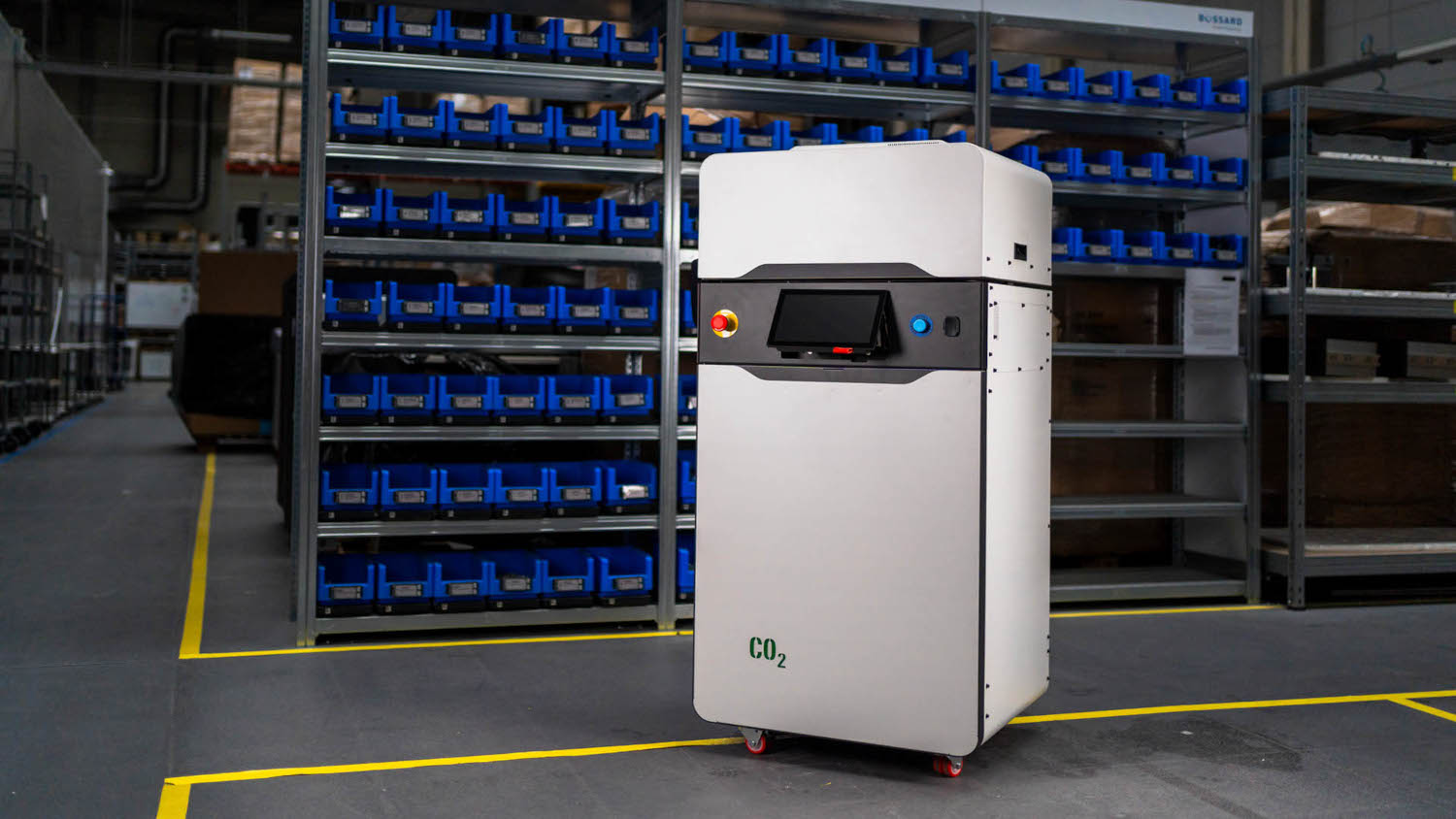
The company’s Lisa model has proven itself since its 2015 launch. Sinterit’s new 2026 model, the Bianco2, builds on that reputation. With access to 137 process parameters, users can fine-tune details and control the 30W RF CO2 laser at the heart of the machine, along with the four-zone heating capability that comes from 19 independent heating elements. All this helps manage temperatures and build packing density.
The Sinterit Studio software is free for setting up builds and nesting parts, but to unlock the full capabilities of the Bianco2 requires Studio Ultimate, adding €12,900 to the bill.
Post-processing is a similarly open choice: Sinterit offers its own Multi PHS capable of depowdering and powder refresh, but the company also suggests other third-party partner options on its website.
Materials: Full Open Parameters
Software: Sinterit Studio
Build chamber: 130 × 180 × 330 mm (Total: 7.7 Litres)
Machine dimensions & weight: 650 × 594 × 1330 mm, 150 kg
Build speed & layer thickness: ~1.5 L/hr, 125 μm
Price: Starts at €47,000 (approx. £40,000)
Advice from a PBF expert
Nick Allen is CEO at 3DPRINTUK, a London-based industrial 3D printing service bureau that specialises in rapid prototyping and lowto- medium volume batch production. Founded in 2011, the company is home to the UK’s largest capacity for polymer powder-bed fusion (PBF) 3D printing. He says:
“We’ve been an industry leader in PBF since 2011, producing over 1.5 million 3D-printed parts each year. This has given us the opportunity to extensively evaluate the PBF systems available today, including the growing number of entry-level machines that have recently launched or are due to launch in the near future. 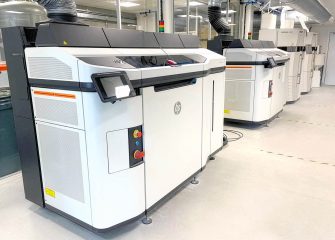
Much like the wider 3D printing industry, navigating the range of PBF technologies can be a minefield. When researching, it is important to fully understand what you are purchasing and how its capabilities align with your requirements.
First, it’s important to understand that not all PBF technologies produce comparable results. The best advice we can give is to fully understand what you are purchasing and which parts of the process it actually covers, with post-processing being particularly important.
For example, do you want to manually remove trapped powder, dye parts or improve their surface finish? What may initially appear to be a relatively simple investment can quickly grow once additional equipment and processes are factored in, sometimes significantly increasing the overall cost.
Without fully understanding these requirements, the process and final results may not be quite what you expect. There are always more purchases to think of when getting started, and a handful of our customers have certainly found this to be the case when attempting this themselves.
That said, some customers who have brought the tech in-house have remained amongst our best customers. They generally use their own machines for prototyping and smaller, less-critical batches that require little to no surface enhancements.
We don’t see these entry-level machines as a threat to our services. If anything, we believe they will create more gateways towards partnering with us for larger production orders, where even lower unit costs can often be achieved.
They are a great way for businesses to get started with additive manufacturing, but are less suited to those looking to scale up and operate as a competitive manufacturing service.
With our experienced team, unique RAMP calibrations, ISOcontrolled processes, rigorous maintenance and quality assurance, additional postprocessing services, bespoke software and the scale at which we operate, we provide a level of manufacturing efficiency and consistency that is difficult to replicate internally, while remaining competitively priced against the cost of operating these machines in-house.
If you are considering investing in one of these entry-level machines, it is important to keep the end goal in mind. Whether that is SLS, PBF, or ultimately injection moulding, choosing a technology that aligns as closely as possible with the next stage of production can help minimise redesign work and provide a more natural route towards higher volume manufacturing.”
In-house considerations
Support-free geometry: Unlike FDM or SLA 3D printing, unfused powder in the build chamber acts as a natural support material in SLS, letting you nest and stack multiple parts into the chamber and maximise build-volume packing and efficiency. These benefits largely come down to the software coupled with the hardware’s ability to manage situations like heat build-up.
Support and staff : Having local support is huge if you want to maximise uptime and machine value. However, some industrial SLS machine support contracts cost between 10% and 15% of the machine’s purchase price annually – and that’s before callout fees and spare parts. Be sure to ask the right questions from your vendor about what they offer for machines at this smaller scale, and consider carefully the amount of automation you rely on. More labour-intensive processes mean more hours operating the machine and doing post-processing work, while fancy automation features might require more complex maintenance plans.
Environment and ventilation: While these models are designed for studio or workshop placement, proper adherence to powder safety equipment, PPE and guidelines are necessary to protect you and others.
Clean-up: SLS printers require a system to remove unfused powder and clean off the surface of parts, as well as clearing any blocked channels or holes. Companion systems can be purchased from each vendor, but also consider third-party options that might offer better value.
Finishing: SLS parts can undergo additional processes to improve surface finish, seal its surface and add greater part strength, either via a vibratory polishing process or chemical smoothing. The Dyemansion VX1 and AMT PostPro SFX are both compact chemical smoothing units designed for smaller build volume machines.
Colour: Depending on the 3D printer, users can opt to use coloured powders, but more accurate finishes can be attained by dyeing parts once printed. The Dyemansion DM60 is an automated colouring system capable of 170 standard colours via preformulated cartridges and can even use your own formulations.
This article first appeared in DEVELOP3D Magazine
DEVELOP3D is a publication dedicated to product design + development, from concept to manufacture and the technologies behind it all.
To receive the physical publication or digital issue free, as well as exclusive news and offers, subscribe to DEVELOP3D Magazine here