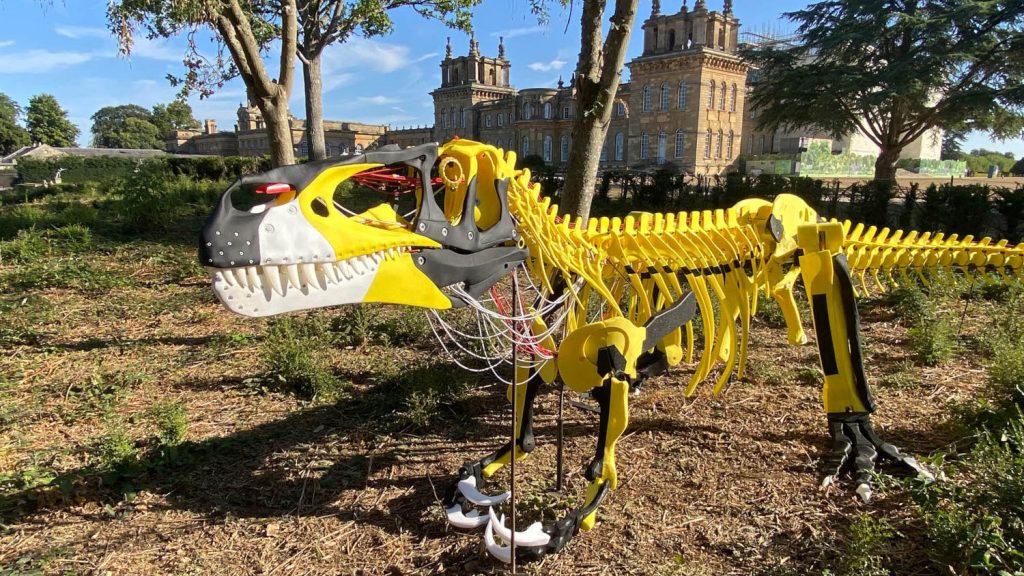

The ‘Dinosaurs are Forever’ exhibition, held at Blenheim Palace this year and curated by artist Jay Jay Burridge, has been a showcase for smart use of 3D printing, as well as the power of combining art and engineering, as Gabrielle Brown reports
In February 1824, English geologist and theologian William Buckland officially described and named the Megalosaurus (meaning ‘great lizard’) at a meeting of the Geological Society of London, using jaw and limb fossils unearthed in a limestone quarry near the village of Stonesfield in Oxfordshire.
While the word ‘dinosaur’ did not yet exist, and other Megalosaurus bones had previously been discovered in the same area around a century and half earlier, Buckland’s presentation is widely recognised as the first scientific naming of a dinosaur.
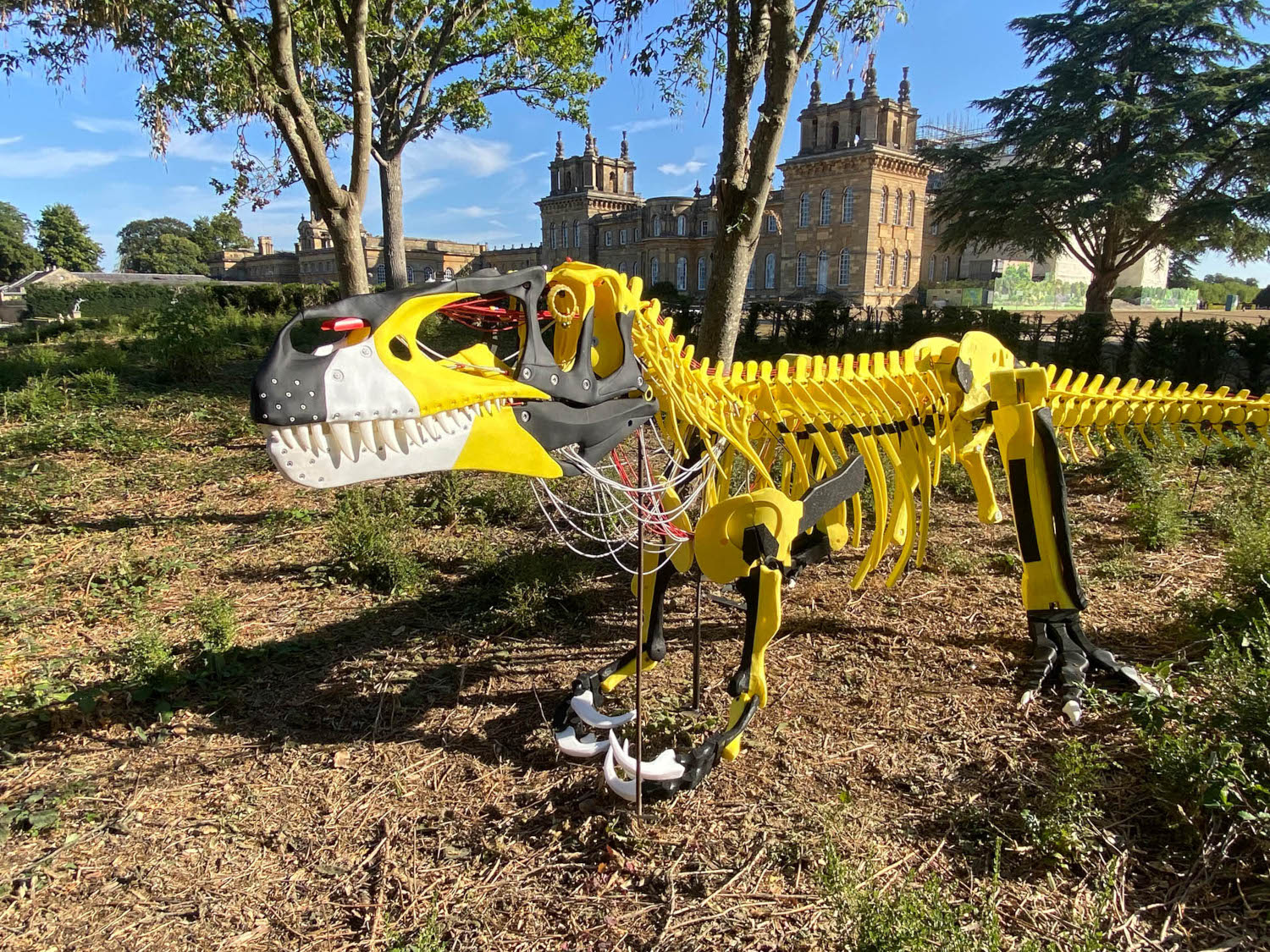
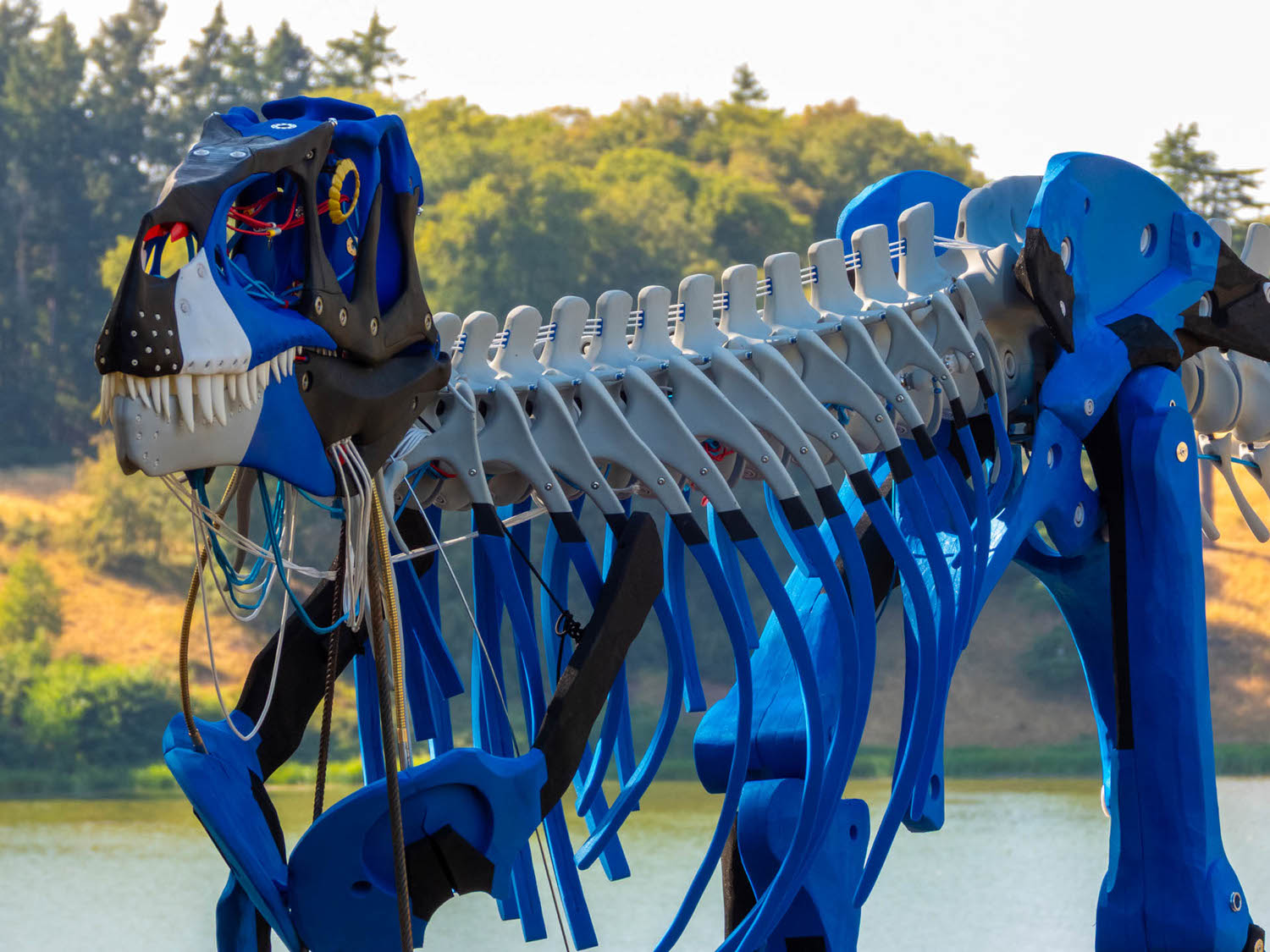
More than two centuries on, Oxfordshire’s Blenheim Palace has this year played host to no fewer than five lifesize, 9-metre Megalosaurus skeletons in its ‘Dinosaurs are Forever’ exhibition, which celebrated its home county as the birthplace of dinosaur science.
The exhibition was curated by British artist Jay Jay Burridge, former presenter of beloved children’s art TV programme ‘SMart’ and a man known for his inventive use of materials to create art. Combining art, science, engineering and storytelling, Dinosaurs Are Forever has reimagined what dinosaurs might have been like if shaped by today’s technologies.
Prehistoric prints
During Burridge’s many years of creativity, 3D printers have become as accessible to artists as the best paints, he says, “so, for me as an artist, it feels like I’ve been reborn again and I have a whole new way of looking at making art.”
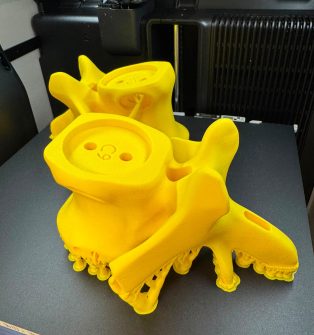
In the case of the five Megalosaurus skeletons at Blenheim Palace, created by Burridge’s Future Fossils studio, the ‘bones’ were printed in just over seven weeks at Gerard Shields at Printpool Additive Manufacturing in Oxford.
Another key contributor to the project was Dr Matt Demsey, a musculoskeletal biologist, vertebrate palaeontologist and scientific illustrator/modeller who worked alongside Burridge as he developed a new, scientifically informed reconstruction of the Megalosaurus using visualisation software Blender. The 3D model was based on original fossil material, combined with evidence from its closest known relatives – something that had never been done before.
“I stylised them to make them look very modern and futuristic, so I said to myself, ‘Really, we should be making them out of the most modern and the most upto- date materials and making methods possible’, and so I knew that I had to use 3D printing,” explains Burridge.
That realisation prompted him to set up a meeting with Gerard Shields at Printpool. An email containing the word ‘dinosaurs’ in its subject line is generally a good ‘door-opener’, he jokes.
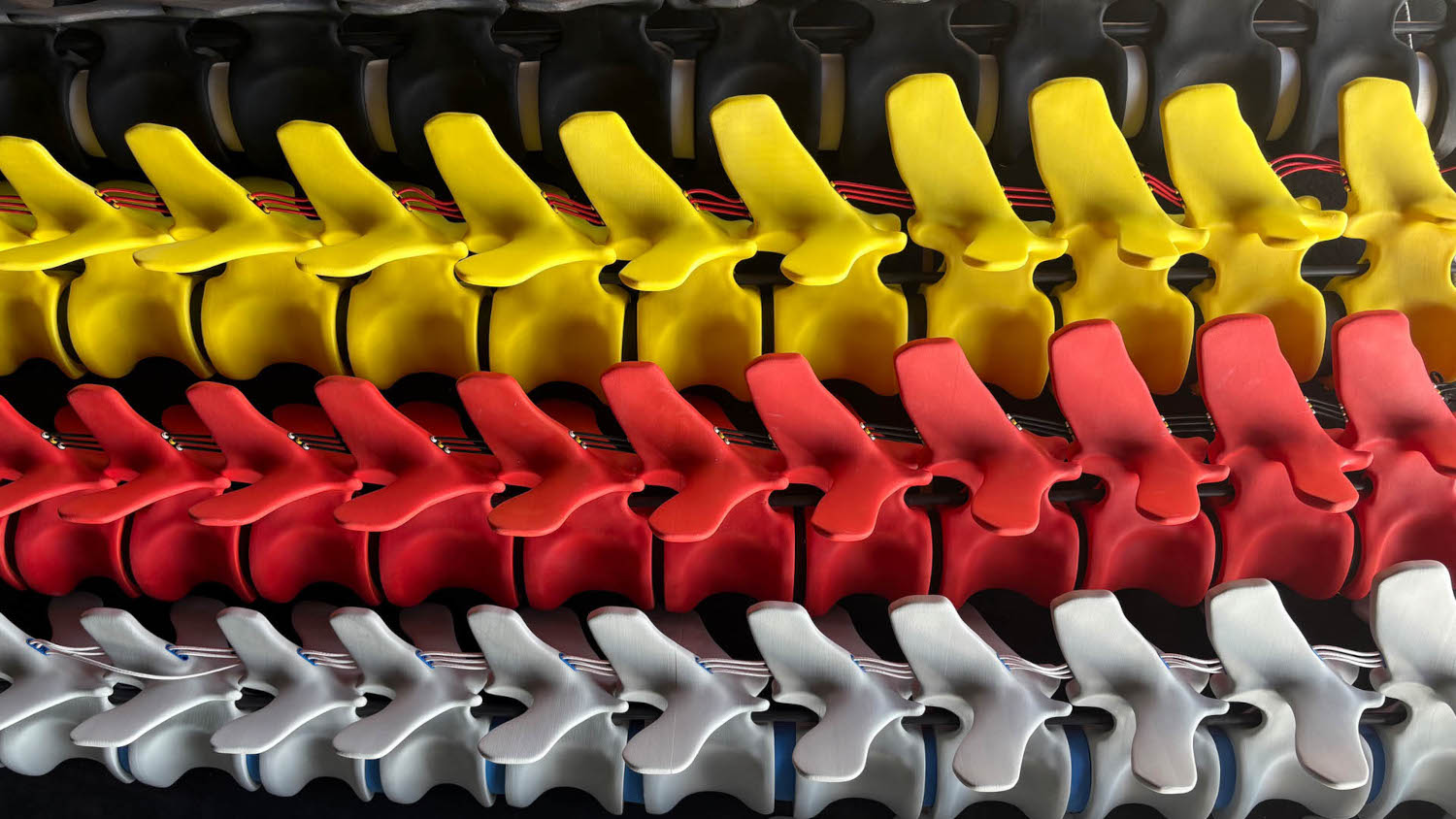
With introductions made, a number of challenges soon came to light, according to Shields. “Jay had a list of problems – like mechanical problems. How are we going to get this [part] to fix to this? How are we going to have this to behave the way we wanted to? How are we going to have the detail and get the spinal column to flex and bend when these parts are in their final positions?”
The original 3D model needed to be adapted to make it suitable for 3D printing. Shields made modifications to create flat surfaces and avoid the need for supports during the printing process. “We used 3D printing at that stage just as much as for the final version. This was still an R&D project at that point,” he says.
Scale models were developed to give Shields and Burridge a chance to play with different materials and mechanisms, exploring not only how the dinosaurs would look visually, but also experimenting with methods for stringing the ‘bones’ together. In the end, bungee cords were used to provide the tension between each bone, mimicking the way that ligaments would have held Megalosaurus bones together 166 million years ago.
Dinosaurs are forever
Once the plan for producing the five dinosaur sculptures had been formulated, Gerard Shields turned to 3D printer company Bambu Labs in order to increase Printpool’s capacity to 14 machines, which ran around the clock for seven weeks.
Each sculpture is built around a lightweight articulated framework, with every bone individually designed and either 3D-printed using ABS-GF filament, or carved by hand using foam, ensuring that each skeleton could balance on two legs.
At the time of writing, Dinosaurs Are Forever has just a few weeks left to run, with the exhibition set to close on 1 November 2026. Since it opened in early August, the sculptures have had to contend with the hottest summer on record, as well as the more typical wind and rain of a UK autumn.
That they have stood up to these environmental conditions, while continuing to delight Blenheim Palace visitors, is a real tribute to the work and planning done by Burridge and Shields. It’s also a great showcase for the beauty and innovation that can occur when engineers and artists work together.
This article first appeared in DEVELOP3D Magazine
DEVELOP3D is a publication dedicated to product design + development, from concept to manufacture and the technologies behind it all.
To receive the physical publication or digital issue free, as well as exclusive news and offers, subscribe to DEVELOP3D Magazine here