
Starting with prototyping, but quickly moving on to the production of tooling and fixtures for manufacturing and assembly, Husky Corporation now anticipates a time when it will use 3D printing to create end-use parts, as Gabrielle Brown reports.
Husky Corporation, based in Pacific, Missouri, has been designing fuel dispensing products – nozzles, hoses and assemblies – since 1947, starting with the first nozzle guard to protect vehicles during refuelling.
The company’s achievements over the intervening eight decades include a range of other industry-first designs that have since become common fixtures in modern filling stations, including hold-open latches and break-away valves.
The company has been innovative in its use of 3D printing, too, adopting the technology way back in 2009. At first, Husky used 3D printing for producing prototypes, before moving on to tools and fixtures for manufacturing and assembly, using a ProJet 6000 SLA 3D printer from 3D Systems.
“The materials available made it perfect for rapid prototyping, but were not compatible with actual end use involving the fuels we deal with. But when I came in as quality manager, I also incorporated the production of tools and fixtures, leveraging the digital nature of the CAD data to make reverse images of a part into a tool that just fits like a glove. This is a huge advantage,” explains Husky vice president of engineering and quality, Steve Baynham.
“We would get a new part coming in, and we would need to get it inspected for quality but without a fixture to measure it. It is so much faster to 3D print that fixture, and even if it’s just for temporary use, it makes a whole world of difference for checking parts quickly, cheaply and accurately.”
Expansion plans
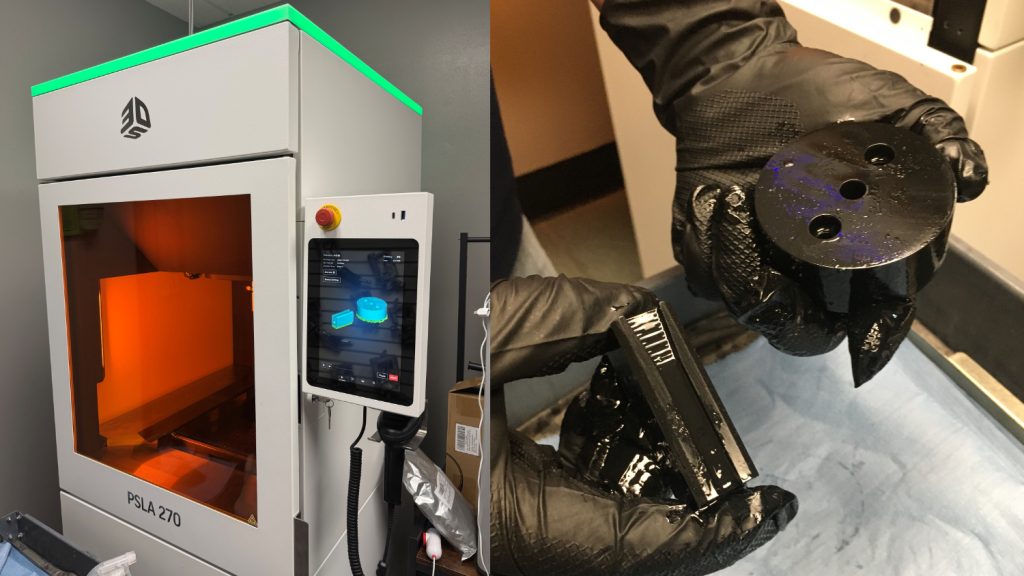
In 2025, a new printer was needed at Husky, due to its expanding use of 3D printing. The resin-based 3D Systems PSLA 270 has a bigger build size over Husky’s existing ProJet 6000 machines. Its pixel-based projection technology integrated with the buoyant, non-contact precision of SLA meant the Husky team could now 3D print even faster while still having the accuracy of SLA.
“The PSLA 270 excels at speed to print, accuracy and also uses the 3D Sprint software, which we like,” says Baynham. The PSLA270 arrived at Husky with a ready-made materials portfolio, most developed for 3D Systems’ Figure 4 materials, broadening the portfolio and enabling Bayham and the team to do more.
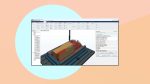
The 3D Sprint print preparation software is used across all 3D Systems polymer 3D printers, which meant that the team could continue using what they already knew and were comfortable using.
“3D Sprint does just about everything I need and makes it easy,” says Husky engineering support specialist Scott Blankley. “You drop a file in, hit ‘Autoplace’, and it will select the best position for the data. If you want multiple copies, you hit ‘Copy’ and the number of copies you want will be placed. It’s pretty neat!” he explains.
In the future, the team at Husky envisions researching eggshell mould creation using the PSLA 270, as well as ultimately being able to produce end-use parts as new 3D Systems materials become available with further chemical resistance for working with fuels.