
Commercial and industrial drones endurance is being constrained by battery life. Gabrielle Brown learns how SunCubes’ deployment of SimScale’s Engineering AI can solve this mission-critical challenge
Drones and Unmanned Aerial Vehicles (UAVs) can be used in sectors from construction and agriculture to public safety and emergency response, but there’s a problem: battery performance and powertrain technology are limiting range and endurance.
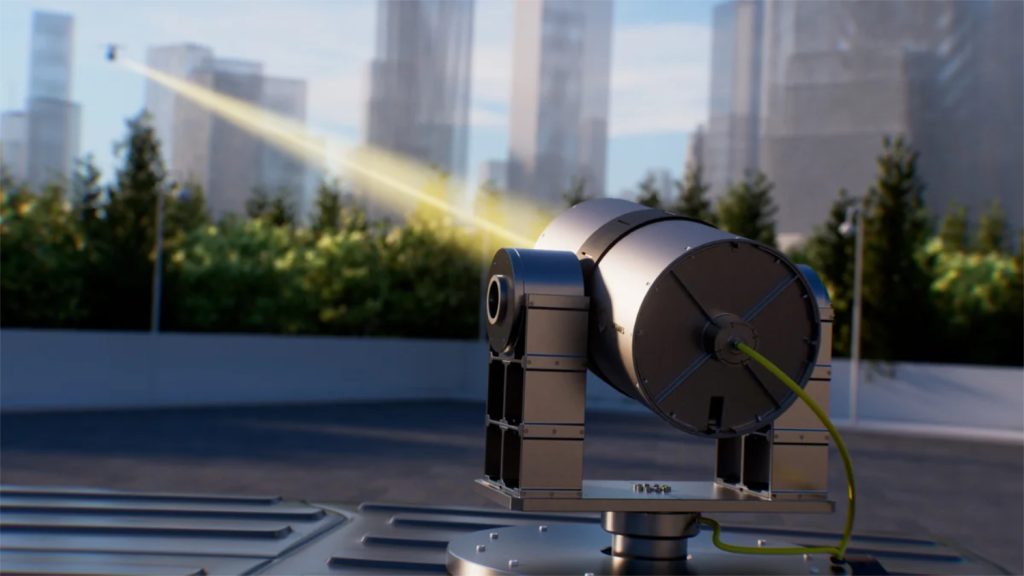
SunCubes is a deep tech company aiming to address this by developing laser-based wireless power transmission using SimScale’s Engineering AI to design and validate systems that let drones and UAVs recharge in flight or at remote stations without physical contact.
Agricultural drones, for example, need their batteries swapped manually, wasting valuable time for farmers.
With the industry looking to almost double its value from $24.4 billion in 2025 to $52.1 billion in 2033 across energy, infrastructure, agriculture, logistics, construction and security, solving this challenge is imperative.
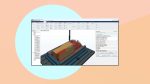
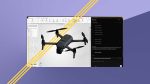
SunCubes’ engineering team is using SimScale’s cloud-native simulation platform, including its AI-powered agentic simulation, to support the design and validation of its UAV systems and wireless energy transfer hardware.
“Simulation is not a support function for us – it’s how we build,” says SunCube chief innovation officer Davide Russo.
Simulation is central to the product development process, enabling the team to evaluate the thermal, structural and aerodynamic performance of its advanced drone architectures without the time and cost constraints of physical prototyping.
“SimScale gives us the capability to run complex, multiphysics analysis on our UAV designs and energy transfer systems in the cloud, with AI that helps us set up and interpret simulations faster than ever.
“For a team our size, this means we’re not blocked by inadequate tools and can move at startup speed, which is critical to our success,” adds Russo.
While the process is still in its early stages, this announcement marks a step towards not only solving a critical challenge but also pushing the boundaries of what simulation and AI can achieve.