
This summer, DEVELOP3D visited New Designers, the UK’s leading graduate design event, to pick out the five entrants who impressed us the most with their clear thinking, design skills, grasp of technology and excellence in execution.
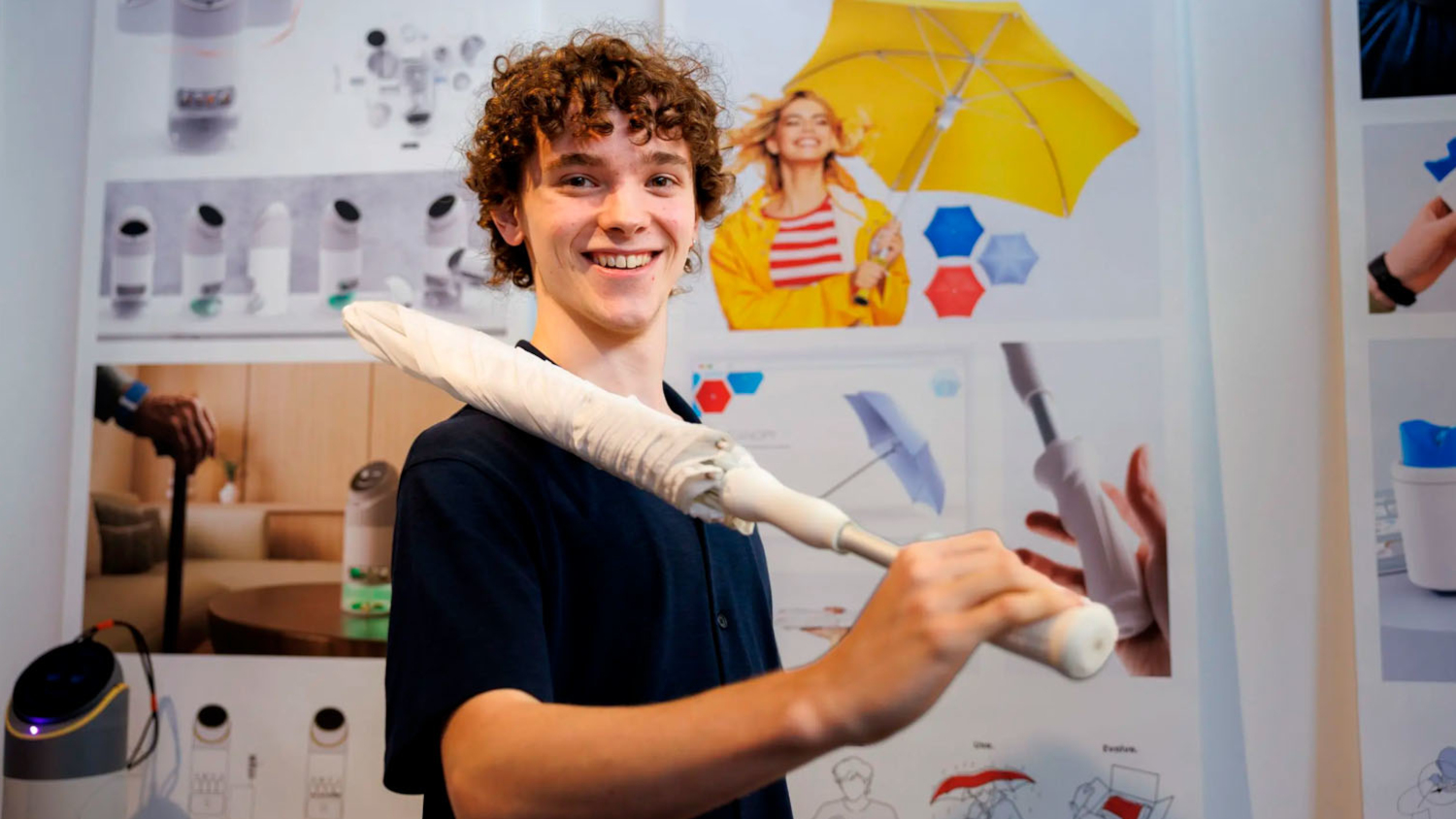
Our overall pick – Canopy, Tom Price – University of Leeds
Canopy is a modular, customisable, repairable and fully recyclable umbrella, which enables users to express themselves and their commitment to the environment. The design supports future colourways, branded tie-ins and end-of-life reassurance.
Sustainability is the fundamental principle behind Canopy. Tom Price’s design decisions were guided by an evaluation of their environmental impact and the umbrella makes use of recyclable components and a fully modular architecture to make repairs easier. Likewise, manufacturing processes were selected with the goals of waste minimisation, scalable production and non-destructive disassembly when the product comes to the end of its usable life.
Tom Price’s research involved identifying the root causes of waste, rather than simply substituting materials. He also studied consumer habits and how personalisation might add value to the umbrellas, as well as how people interacted with the product’s modular engineering.

What we liked
Tom grabbed our attention right from the start – he was literally the first person we met as he welcomed us to the University of Leeds booth at New Designers. As well as being personable, he was able to offer considered and detailed responses to questions about his project: why he’d created Canopy, what he had learnt along the way and how he sees the product evolving, as well as the business model behind it.
He was able to demonstrate some great technical models, CAD designs and renders, not to mention a full bill of materials and brand website. What Canopy represents is an entirely fresh and original reimagining of a familiar, tried-and-tested object.
Post-graduation plans
Tom Price will be taking a role as a product designer working for Ocean Infinity on maritime robotics for data collection www.linkedin.com/in/tompricetp
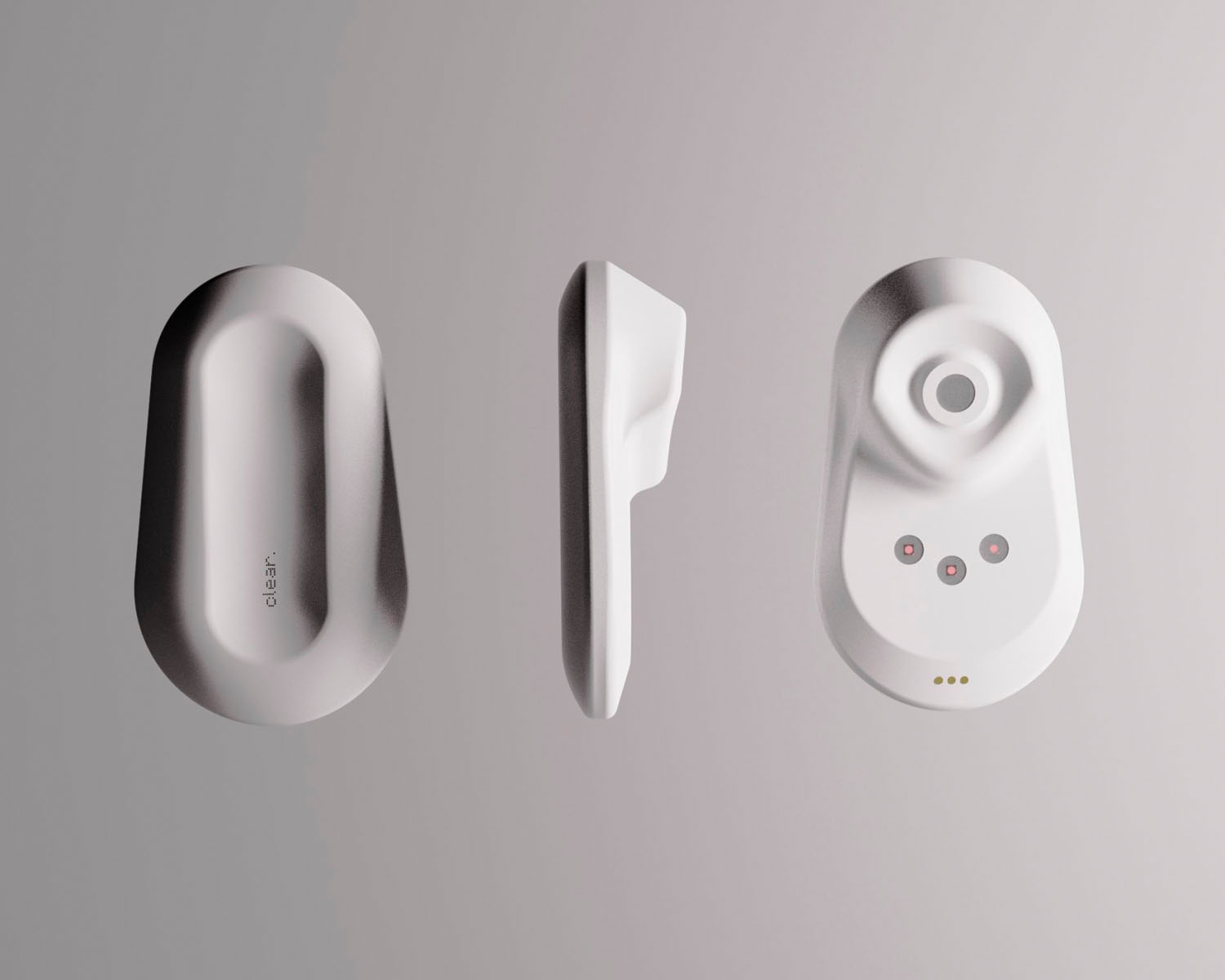
Clear, Joshua Bragg – University of Sussex
Clear is a health monitoring device designed to bring visibility and insight to a patient’s condition in the immediate aftermath of a concussion and subsequent recovery period.
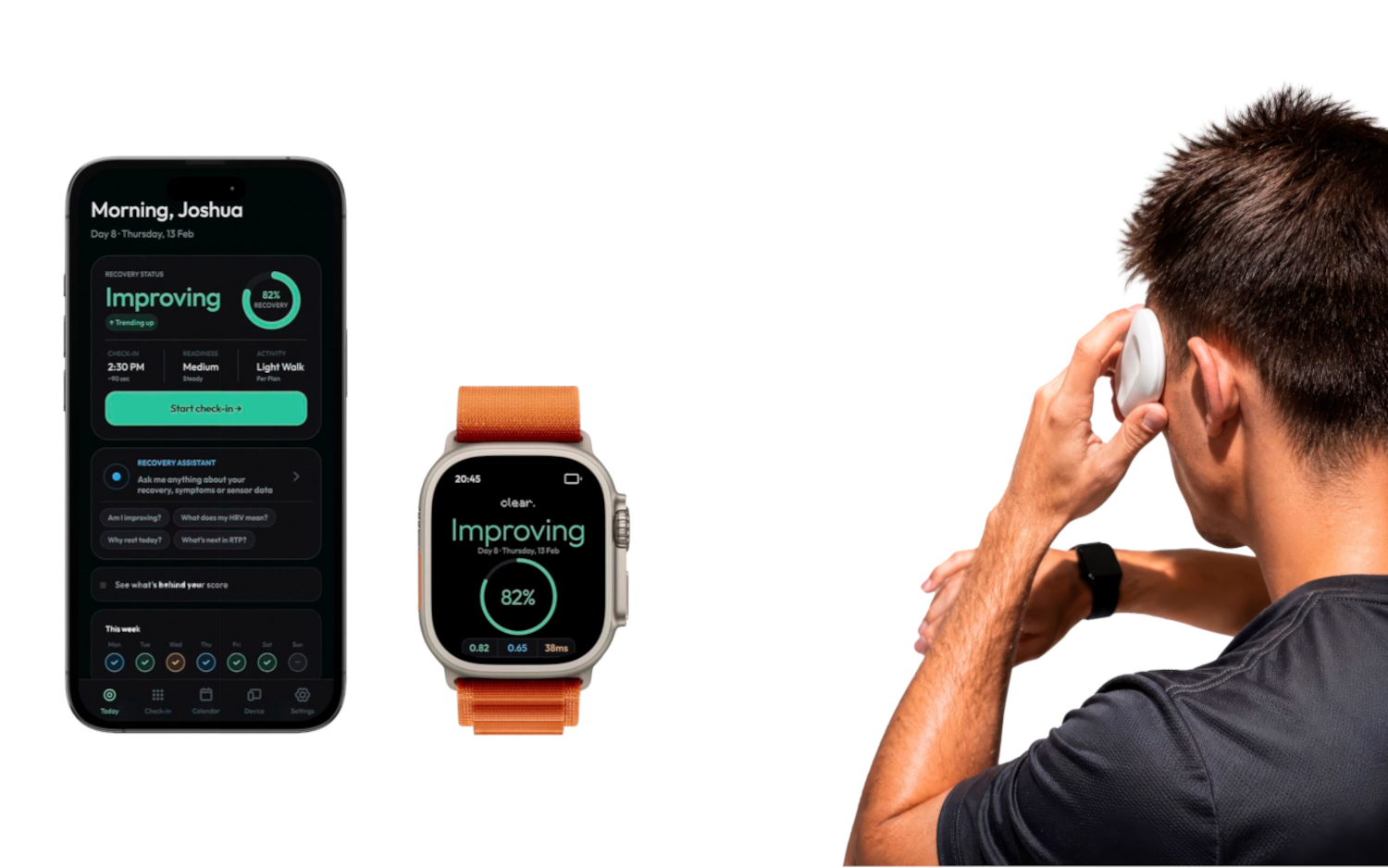
Currently, this can be a subjective process. Joshua Bragg set out to identify conclusive pointers and build a product capable of tracking three important sources of information: the brain, the eyes, and the autonomic nervous system. The goal is to give athletes, along with coaches and clinicians, a clearer view of how the body is recovering after a head impact or injury and to support safe return-to-play decisions.
Compact, foolproof and connected, Bragg’s working prototype is impressive, with cameras to monitor the eyes and sensors connecting with the temple when held in place. A clear link between the product design and a smartphone app shows how this data is used and the guidance it offers.
Post-graduation plans
Joshua Bragg is taking a role as a UX Designer for RES, one of the world’s largest independent renewable energy companies www.linkedin.com/in/joshua-bragg-335351292
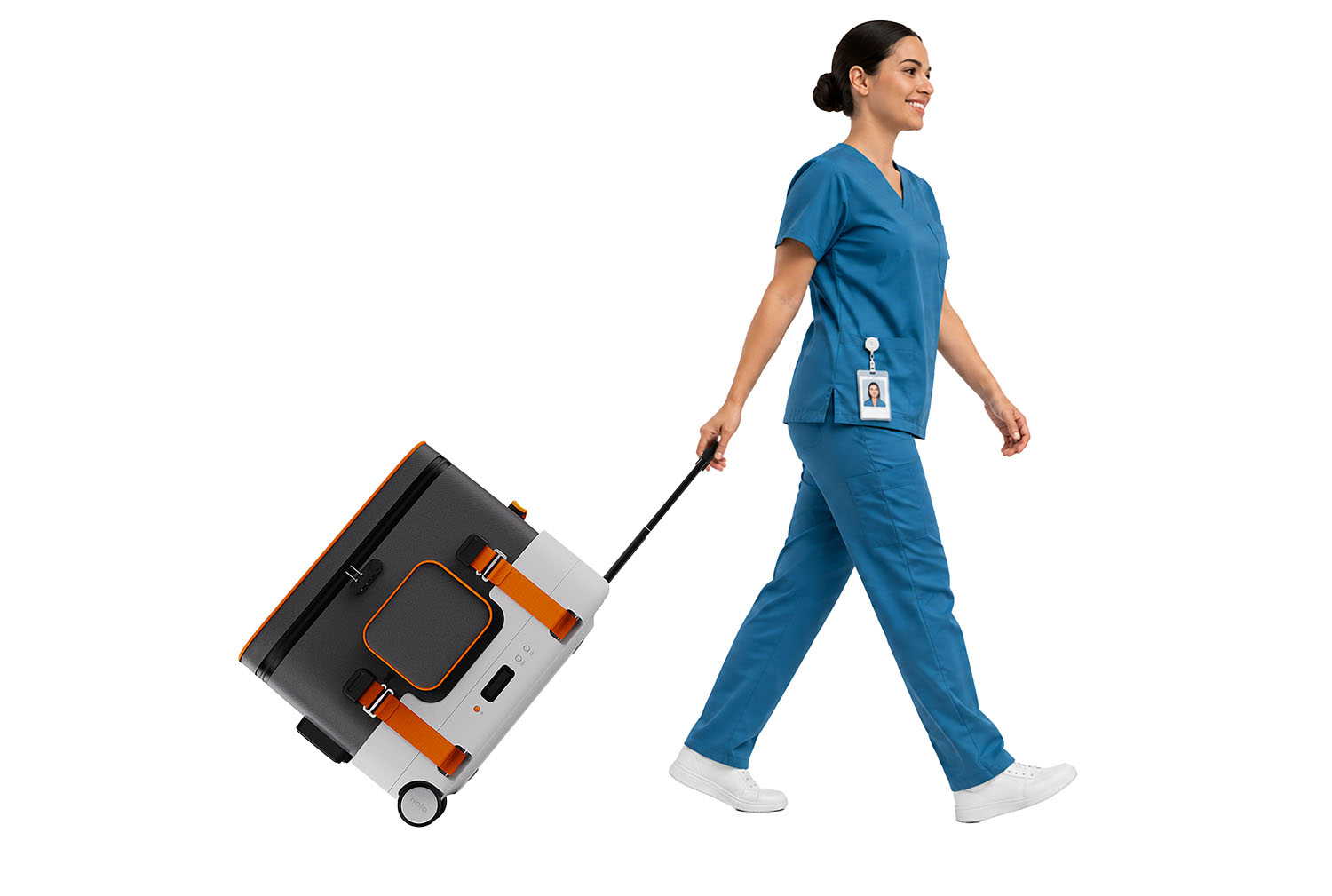
Nata, Samuel Collins – Sheffield Hallam University
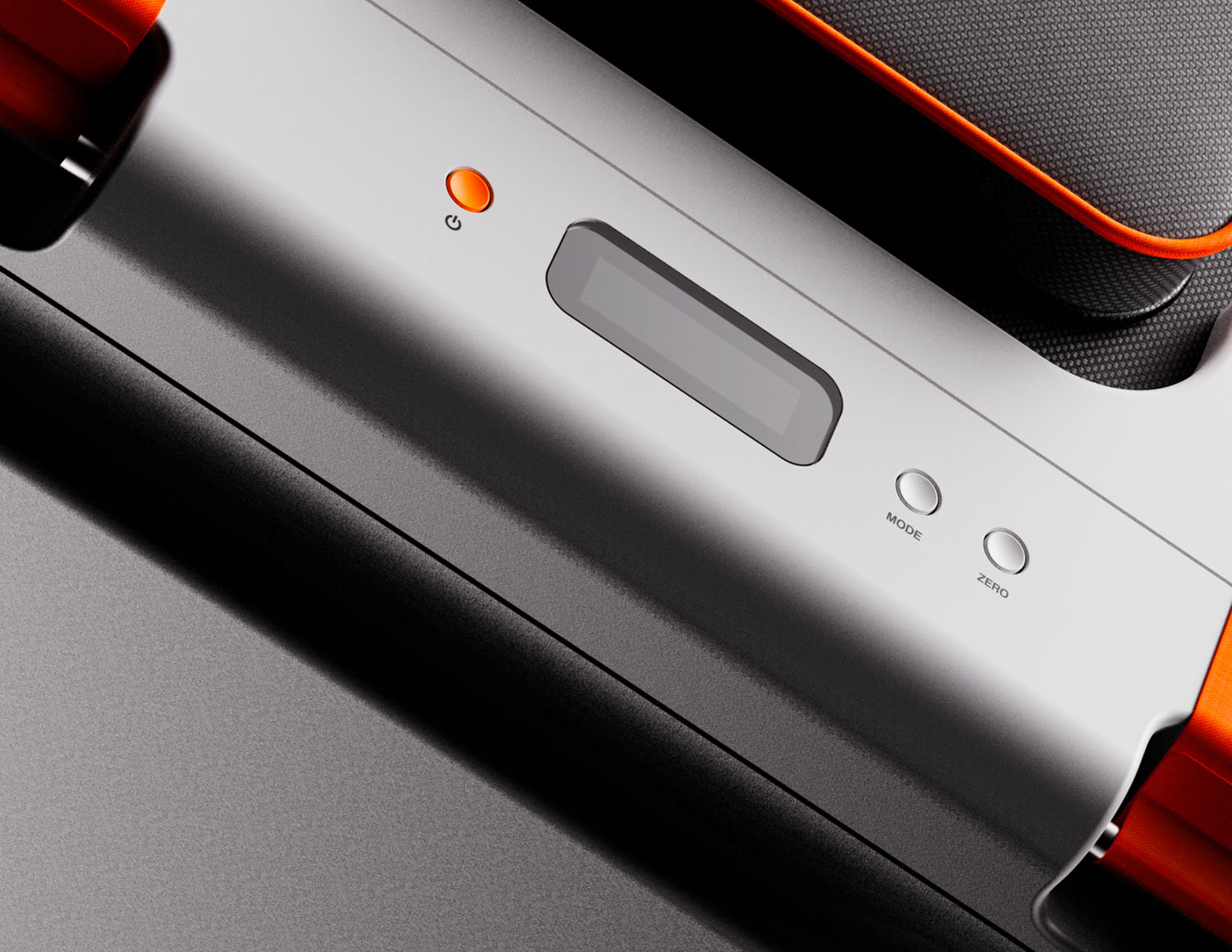
A modular community midwifery kit, Nata has been designed to reduce the physical and cognitive workload associated with carrying, organising and using essential equipment during home visits to new mothers. These appointments are typically short, and valuable time is often wasted setting up, packing away and organising equipment, instead of focusing on patient care.
Samuel Collins’ clever design packs everything into a modular set-up, from bulky oxygen canisters to a set of integrated weighing scales. His research went further than what’s included in the bag, but helped him to focus on optimal workflows and the many pressures faced by community midwives.
Iterative prototyping helped build the functionality of Nata with continuous user feedback refining both the product architecture and user experience. Designing and building a product that incorporates a number of soft goods added to the challenge. We were extremely impressed by the project and the high quality of the 1:1 prototype on display at New Designers.
Post-graduation plans
TBC www.linkedin.com/in/samuel-collins-1512182a1
Unopod, Millan Minter – Aston University
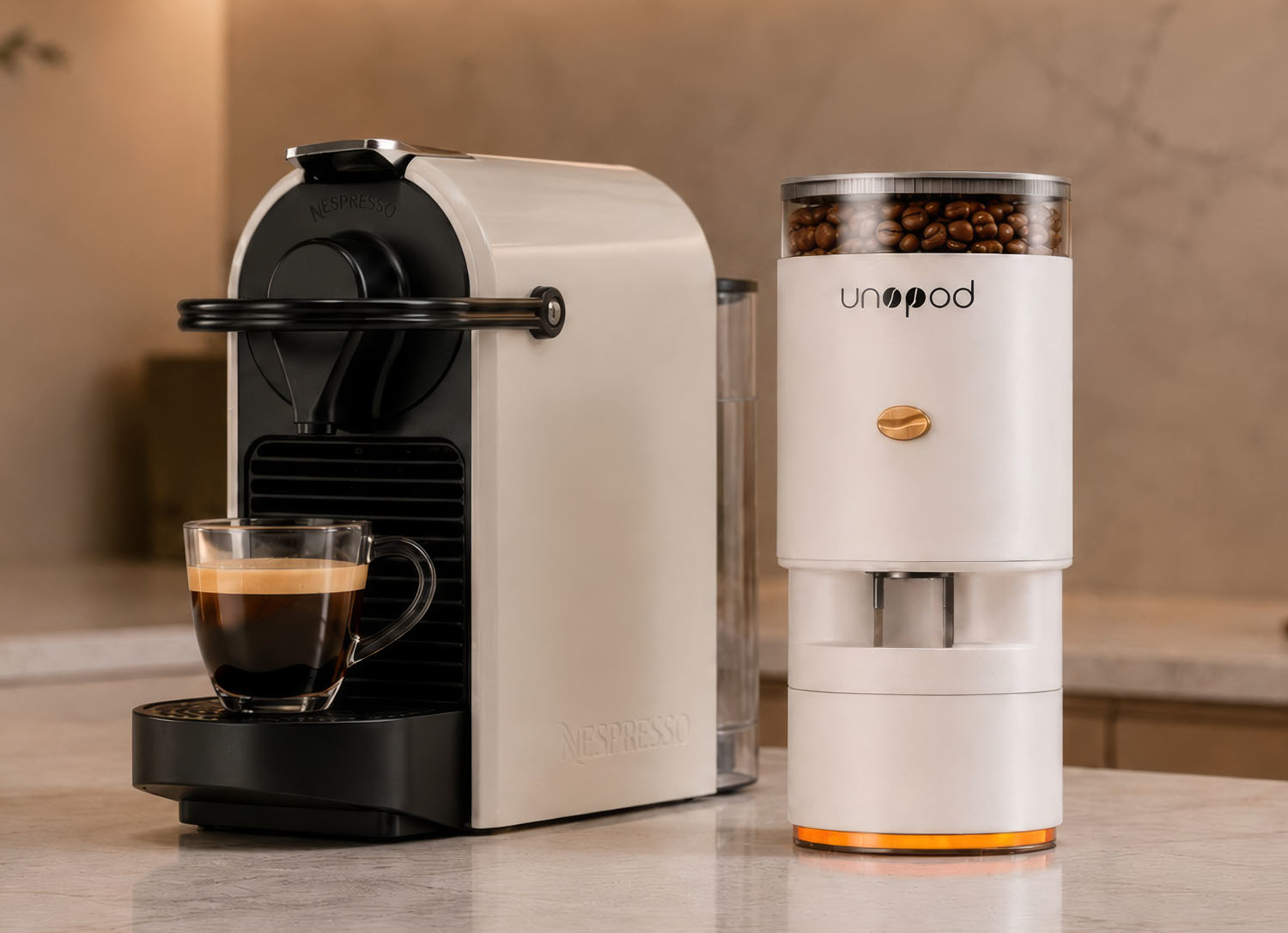
Coffee capsule machines are popular with consumers for their speed and convenience, but disposable pods generate unnecessary waste, often tie the consumer into a particular brand, and come with a significantly higher per-cup cost. Reusable capsules, meanwhile, can be messy and inconvenient.
Intrigued by this situation, Millan Minter created UnoPod, a device that automates the preparation process for reusable capsules by grinding a precise, single serving of fresh coffee and feeding it directly into the capsule in one simple action.
Having carefully considered form and function, Minter designed and built a UnoPod working prototype that makes a neat addition to any kitchen countertop. Along the way, he drew on his own knowledge and experience, having supported his studies while working for a coffee roasting company, confident that demand for such a product was ready and waiting.
What really interested us was Minter’s in-depth research, which saw him testing and tearing down existing grinders to find weak points, compare flat and conical burr grinders, calculate costs and figure out the perfect dose weighting. The results of that diligence speak for themselves, in the form of a machine to please coffee fanatics and casual users alike.
Post-graduation plans
TBC www.linkedin.com/in/millan-minter-71446b297
Re-Warm, Rupert Murphy – Bournemouth University
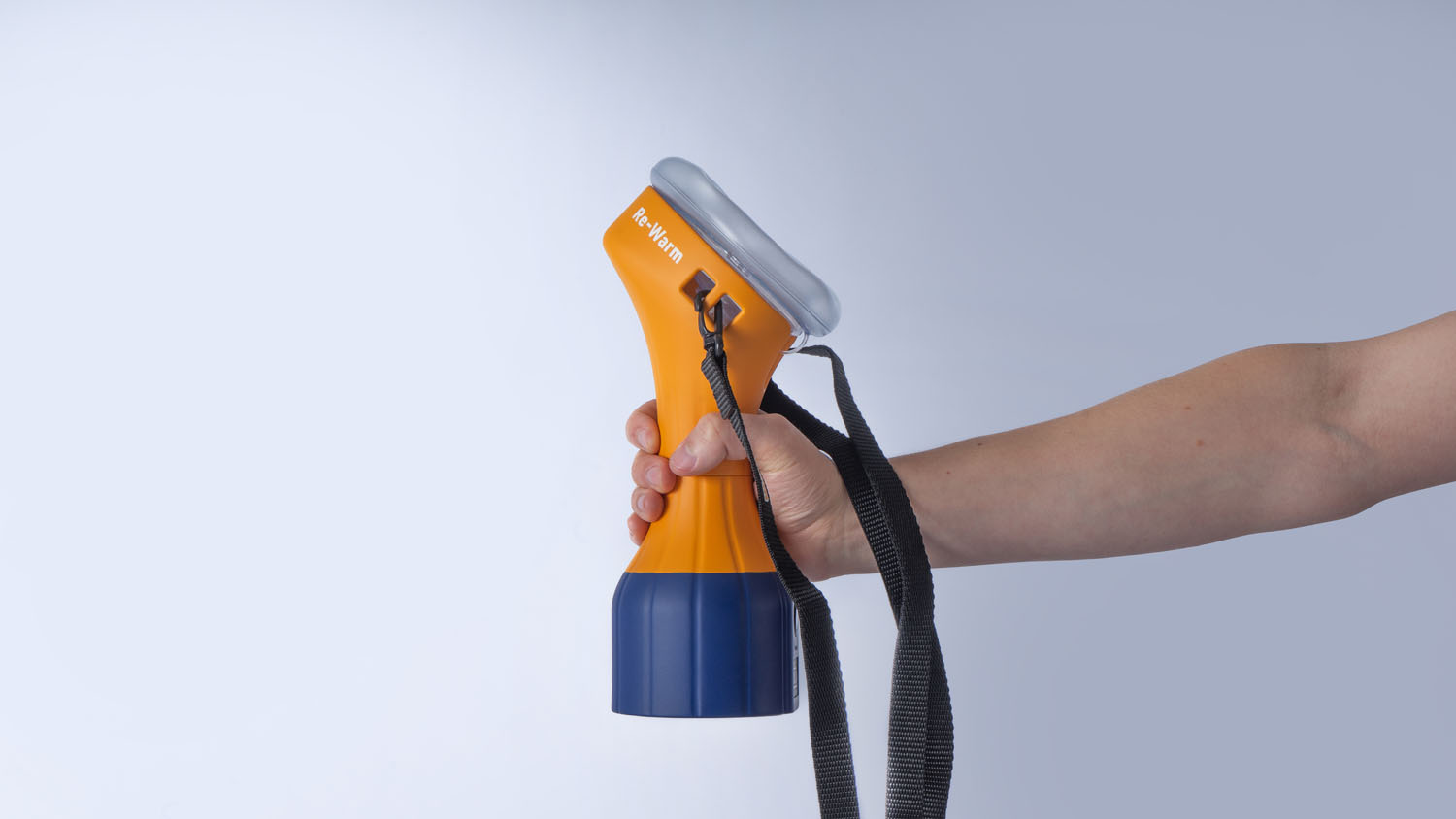
Re-Warm addresses a gap in the first aid treatment of cold-water immersion. While rescue services can insulate casualties with thermal blankets, few practical methods exist for active rewarming to stave off hypothermia before they arrive at a hospital.
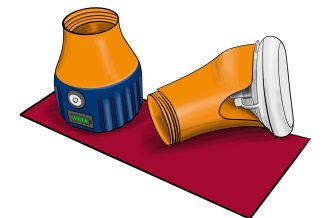
Designed to be used by lifeboat crews, the Re-Warm device delivers warmed, humidified air to reduce respiratory heat loss and initiate active rewarming during this critical period.
Rupert Murphy became interested in the topic of how a body warms after cold-water immersion as a direct result of his year-round surfing hobby, which gets him into the sea even during the winter months. In collaboration with the RNLI (Royal National Lifeboat Institution) in Poole, Dorset, he created a product with real-world impact for RNLI crews working in tough conditions. This involved defining an intuitive, one-button interface, wireless charging, four-position bayonet fitting and removing all unnecessary components.
Murphy’s impressive ability to tap into iterative prototyping and user feedback are all reflected in the way that the Re-Warm’s water reservoir, heating system, electronics and battery are integrated in a compact, ergonomic and reliable product.
Post-graduation plans
TBC www.linkedin.com/in/rupert-murphy-68b848294
This article first appeared in DEVELOP3D Magazine
DEVELOP3D is a publication dedicated to product design + development, from concept to manufacture and the technologies behind it all.
To receive the physical publication or digital issue free, as well as exclusive news and offers, subscribe to DEVELOP3D Magazine here