
Inside the helicopter division at European aerospace giant Airbus, digital transformation is getting a vertical-lift boost from Dassault Systèmes’ Simulation Process and Data Management (SPDM)
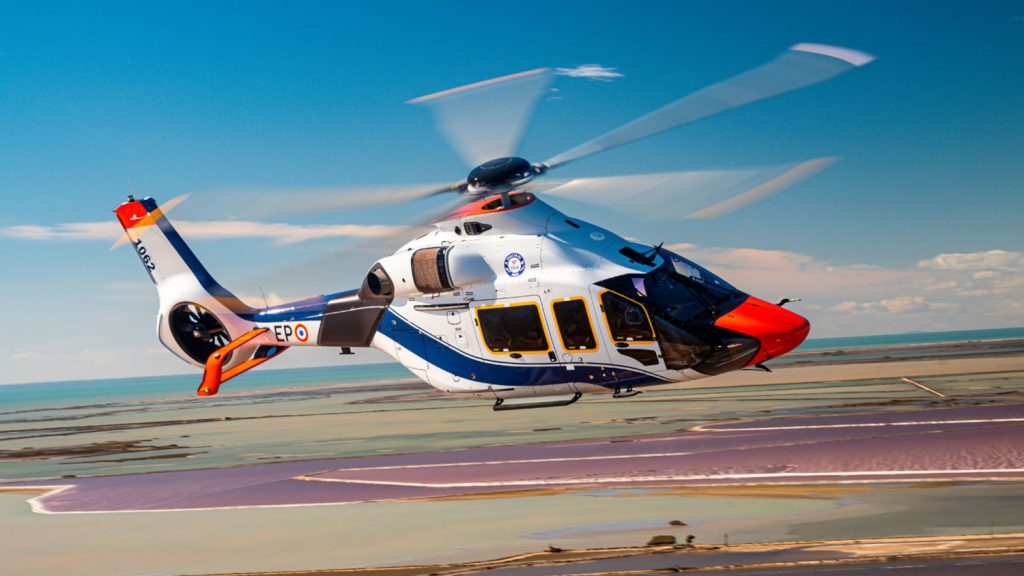
From small single-aisle regional jets to the world’s largest passenger and military transport planes, Airbus is known for its diversity. The company’s helicopter division is no slouch in this respect, either, with over 12,000 rotorcraft in service across more than 150 countries worldwide, performing almost every type of vertical flight task imaginable in civil, government, military, law enforcement and parapublic work.
In helicopter development, every design choice has critical implications. Engineers must balance performance, safety and reliability in machines that operate in the most challenging environments, from confined urban airspaces to rugged mountain terrains.
Then comes certification, a process so demanding that it costs tens to hundreds of millions of euros, pushing the total close to €1 billion across a commercial flight test programme. During a development program, thousands of interdependent decisions and strict certification demands need to be completed, while the aircraft requires extensive testing and traceability.
In a competitive environment, better simulation management to speed up development and certification without compromising safety and reliability is a winning formula.
To this end, the company is moving away from isolated simulation tests to a connected, traceable approach that not only captures the results but also the reasoning and workflow behind each simulation.
“Airbus Helicopters develops complex products and we need simulation to design and develop them,” says Gwenaël Neveu, methods and tools engineer at Airbus Helicopters. “We study many different simulations: thermal, aerodynamic, mechanical and electromagnetic. It means we have an enormous amount of data to handle. Our challenge is to perform all of these simulations and to successfully manage all of this data.
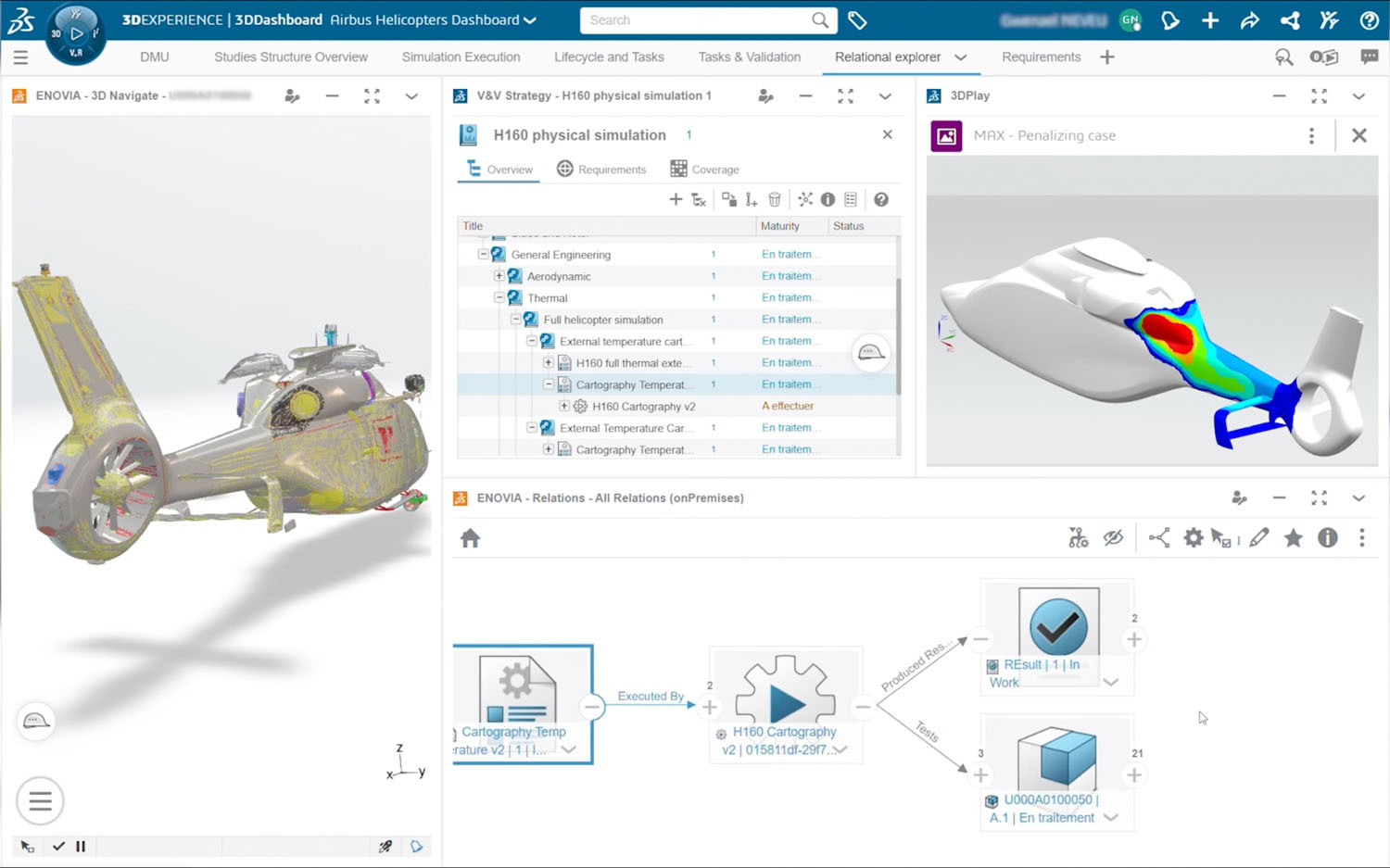
” In response, Airbus Helicopters adopted Dassault Systèmes’ Simulation Process and Data Management (SPDM) solution to capture and organise information, automate workflows and achieve end-to-end traceability from simulation input conditions to final results.
The key goals are to ensure engineers aren’t starting from scratch every time and that decisions are backed by clear, documented evidence.
“The goal of SPDM is to industrialise our way of conducting simulations and meet our certification objectives,” Neveu says. “This means we will have better productivity, because we will be able to eliminate unnecessary and time-consuming tasks such as data searching.”
When we execute simulations, we need to capitalise on them, activity by activity, reuse them, and be able to trace all inputs
The DDMS programme
Airbus Helicopters’ SPDM initiative is part of Airbus Group’s wider Digital Design, Manufacturing and Services (DDMS) programme, which maintains a continuous digital flow across all stages of aircraft development and product lifecycle management.
With design, simulation, PLM and manufacturing data working its way smoothly across the 3DExperience platform, Catia handles the advanced design and engineering, shaping complex parts like rotor blades and fuselages.
Coupled with Simulia, integrated modelling and simulation (Modsim) capabilities allow engineers to virtually define loads, test and refine aerodynamics.
Modsim also allows engineers to compare simulation results from different manufacturing processes in advance. They can then take the requirements of the chosen process into account from the start of the design.
Dassault Systèmes Enovia, meanwhile, supports Airbus Helicopter teams around the world, enabling them to access and share information in a single, organised system.
Delmia connects digital design to manufacturing, integrating planning, scheduling and quality control to deliver real-time visibility, digital instructions and optimised processes.
By capturing and analysing operational data from the shop floor, Delmia also helps Airbus Helicopters find continuous improvement by identifying inefficiencies, reducing waste and standardising its best practices across all its global sites.
The Airbus Helicopters team says that the management of this digital thread helps lead to faster development cycles, stronger cross-functional collaboration, richer knowledge and the ability to anticipate issues – both on the factory floor and throughout an aircraft’s lifetime – before they arise.
“Using the 3DExperience platform to implement our SPDM solution was a no-brainer,” Neveu says. “We needed a single source of data that is accessible and shareable, where we can easily find and reuse the information we need. Also, when we execute simulations, we need to capitalise on them, activity by activity, reuse them and be able to trace all inputs.”
This method provides Airbus Helicopters with a single source of truth for simulation data and a structured way to run simulation workflows from start to finish. Each analysis follows the same steps and conditions, so results can be trusted, compared and reused. By linking design, testing, certification and manufacturing with this digital thread, the company can bring helicopters to market with full confidence in their safety and performance.
Towards full simulation
Alongside this approach, Airbus Helicopters is building a comprehensive knowledge base that captures the full context of every study in every product development process.
Simulation activities and analyses can be organised and tagged, allowing engineers to learn from past work and to apply proven methods to new projects. Enovia is used to record each step of the process, so teams can draw on accumulated knowledge to make faster, more informed decisions.
“Simulation plays a role throughout the helicopter’s lifecycle, from the conceptual phase to development, and then to support and service, to study operational conditions that may arise for our clients,” Neveu explains.
“Each simulation study must be structured with context so that it can be retrieved, reused and tracked.”
A key benefit is seeing how design changes affect the entire project. Engineers can trace how a modification in one area, such as an updated material property or new load condition, will influence related simulations downstream. This gives them the confidence to decide whether further analysis is needed or if existing results remain valid.
“If there’s an impact on a design or input data, we can quickly identify the affected simulations,” says Neveu, adding that the engineers can then decide whether to rerun the simulation with the existing design or adjust the design first and then redo it. “This reproducibility will improve quality, because we will always be able to use the right data at the right time,” he says.
Certification by analysis
Being able to trace every step is crucial for meeting safety and regulatory standards, giving everyone confidence that simulation results are accurate and reliable. Validated simulations can even be used as evidence for certification, reducing the need for costly physical prototypes and flight tests. Underlying all of this is a key Airbus Group principle: ‘There is no digital certification without digital traceability.’
The approach, referred to as ‘certification by analysis’, lets regulators treat simulation results like physical tests once those simulations have been proven to be reliable. OEMs like Airbus demonstrate credibility through clear processes, accessible data and full traceability.
On the 3DExperience platform, Airbus Helicopters uses a Virtual Plus Real (V+R) test pyramid to progressively validate designs. Here, small component tests are used to validate simulation models and accurately predict real-world behaviour. Once these component models are validated, they can be applied to predict how larger assemblies will behave. Each level builds confidence in virtual testing and gradually reduces the need for multiple full-scale prototypes and tests.
“It is imperative for us to be able to organise and track simulations for a given program,” Neveu says. “The 3DExperience platform streamlines integration between design and simulation.
This ensures traceability that improves collaboration among all simulation fields, whether thermal, aerodynamic, stress analysis, but also between simulation and design or support and service throughout the development cycle. Our ultimate goal is to bring digital continuity to the world of simulation within Airbus Helicopters.”
Enormous potential
Executives at Airbus Helicopters say they see enormous potential in making structured design, simulation and manufacturing data more widely available across the enterprise with Enovia. With the backbone of SPDM in place, the next stage of digital transformation is to integrate simulation fields into the platform, says Neveu.
“By having all this data stored centrally, we can better exploit it and make it accessible, democratising it for other fields that may not be familiar with simulation, but need the results to guide their own work.”
Airbus has made the 3DExperience platform an integral part of daily operations, with teams across development and manufacturing exploring its capabilities and applying it to real-world challenges.
“There is a good dynamic,” says Neveu. “The valuable feedback from our teams helps us improve how we use the platform and strengthens our collaboration with Dassault Systèmes. Through the DDMS program and our strategic partnership, we are developing new features that will help us establish real digital continuity and allow us to fully leverage our data.”
This article first appeared in DEVELOP3D Magazine
DEVELOP3D is a publication dedicated to product design + development, from concept to manufacture and the technologies behind it all.
To receive the physical publication or digital issue free, as well as exclusive news and offers, subscribe to DEVELOP3D Magazine here