
Formnext 2026, the giant trade fair focussed on all things additive manufacturing, returned to Frankfurt a little smaller but no less packed to the brim with new technology and approaches to how this method of fabrication is fitting into design, engineering and manufacturing workflows. With our team busy covering all three halls and every further afield, here are their key takeaways on what technology stood out and which trends are rising fast
Formnext 2026 – 1: Niche is good

Producing parts using non-traditional materials, or just those with a problematic backstory, is one of 3D printing’s most understated skills – whether directly or via casting.
Direct printing of mad novel alloys – tungsten-based metals saw a lot of love this year from companies, including 3D Systems – is opening up greater adoption of additive processes in verticals willing to pay big money [see point 5], and many vendors are more than happy to work with customers developing and qualifying processes.
Ceramics continue to be a hotspot for 3D printing, with Lithoz announcing sales to Boom Aerospace of three industrial printers for complex casting cores for single crystal turbine blades. On the smaller scale, University of Leeds spin-out Hydra Manufacturing showcased its hybrid process for ceramics, blending the benefits of additive with precision detail machining before the parts are fired.
The maturity of the technology for 3D printed castings is one of the quieter success stories (probably as many companies would rather you buy their printers that can print the parts directly…) but the technology fits readily into the workflows of big casting companies around the world – not only for giant sand casting, but with wax printers growing in scale and the range of casting resins making large SLA 3D printers invaluable for intricate and niche work.
Formnext 2026 – 2: Desktop Metals
Just over a decade ago, the $1,750 Makerbot Replicator gave the masses the ability to print plastic parts, lighting the touch fuse on the 3D printing boom. Today that would equate at roughly $2,570, so imagine that for double the price you could buy a machine that prints in steel? SnowX has managed just that, with its SnowPod desktop 3D printer.
With some clever engineering built atop proven existing tech and a huge amount of enthusiasm from its team, the crowds around the SnowX stand were huge. The surface finish straight off the machine won’t trouble any 3D printers 100x more expensive, yet the postprocessed output on show at Formnext exceeded even our expectations.
With more materials in development, it could prove to be a workshop staple capable of transforming inhouse prototyping, and with a massively oversubscribed Kickstarter, it’s likely that the SnowPod will be the biggest selling metals 3D printer of all time.
A side note is that CEO Fangda Xu spent nearly a decade in the UK studying and developing AM tech and processes before heading back to China to build SnowX – another example of exciting new talent being nurtured on our doorstep, but our ecosystem failing to back into industry.
Formnext 2026 – 3: Run The Jewels
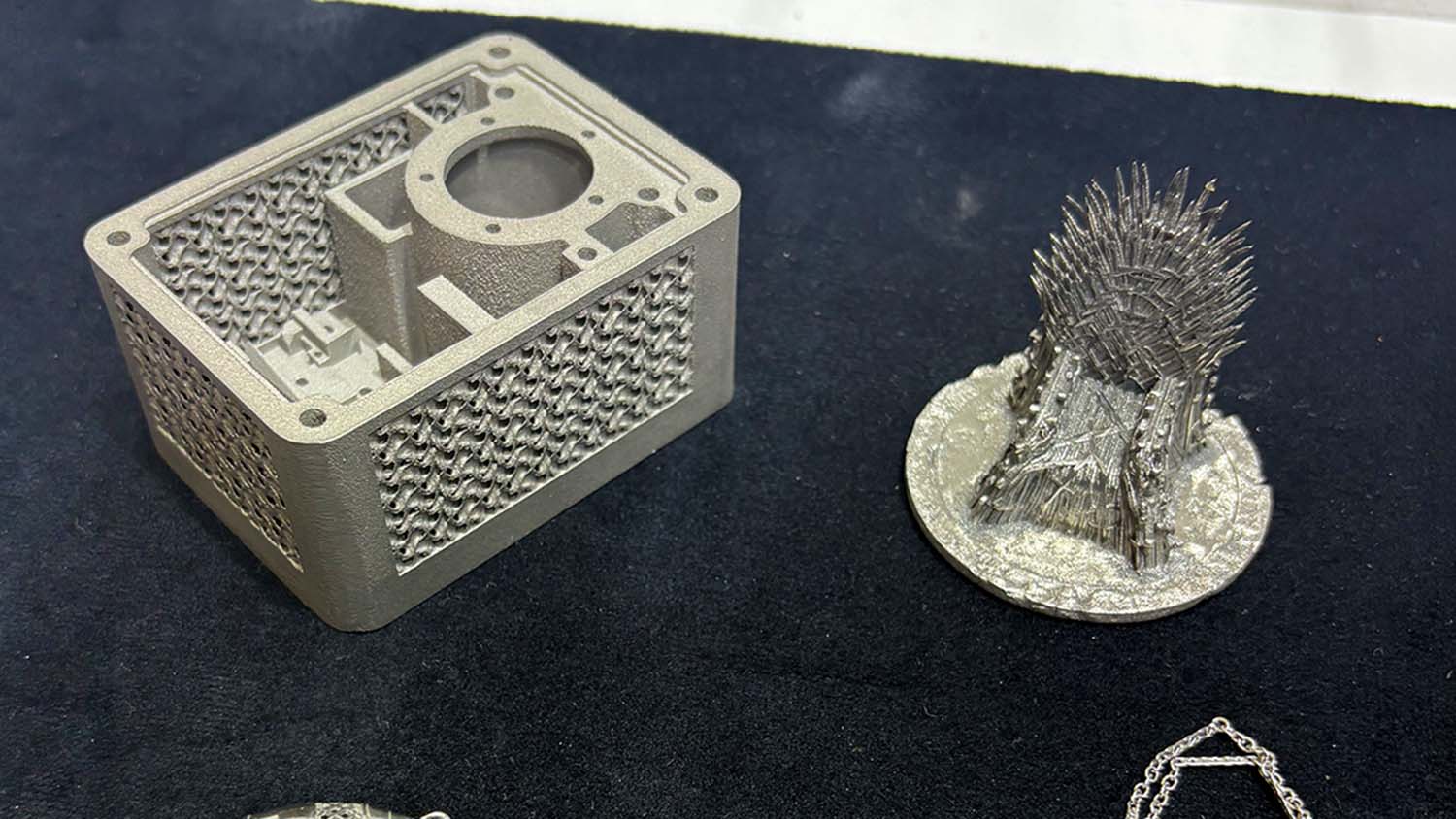
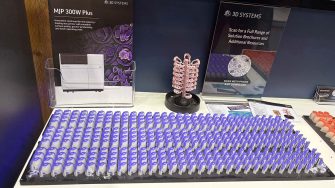 Lost wax casting has leant on 3D printing for years now, but Formnext 2026 gave a glimpse of just how far this technology has come from the early SolidScape wax printers.
3D Systems has doubled the build area of its updated MJP 300W Plus, its leading wax casting machine, which is also capable of detailed cast with more industrial uses.
The crowds flocking to see Formlabs’ entry level machine, the Form Studio 1, included a number of jewellery designers and with good reason. In part developed with Formlabs casting materials in mind, the machine’s £658 price tag makes it affordable to small jewellery studios.
There was also some interesting further industrialisation in direct metal printing for jewellery. No moulds, capability to print multiple custom parts in the same build, high density parts and (99.8%) and 99% reuseable powder while allowing parts with less downstream work like soldering, the costs and speeds are finally beginning to match up to traditional methods. The lack of waste material at a time where bullion prices are hitting all time highs, and the ability to switch production with a digital file and skirt jewellery import tariffs means that it’s an increasingly attractive process in today’s climate.
Legor, a precious metals materials science group that produces powders for sintering, showcased some impressive pieces as it continues to advocate for metals AM via partnerships with both HP MetalJet and Stratasys-backed Tritone MoldJet technologies.
XJet has undergone something a pivot towards jewellery – taking advantage of the smooth surface finish and easy post processing of its NanoJet technology – to the extent of opening a new direct to consumer service for people to design their own pieces using generative AI, with XJet’s service offering fulfilling the production and shipping.
Formnext 2026 – 4: Applications First
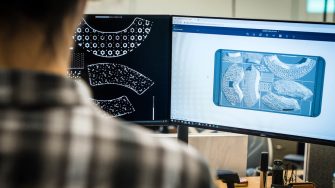
The days of a ‘does everything’ 3D printer are slowly on the decline as companies are finally figuring out (some the hard way) that being application first ensures they have a core audience to sell to.
Where metals 3D printing has a safety net in terms of the high-spending energy and aerospace sectors that have long since validated the technology for their workflows, the polymers market is still trying to build out its role in competition to traditional methods like injection moulding.
Carbon, with partnerships with Adidas, Riddell and a multitude of bicycle seat manufacturers, has long been exponents of this and is reaping the benefits as a result. Some staggering (and sadly unrepeatable) numbers show that its sports equipment clients are all having great success having incorporated DfAM processes into their workflows and Carbon as its production partner. Its stand at Formnext included DEVELOP3D June/July cover stars Vivobarefoot, which has developed its foot scanning technology into a simple phone app, removing yet another step from the custom 3D printed footwear process, putting Carbon in a prime position to benefit from another growing ecosystem.
Even legacy giant Stratasys is doubling down on manufacturing applications. Announcing its focus on four core use case verticals – aerospace, defence, automotive and medical – it says that it is no longer focussed on ‘general prototyping’. This presents a few awkward square peg/round hole scenarios across the extremely broad range of Stratasys technologies on offer, but with the launch of its two latest 3D printers – the F870 and H550 – you can see the plan at motion as it specifically targets factory jigs and fixtures and the automotive sector with the respective machines.
Formnext 2026 – 5: AI is Pushing Hardware
While the past few years have seen drones and footwear as key additive adopters, the current big noise is coming from the race to build AI datacentres and the infrastructure around them.
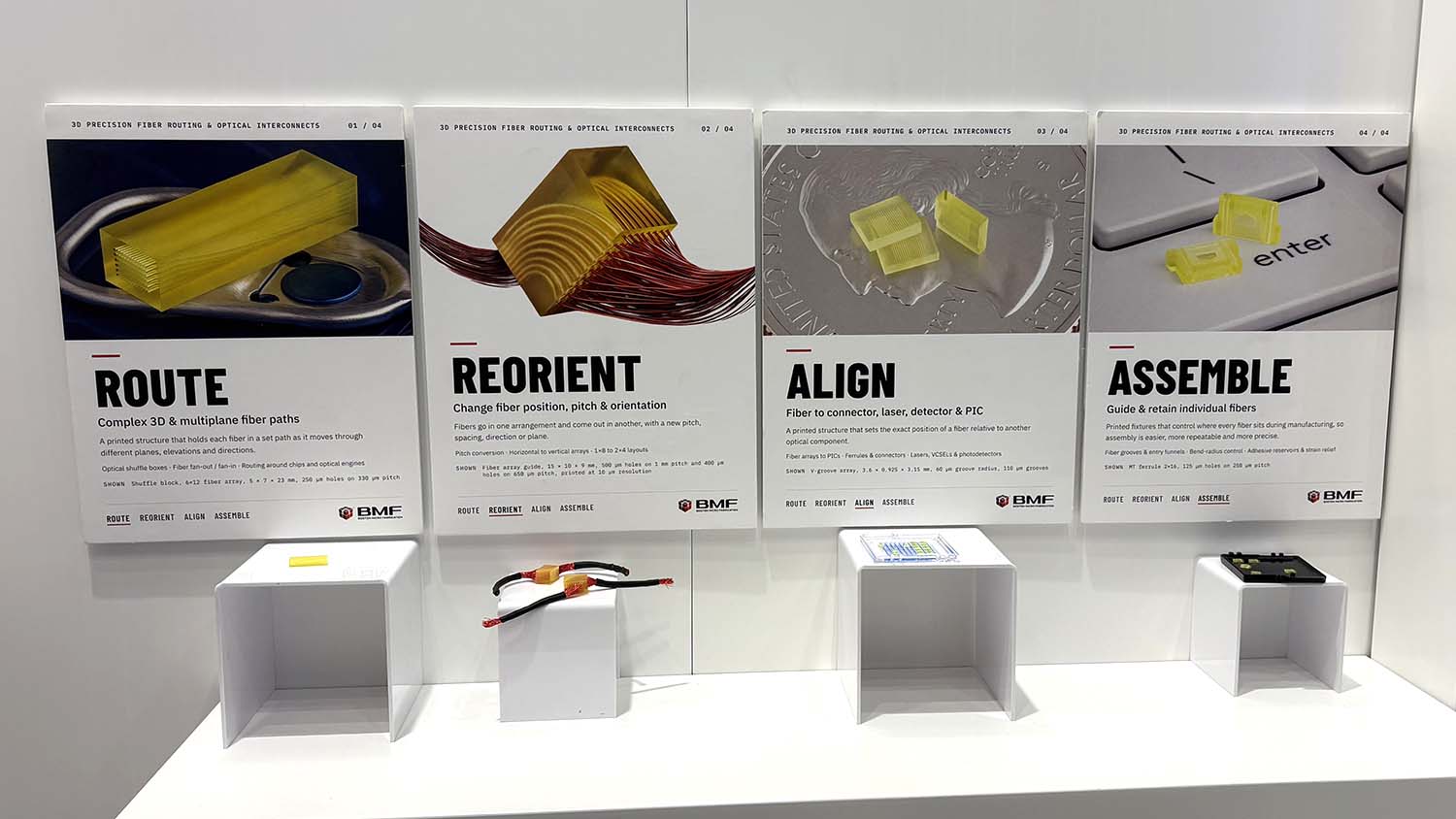
From tiny routers and connectors for delicate fibre optics, cramming in as much as possible within a housing, to the push for generative designed cooling panels, there’s a huge amount happening.
At the forefront of a lot of the precision parts is Boston Micro Fabrication (BMF), with its ability to print down to single-digit micron accuracy. Its latest machine, the microArch S150 Ultra, has reduced this accuracy to ‘only’ four microns enabling nearly 9-times higher throughput still with astonishing detail.
At the bigger end of the spectrum, the need for electricity to power these stations means that additive is being employed to help speed up the development of new electrical generation equipment, with several stands showcasing giant parts built from additive casting for turbines.
AI is also beginning to infiltrate the industry’s hardware; not only are AI-led build setup software and build process monitors helping maximise successful prints, but it is also infiltrating the market for upgrading second-hand machines. Far from a simple refurbishment, some out there – like German 3D printing bureau Visiotech – are reworking the machine’s software to be able to work with newer elements like more powerful lasers and coaters.
The market for older machines looks set to boom, as companies look to add more throughput at a bargain price, which hopefully vendors accept and promote, given it opens the door to wider 3D printing adoption.