
By rethinking marine propulsion systems, Chinese boatbuilder Hu Wei is developing an exciting new rudderless yacht capable of travelling thousands of miles on its catamaran hull
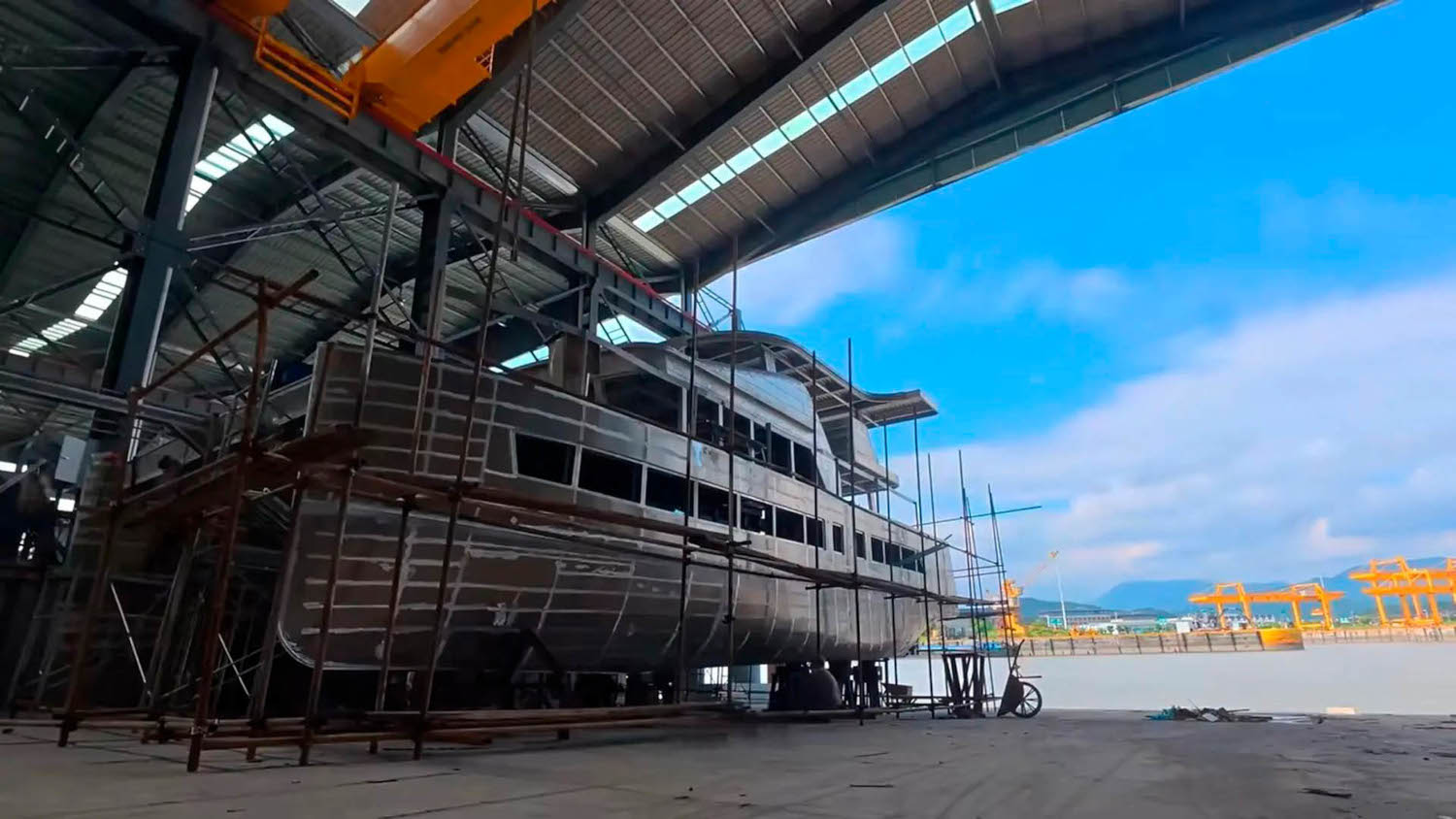
Along the banks of the Qiantang River in Hangzhou, the capital city of China’s Zhejiang province, an unconventional catamaran is quietly taking shape. The vision of veteran sailor and engineer, Hu Wei, a man who has spent his career in marine engineering and project management, HighWei 66 is both a striking aluminium vessel and a sailboat designed for the future.
Traditional diesel-powered sailboats typically bring with them handling challenges, significant maintenance demands, excessive noise and fuel pollution. In response, Hu looked to China’s capabilities in new-energy technology and supply chain logistics.
The design of HighWei 66, he says, is one that fundamentally rethinks marine propulsion and abandons altogether the centuries-old concept of a rudder system. Over 10 million yuan (almost $1.5 billion) has been invested in the project to build this catamaran, which is based on the latest electric propulsion technologies.
The vessel combines sails, a variable-pitch electric propulsion system, solar power generation and regenerative energy-recovery technologies. Because it does not rely on diesel fuel, it is capable of sailing thousands of nautical miles and, in theory, even undertaking polar expeditions.
Most importantly, the HighWei 66 eliminates both the traditional rudder and diesel main engine. Instead, directional control is achieved through dual electric motors, variable-pitch propellers and intelligent control algorithms.
All hands on desk
With this bold engineering philosophy, Hu Wei and his team hope to redefine the future of new-energy sailing vessels.
To meet the demands of long-range ocean travel, the HighWei 66 adopts a lightweight yet high-strength aluminium-alloy hull structure. However, aluminium alloy is particularly susceptible to thermal deformation during welding and fabrication, making dimensional control extremely challenging for large marine structures.
Traditional shipbuilding inspection methods rely heavily on manual tools such as tape measures and callipers. While suitable for local measurements, these methods cannot capture complete fullscale 3D geometry, nor can they accurately quantify overall hull deformation.
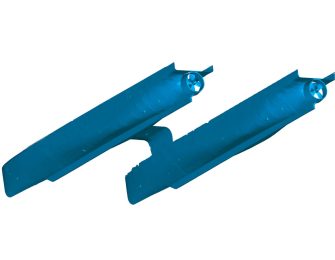
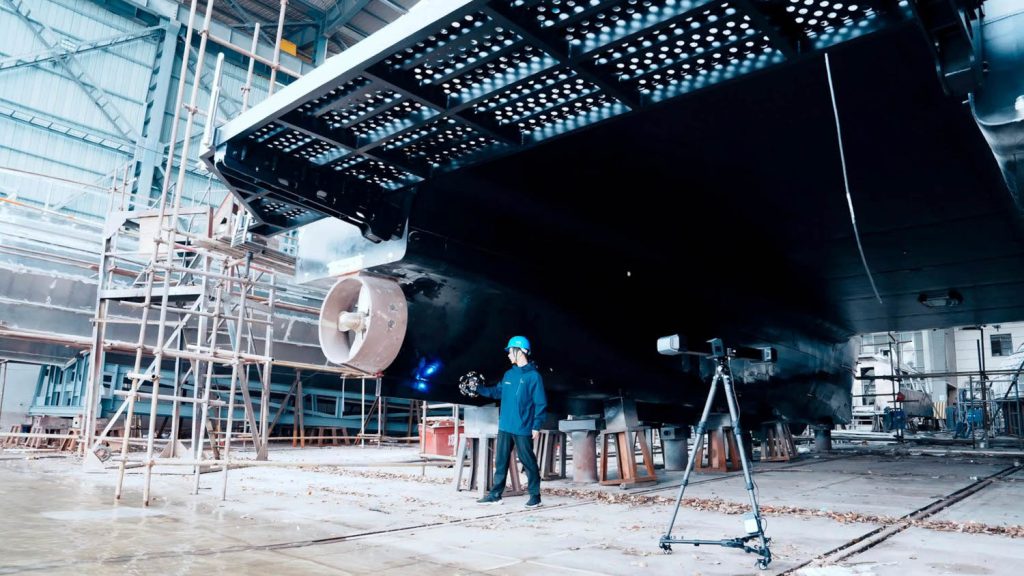
To address the challenge, the team turned to 3D scanning, using a FreeScan Trak series scanner from Shining 3D to capture the complete hull geometry.
Designed specifically for large-scale industrial measurement, the wireless 3D scanner benefits from dynamic tracking over large areas, high accuracy and fast scanning efficiency.
The entire geometry was captured without need for markers, noting critical dimensions such as the length, width and perimeter of catamaran waterline cross-sections.
Captured scan data was imported into Hu’s inspection software and compared directly with the original 3D CAD design. Colour deviation maps clearly visualised dimensional differences between the manufactured hull and the theoretical geometry.
Using these insights, the engineering team optimised the structural designs and conducted further CFD simulations to better understand how any hull deformation might impact the craft’s hydrodynamic resistance. This data-driven workflow helped the engineering team control manufacturing deviations at the source and shortened the development cycle from prototype to production-ready vessel.
As sea trials approach, HighWei 66 will soon face real-world wind and wave conditions,providing critical validation for its structural integrity and performance.
For Hu Wei, this project goes beyond the creation of a single experimental boat. His broader ambition is to establish a standardised design, manufacturing and inspection workflow for the next generation of electric sailboats.
From the shores of the Qiantang River to other maritime hubs around the world, a new adventure in sustainable marine design and manufacturing may be about to launch.
This article first appeared in DEVELOP3D Magazine
DEVELOP3D is a publication dedicated to product design + development, from concept to manufacture and the technologies behind it all.
To receive the physical publication or digital issue free, as well as exclusive news and offers, subscribe to DEVELOP3D Magazine here