
Artist Sullivan Owen pairs new technology with time-honoured techniques to create ceramic vases that enable beautiful, bold flower arrangements to rest naturally in position, as Gabrielle Brown reports
A professional florist since 2009, Sullivan Owen certainly knows her way around a flower arrangement. She has frequently been listed among the top florists globally, has supplied arrangements for gilded events across the US, and her work has been featured in Vogue magazine and in a number of coffee-table books.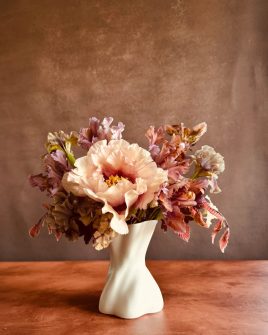
Owen’s journey in ceramics and slip-casting came later, however. When clients began to postpone events due to the Covid pandemic back in 2020, Owen found herself at home, watching a video of a potter throwing clay. She might try to make a vase to hold one of her arrangements, she thought.
That simple idea launched four years of intense learning in mould-making, clay chemistry, the development of casting slip recipes, 3D scanning and modelling software. Owen even built her own 3D printer.
“Ceramics and slip casting are an inherently analogue process, and that’s where technology entered the picture, almost by necessity,” she says. “I needed a way to scale up my original hand-sculpted forms to account for clay shrinkage during firing. That practical problem sent me down a two year path of learning digital modelling and 3D printing.”
Today, each Sullivan Owen vase begins as a physical prototype that has been sculpted by hand, but it doesn’t go into production until it’s been digitally scanned.
“The unexpected bonus of that detour is that it changed my whole design process. I can now print a prototype, actually arrange flowers in it, and refine the form until it’s right for testing function, not just appearance, before a single mould is ever made,” says Owen.
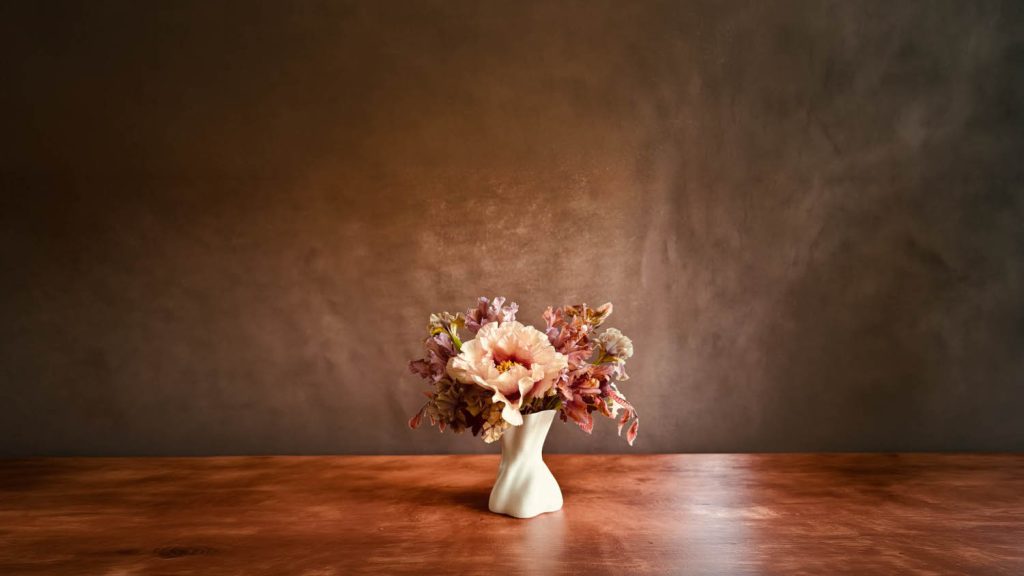
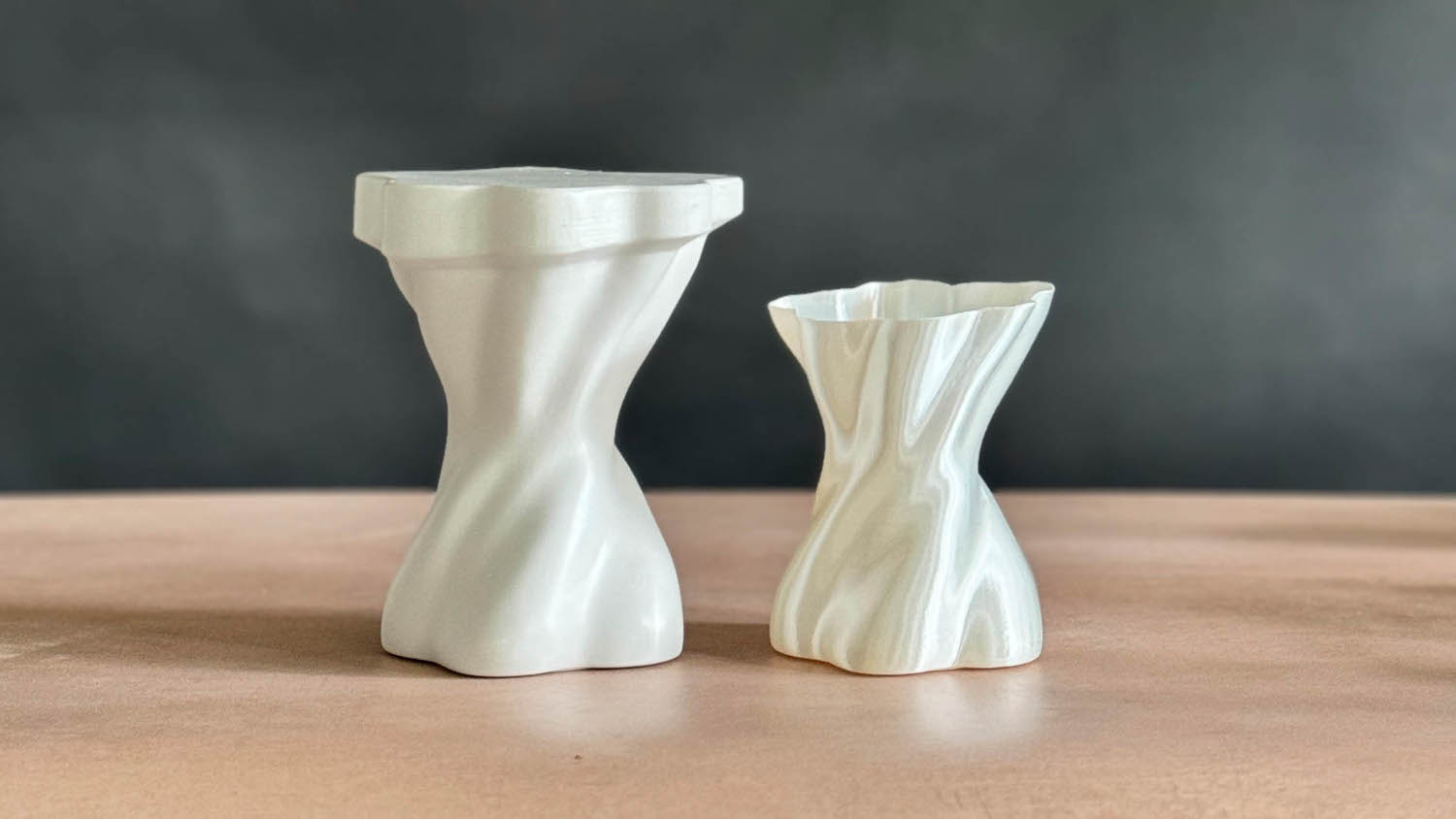
The resulting designs are not only visually striking in themselves, but also offer folds and ridges that in addition to providing decorative flourishes also give the vases structural routings where flower stems can rest and be held in position.
The Baby Twist
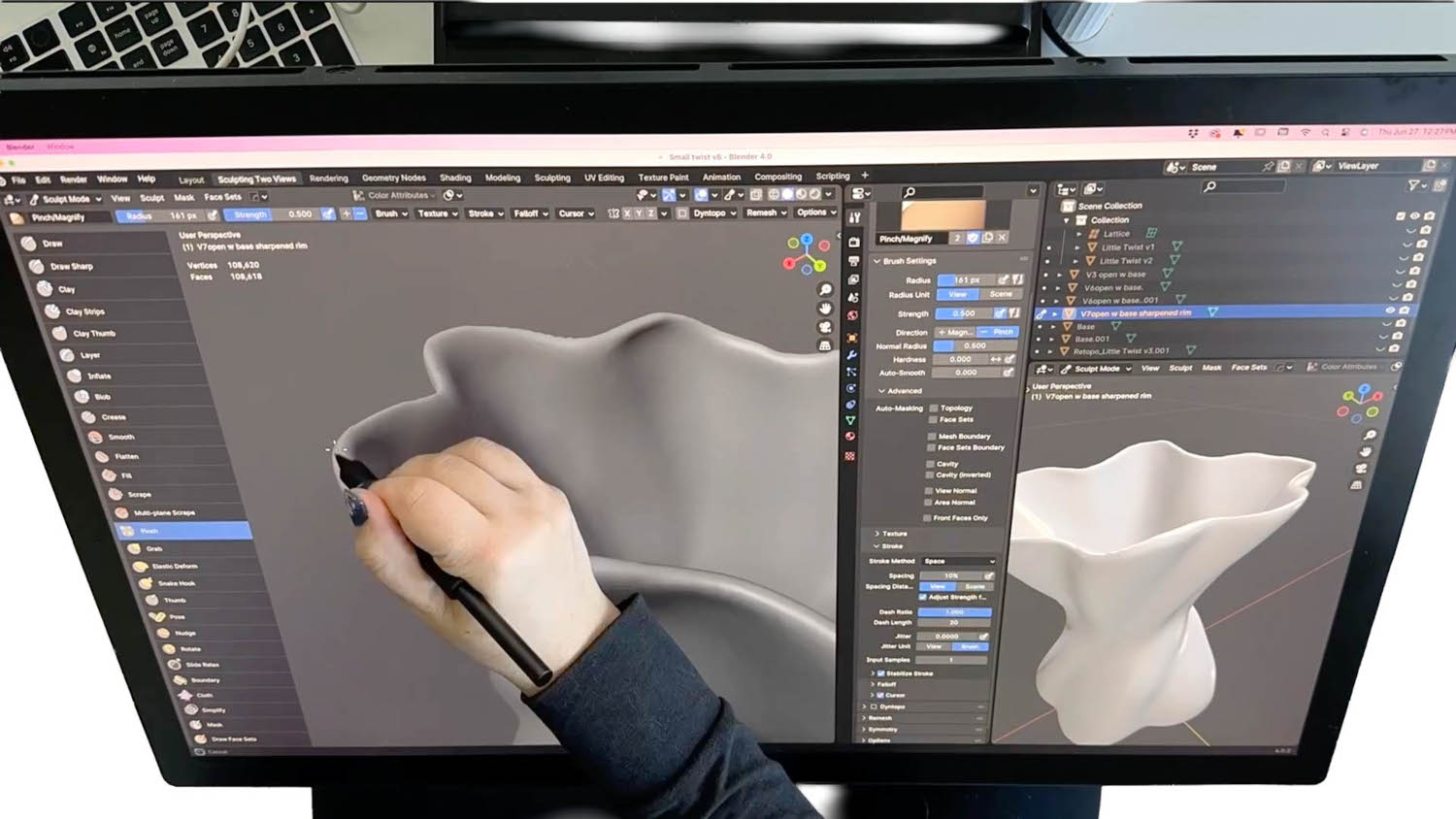
The Baby Twist vase began as a sculpture made from wax clay and was then scanned using Kiri Engine and Polycam directly from Owen’s smartphone to capture the physical sculptures. From there, it was brought into Blender for digital refinement.
A challenge for Owen was that most slip-cast work using Blender involves a round or symmetrical object with a profile or texture applied to it. While this is efficient, the results tend to look digitally moulded, not sculpted. When exploring the sculpting side, by contrast, Blender is often used to create creatures or characters that become game assets or figurines.
“I couldn’t find anyone doing truly sculptural, asymmetrical work meant for slip casting, so I had to develop my own techniques from scratch [to accommodate] my own approach to fixing scanned geometry and building cutting lines on forms that were never meant to be uniform,” she says.
The goal has always been for a final piece to feel handsculpted, not 3D-modelled, even with technology doing the behind-the-scenes work.
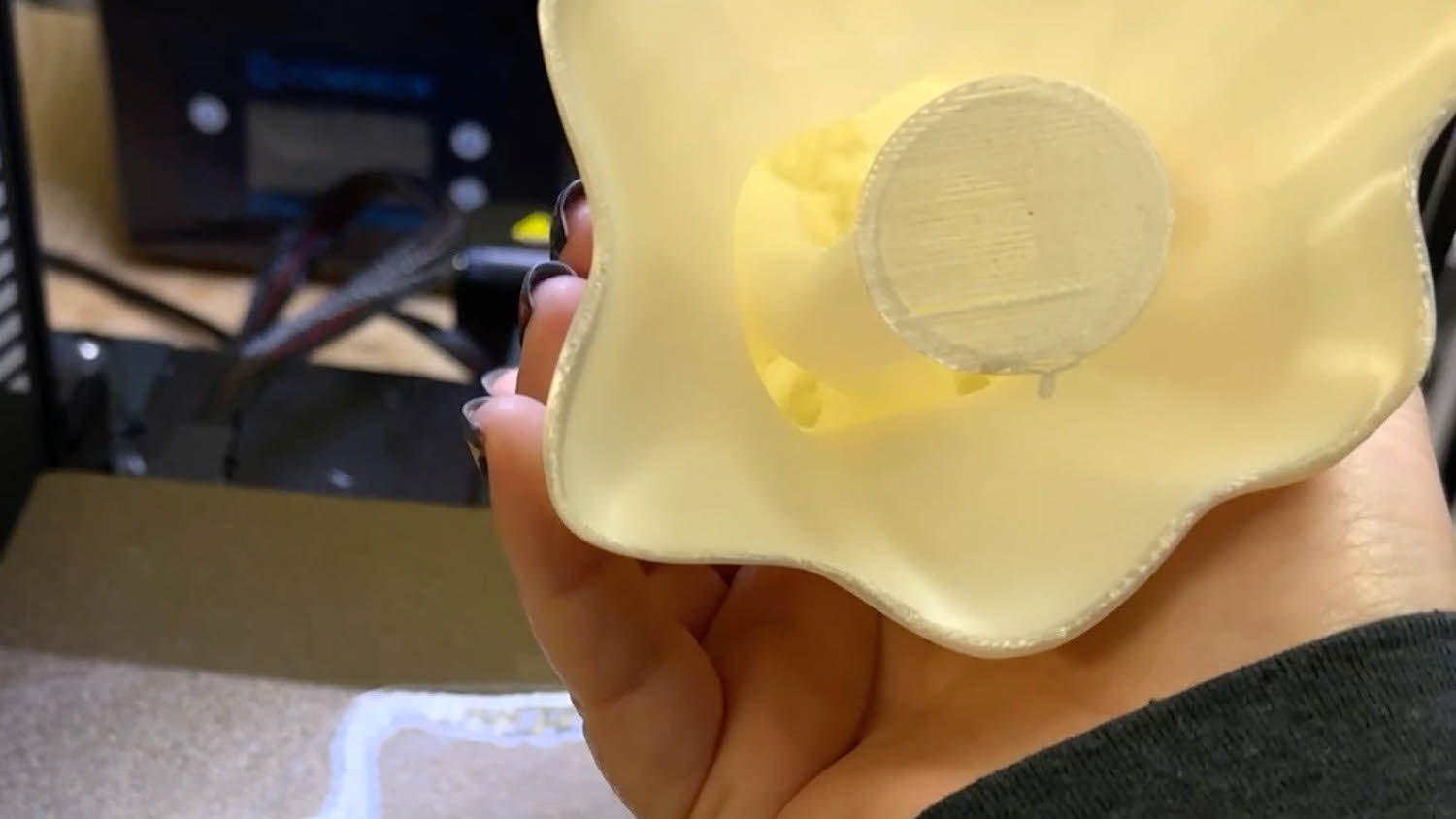
Each design is prototyped as a watertight and full-size version, so that it can be tested with real flowers. It is then 3D printed in PLA, using a combination of a dual extrusion BCN3D Epsilon W50, an Elegoo Neptune 4 Max, an Elegoo Neptune 4 Pro for large-format FDM, and a Phrozen 8K resin printer.
Owen has had to modify these printers herself in order to print a vase in one full piece. She has added linear rails to the Neptune 4 Max, for example, to support the creation of prototype vases at full size or larger with clean surfaces on curved forms.
“The Max has a large bed that rides on wheels and, at fast speeds, it develops a noticeable wobble. That’s a problem when the goal is a clean surface on a large, curved form,” she explains. “The machine I dream about is a super large format printer, a meter or larger.”
Variations on a theme
Baby Twist went through several printed variations, she says. “Each round told me something that the previous one hadn’t. A form can look resolved and still fail completely at holding stems, so this testing loop is where most of the real design work happens.”
Once Owen is happy with a version, she engineers a custom slip well that ensures the casting achieves uniform wall thickness, accounting for shrinkage during firing.
Most of her work is white, black or grey, and she describes her natural next step as creating outdoor planters, which will likely involve printing models for fibreglass moulds and then casting in concrete.
By pairing new technology with time-honoured techniques, Owen’s sculptures demonstrate how perfect positioning can be made to look effortless and organic.
This article first appeared in DEVELOP3D Magazine
DEVELOP3D is a publication dedicated to product design + development, from concept to manufacture and the technologies behind it all.
To receive the physical publication or digital issue free, as well as exclusive news and offers, subscribe to DEVELOP3D Magazine here