
Is the party over for VR headsets? Despite billions invested, this is a hype cycle that has run its course – but there’s still hope for users who are craving a more immersive experience of 3D models, writes Tom Zerega of Magnetic 3D
Back in October 2021, social media giant Meta placed one of the largest technology bets in modern history. CEO Mark Zuckerberg rebranded the company previously known as Facebook, declared that the metaverse was the future, and publicly committed tens of billion of dollars to immersive experiences that would take us all far beyond the world of 2D screens.
Almost five years and $60 billion later, that future remains – quite literally – virtual.
Earlier this year, Meta laid off 1,500 employees from its Reality Labs division and shuttered three virtual reality (VR) game studios. According to analysts at technology market research firm Counterpoint Research, global VR headset shipments saw a year-on-year drop of 17% in the first quarter of 2026.
VR technology has, once again, slid into what Gartner analysts term ‘the trough of disillusionment’. The question is no longer whether VR stalled. The real question is why?
Multiple failings
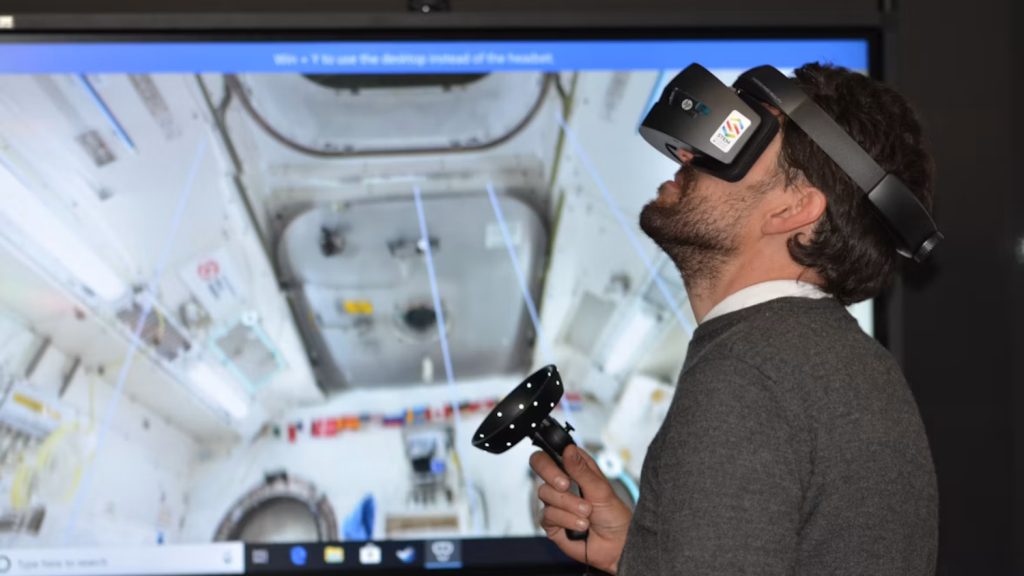
For over a decade, the tech industry chased immersion through head-mounted displays or HMDs. The assumption was simple: strap the experience to the user’s face and adoption will follow. Except it didn’t.
Headsets introduced a cascade of friction. Cybersickness affects an estimated 40% to 70% of users. Prolonged use leads to neck strain and headset fatigue. Social isolation hampered collaboration. And once the novelty wore off, most people simply didn’t want a heavy, sweaty device strapped to their face, whether it cost $300 or $3,000.
Declining sales of VR headsets is not evidence of a content problem, a computer problem, nor a graphics problem. It is a human factors problem
Even technical marvels like the Apple Vision Pro failed to alter the fundamental truth: people do not want to wear computers over their face to participate in everyday digital experiences. The form factor, not the fidelity, is the barrier.
Industry sentiment reflects this reality. In a recent Game Developer Collective survey, 56% of developers describe the VR market as “declining or stagnant”. Counterpoint Research reports that the consumer headset market has shrunk consecutively for three years now. This decline in sales is not evidence of a content problem, a computer problem, nor a graphics problem. It is a human factors problem.
Ironically, the few areas in which VR does work – in advanced manufacturing, training and simulation, for example – also expose the form factor’s greatest limitation. Headsets isolate users.
Teams can’t easily collaborate. Eye contact disappears. Natural communication breaks down. For the healthcare, defence and education sectors, that makes VR a very tough sell. The reality is that immersion delivers tangible value only when it enhances collective understanding and that process becomes more difficult when you introduce a headset.
Hiding in plain sight
The solution has always been hiding in plain sight: if immersive 3D could be delivered without headsets or glasses, adoption would be automatic, not forced. No friction. No learning curve. No physical barrier between people and information.
In other words, we need to put 3D tech back where displays belong – as part of the display device, not as a wearable. That is the inflection point that Meta’s $60 billion investment missed.
Today’s advanced autostereoscopic displays deliver full-resolution 4K imagery, wide-viewing angles, realtime depth rendering and multi-viewer support, without wearables of any kind. The optics are on the display instead and the experience becomes friction less and automatic.
This shift fundamentally changes how immersive content can be deployed and experienced. Without glasses, the content can exist anywhere a 3D display is deployed. Engineers can collaborate around digital twins in real time. Professors can engage their students without isolating them behind headsets. Experiences become shared, social and intuitive – exactly how human perception has evolved.
Just as flat panels replaced CRTs, and mobile touchscreens replaced keyboards, glasses-free 3D represents the next natural evolution of visual communication. Importantly, it aligns with natural human behaviour, making adoption automatic.
People want immersive experiences, that’s why they’ve tried VR. So it isn’t VR that has failed, but rather, the headset experiment. As a delivery system, a headset extracts too high a price from the user.
The next generation of 3D digital displays, by contrast, flips that equation. Instead of asking people to adapt to use the machine, the tech adapts to support human physiology, delivering the experience without compromise.
Glasses-free 3D displays are not a niche, a novelty, nor a gimmick. They are the first immersive display technology designed for humans the way they see the world. After $60 billion worth of hard-won lessons, one can only hope the industry is finally ready to see reality clearly.
About the author:
Tom Zerega is Founder and CEO of Magnetic 3D, an innovative, glasses-free 3D technology company based in New York City.
An entrepreneur, angel investor, media personality and inventor, Zerega is widely recognised as an expert on holographic and glasses-free 3D technology and AI.
This article first appeared in DEVELOP3D Magazine
DEVELOP3D is a publication dedicated to product design + development, from concept to manufacture and the technologies behind it all.
To receive the physical publication or digital issue free, as well as exclusive news and offers, subscribe to DEVELOP3D Magazine here