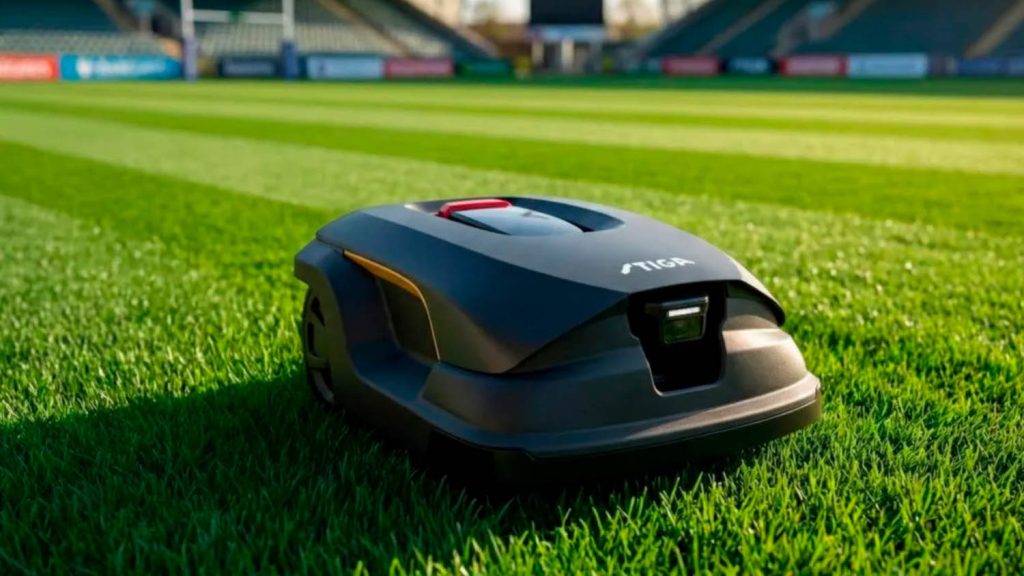

Whether for rugby, cricket or horse-racing, personnel at sporting venues across the UK face the constant challenge of maintaining top-quality turf. Gabrielle Brown reports on how Stiga’s new automated robot mower is fast becoming a powerful secret weapon for many groundskeepers
As official groundskeeping partners of England Rugby, garden and lawn equipment company Stiga knows the importance of delivering on consistently short, healthy turf and clean lines, especially when hundreds of players’ studded boots are hitting the ground each week.
Founded in 1934 in Sweden, and now headquartered in Italy, Stiga describes its team as green-fingered engineers who create smart machines, from mowers to leaf blowers, that make gardening a delight. The company sells over one million such machines every year, through the collaboration of its own internal engineering and product design professionals with external industrial designers.
One example of this kind of teamwork is the company’s work with the team at Lamb Industries, an industrial design consultancy based in Bath, UK, which has designed and engineered for brands including Dyson, Whyte Bikes and Hyva over the past 15 years. Given this impressive roster, it’s no surprise that Lamb Industries was called in to help progress designs for Stiga’s new professional range.
Lamb Industries has a small, two-person design team supported by sector-specific freelancers and had already worked with Stiga before, but the relationship has gone deeper with a new robotic mower concept.

New blades
Since first working with Lamb Industries, Stiga has developed Vista, an AI-driven, on-board camera system that endows autonomous robotic lawn mowers with visual awareness of their surroundings. Vista is capable of recognising all lawn colours, textures and shapes in real time, so that it doesn’t stray beyond the lawn and can avoid any obstacles it might encounter there.
Integration of this system, along with the demands of increased range and other capabilities for consistent professional use, meant that Stiga’s A140v model would require a completely new design.
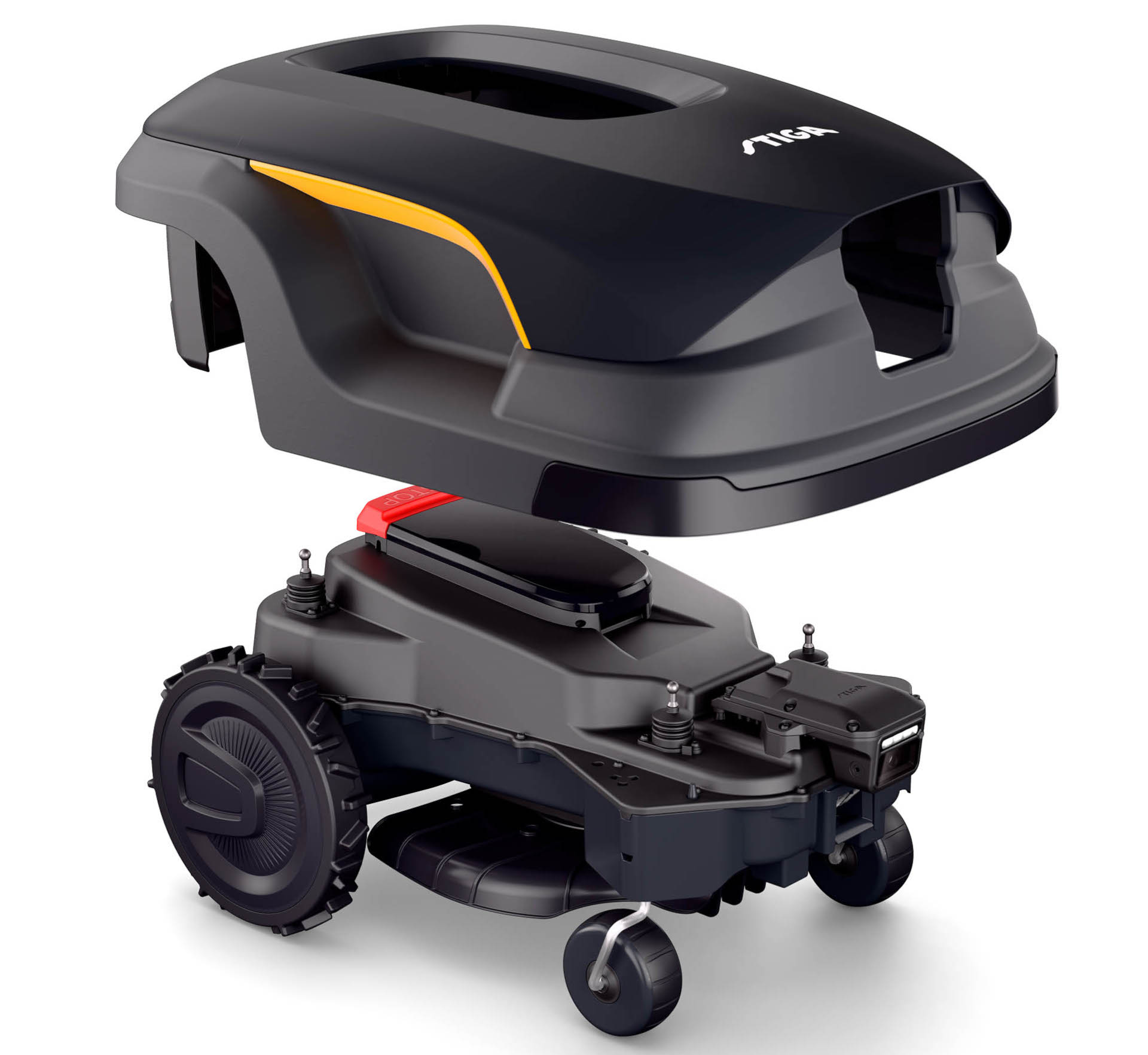
For example, a new camera array needed to be added to contend with the hardpoints of the design, placing the camera module much higher on the A140v than it appears on Stiga’s original range of autonomous mowers. A more powerful blade motor was also required, along with increased ground clearance for uneven terrain, in order to cope with the challenge of being capable of mowing over 14,000 square metres, managing up to 30 allocated zones, and traversing slopes with gradients of up to 50%.
At the same time – and as Stiga briefed Lamb Industries – the new design would need to complement other mowers in the company’s existing range.
Working closely with Stiga’s design team based in Veneto, Italy, who had previously designed the brand’s smaller domestic robotic mower, Lamb Industries used this existing design along with its design guidelines as their starting point.
“They’re effectively little brother and big brother,” explains director James Lamb from his studio in Bath. Once provided with a CAD model identifying the little brother’s design hardpoints, the engineering work began. “
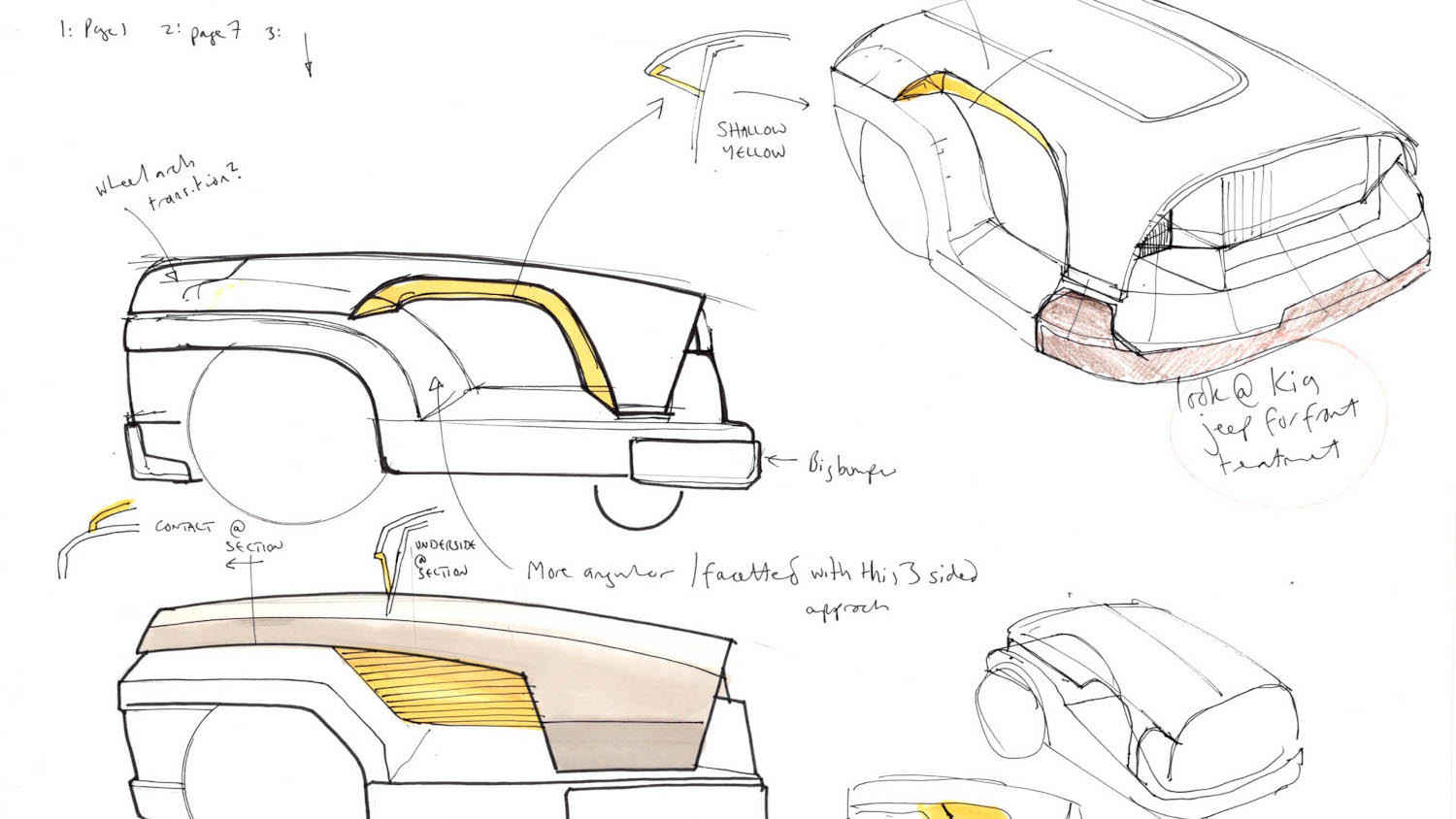
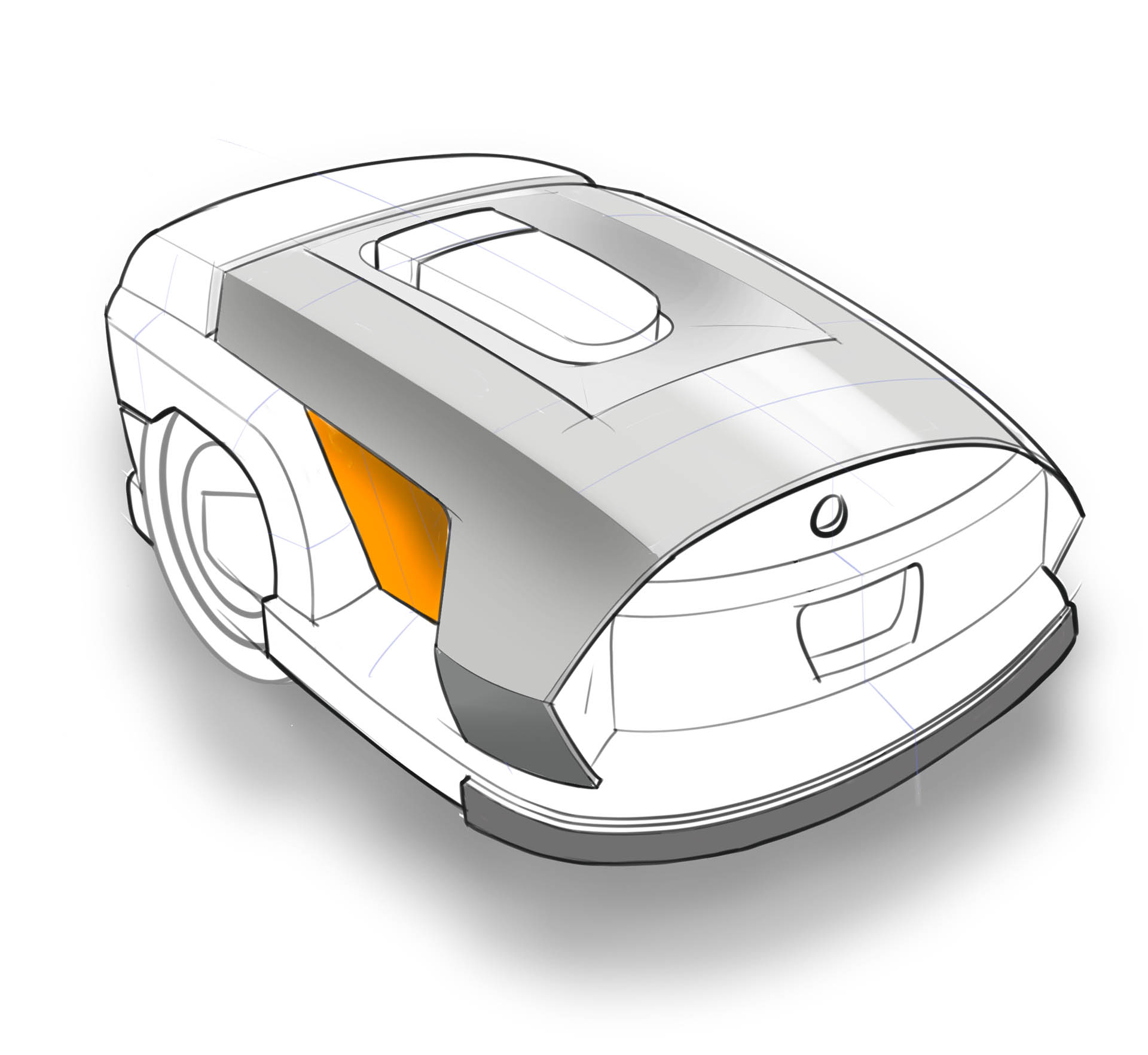
A typical workflow is to look at opportunities to rearrange certain hardpoints in CAD, if that can result in a better design or user experience. Invariably, we then switch to working in 2D – still pen and paper mostly,” says Lamb.
The team added in elevation and perspective using printouts from the Dassault Systèmes Solidworks model as underlays, so that scale and proportion could be maintained. Promising ideas were drafted back into Solidworks to assess the changes in 3D form.
“The process is iterative, so once in CAD, we don’t stay there. We will go back to hand drawing and modelling until we start coalescing on promising directions,” Lamb explains.
A cut above
Most of the prototyping for the Vista mower could be produced using Lamb’s in-house FDM 3D printers, while cannibalising and adapting existing machines and models from previous Stiga projects. Using 3D-printed prototypes, the team repurposed components and produced bespoke machined parts, dicing and slicing to work out the functionality physically before managing the aesthetics.
“Prototyping and quick-and-dirty modelmaking is central to what we do,” says Lamb. For the surfaces, sketch models were created in foam, cardboard or quick 3D prints throughout the process, while surface modelling was performed in Solidworks.
This proved important, not only for any changes to the initial hardpoints to be accommodated, but also to pinpoint where surfaces needed to be manipulated in situations where they interacted with each other. Aluminum was chosen as a key material, for its ability to shield the mower’s body from the elements and help with heat dissipation over long periods of use.
“We always deliver shelled solid models as the final deliverable, with all external manufacturing details such as shut lines, draft and other details,” says Lamb. “It is important to deliver a solid body, as it verifies internal clash detection and ensures the manufacturing partner receives a manifold model as the basis of their internal detailing.”
Refining the 3D form proved a challenge. “Trying to maintain a flowing design in keeping with the house design while looking purposeful was an aim. The camera array was quite bulky and had to be positioned in a difficult area, high and at the front of the machine. It was also in development at the same time as [our design], so it exercised the parametric muscles with late changes,” grins Lamb.
The resulting design was handed back to Stiga, which manufactures in-house all of the hardware and software in-house for its robots. The mower’s software and mobile app for groundskeepers is proprietary, patented and has already attracted several awards.
This article first appeared in DEVELOP3D Magazine
DEVELOP3D is a publication dedicated to product design + development, from concept to manufacture and the technologies behind it all.
To receive the physical publication or digital issue free, as well as exclusive news and offers, subscribe to DEVELOP3D Magazine here