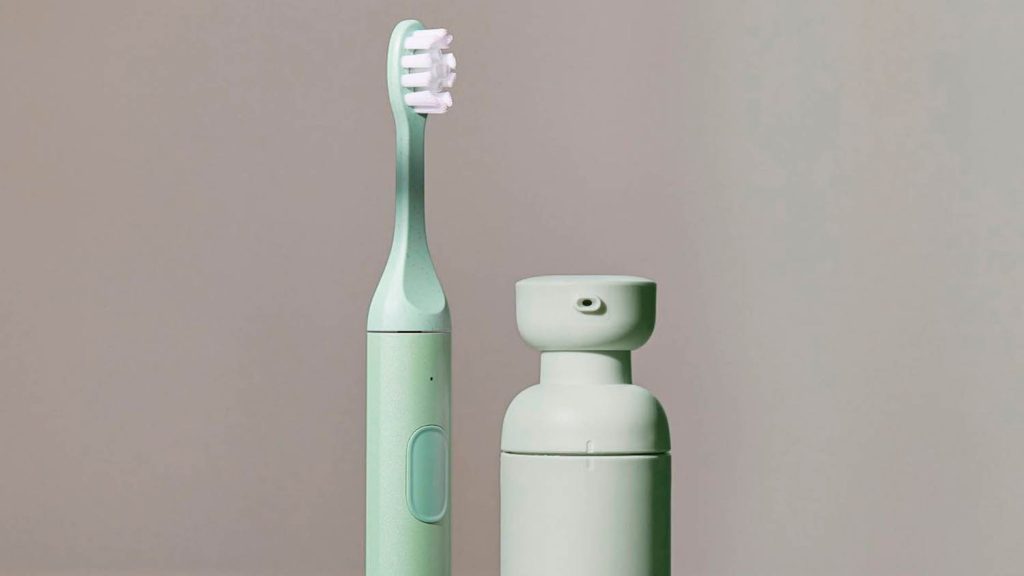

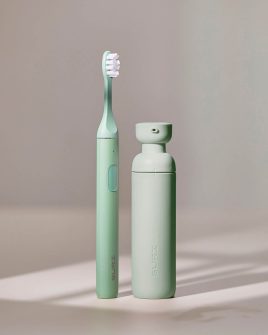
Electric toothbrush brand Suri is leading the charge against tooth decay, bland bathroom kit and toothbrush-head waste with a design that simplifies the form as well as the daily brushing ritual. Stephen Holmes speaks to the team behind Suri’s latest Pro 2.0 model about how its members focused on sustainability, performance and DfM
While electric toothbrushes have been proven better for oral hygiene, their dark secret is the waste they produce and their resistance to recycling once they reach the end of their useful life.
As with many products that come at a low initial purchase price, but remain hungry for consumables throughout their lifetime – think printer ink cartridges or razor blades – sustainability is limited when waste is maximised.
The manufacture and materials of disposable electric toothbrushes and replaceable brush heads are no boon to the planet. Around 141 million electric toothbrush heads are thrown away each year in the UK alone – not to mention some 4 billion globally – and with nylon a key material, will take hundreds of years to break down.
This is the issue that mobilised Suri’s founders, Gyve Safavi and Mark Rushmore. They had both worked at consumer goods giant Procter & Gamble and, on observing the stagnation of oral hygiene brands, saw a market ripe for disruption.
They were entirely correct. By making smart, sustainable design and material choices early on in the design of their product, Suri has become one of the leading BCorp brands in the personal care segment. Not only does the London-based company use PLA – a plant-based bioplastic derived from renewable sources like corn starch and sugarcane – to create its products, but it also operates a ‘takeback scheme’, where it recycles its toothbrush heads for free in the UK and US.
Researching the market, Suri’s founders also uncovered some other winning ideas. While high-end, Bluetooth connected toothbrushes often came with smartphone apps, these were simply not being used in many cases.
The apps didn’t offer ‘sticky’ experiences, observes Suri innovation director Seb Wetherall. “So by actually reappraising and bringing back the basics of a lifestyle-led ritual and doing something very elegantly, brushing your teeth effortlessly [becomes] a joy.”
Many people don’t necessarily follow great oral hygiene practice, he continues, but if they enjoy interacting with a toothbrush, that opens the door to improvements, and “then obviously, we’re doing something good and better, not just environmentally, but also for oral healthcare.”
Difficult second product
Having launched its first model in 2022, Suri wanted to build on its initial success with a second generation of products. Wetherall jokingly compares that process to a band launching “the difficult second album”.
The process began with user feedback. Suri’s heavy presence on social media and review platforms like Trustpilot (which alone offered up some 20,000 user reviews), meant the team had plenty of information that could be harvested to help optimise its next design.
“We used AI to analyse sentiment to understand what our users and consumers are saying about us,” he says. The word that most frequently appeared, he says, was ‘love – an encouraging start. Users love the product, the experience and the thoughtful accessories, such as the mirror mount, so the toothbrush doesn’t leave a gunky mess on a countertop. Practical elements like USB-C charging and a travel case with a UVC light to sterilise the brush head are also popular.
The overwhelming positivity, says Wetherall, meant Suri had a great platform on which to build and that introducing its second generation wouldn’t necessitate a complete overhaul of this winning formula.
We didn’t want to revolutionise the proposition straight away, so we knew it was a great product market fi t in the UK,” he says. In this way, the next step became clear, he says: “Let’s take that to the US without changing the core industrial design.”
In search of improvements
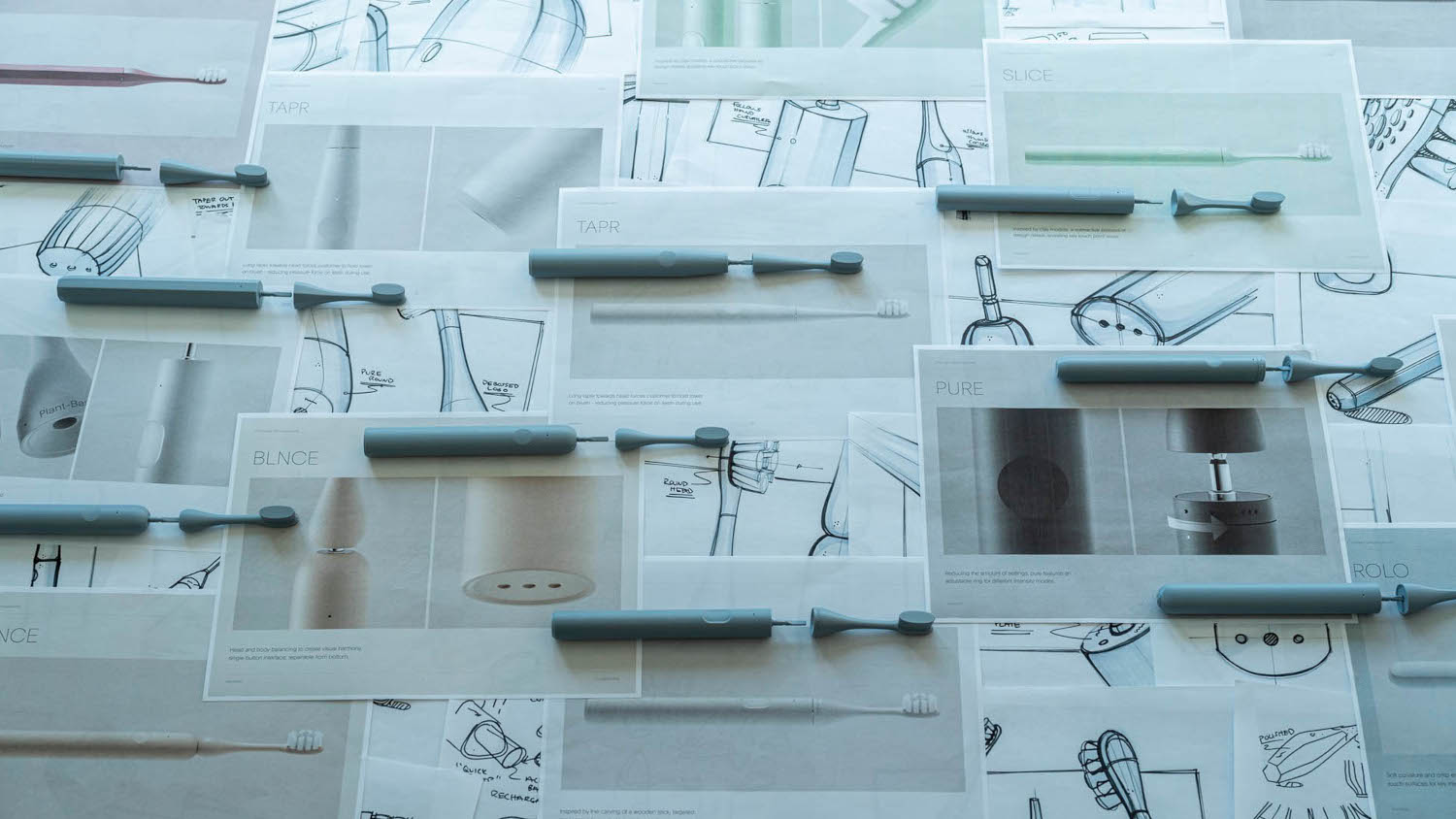
With the styling of a new product already dialled in around the existing model, the challenge for the design team quickly became identifying areas for improvement that wouldn’t involve changing the tooling involved in its manufacture. “We knew there was a little bit of performance left on the table to extract,” says Wetherall.
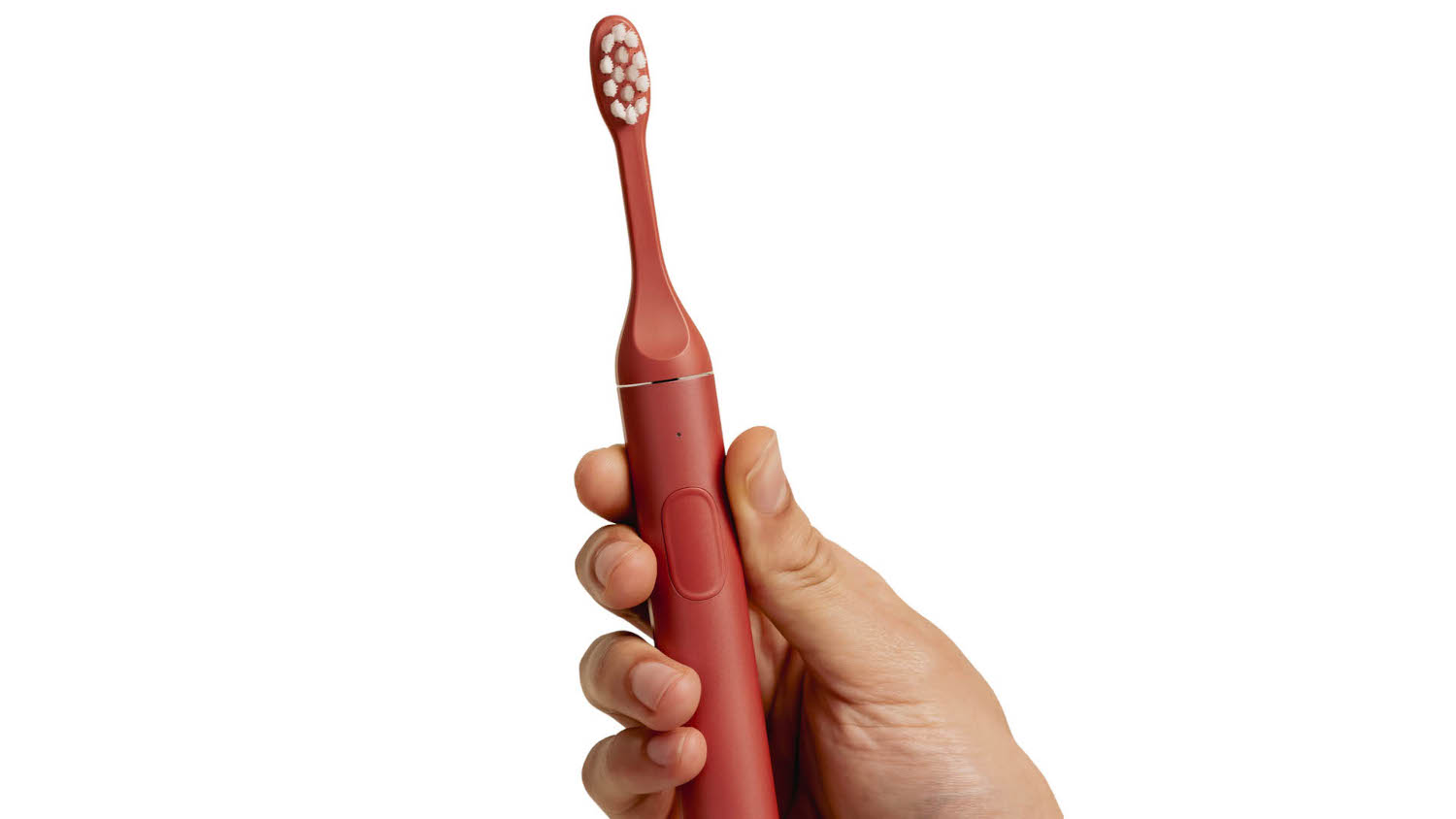
The body casing of the Suri toothbrush is made from aluminium, making it long-lasting, durable and endlessly recyclable, but also light for users to handle and easier for logistics companies to deliver.
“Aluminium is also corrosion-resistant, making it perfect for its sink-side setting. We also believe the aluminium finish adds a touch of elegance and feels great in the hand,” adds Wetherall.
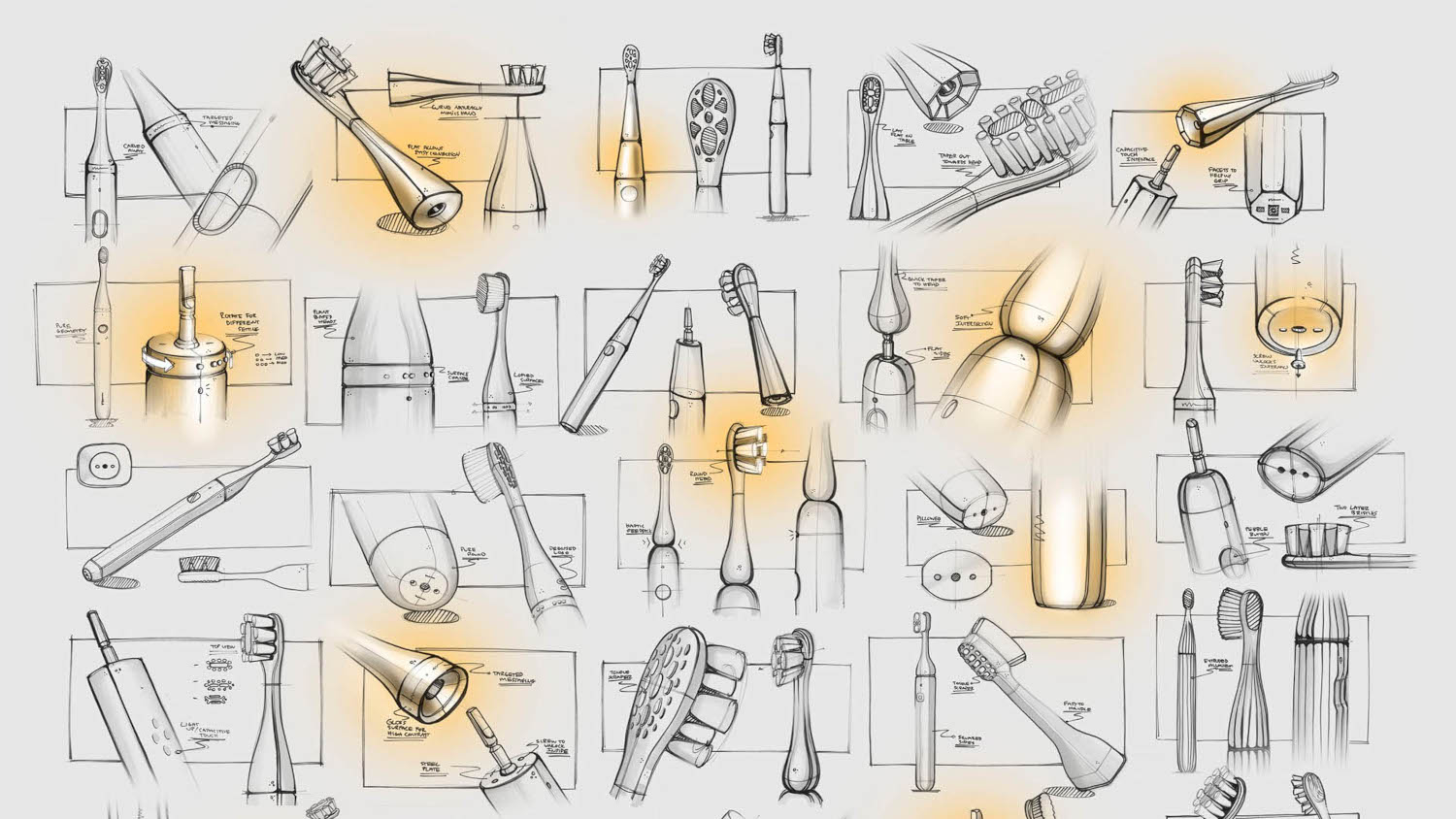
Developed predominantly in Rhino and Keyshot, the team at Suri also used Vizcom to rapidly ideate on the initial handle form. Since that would be carried over into the second generation of products, the focus shifted to factors such as extending battery life, as well as achieving better economies of scale and supply-chain robustness in preparation for the company’s growth in the US market.
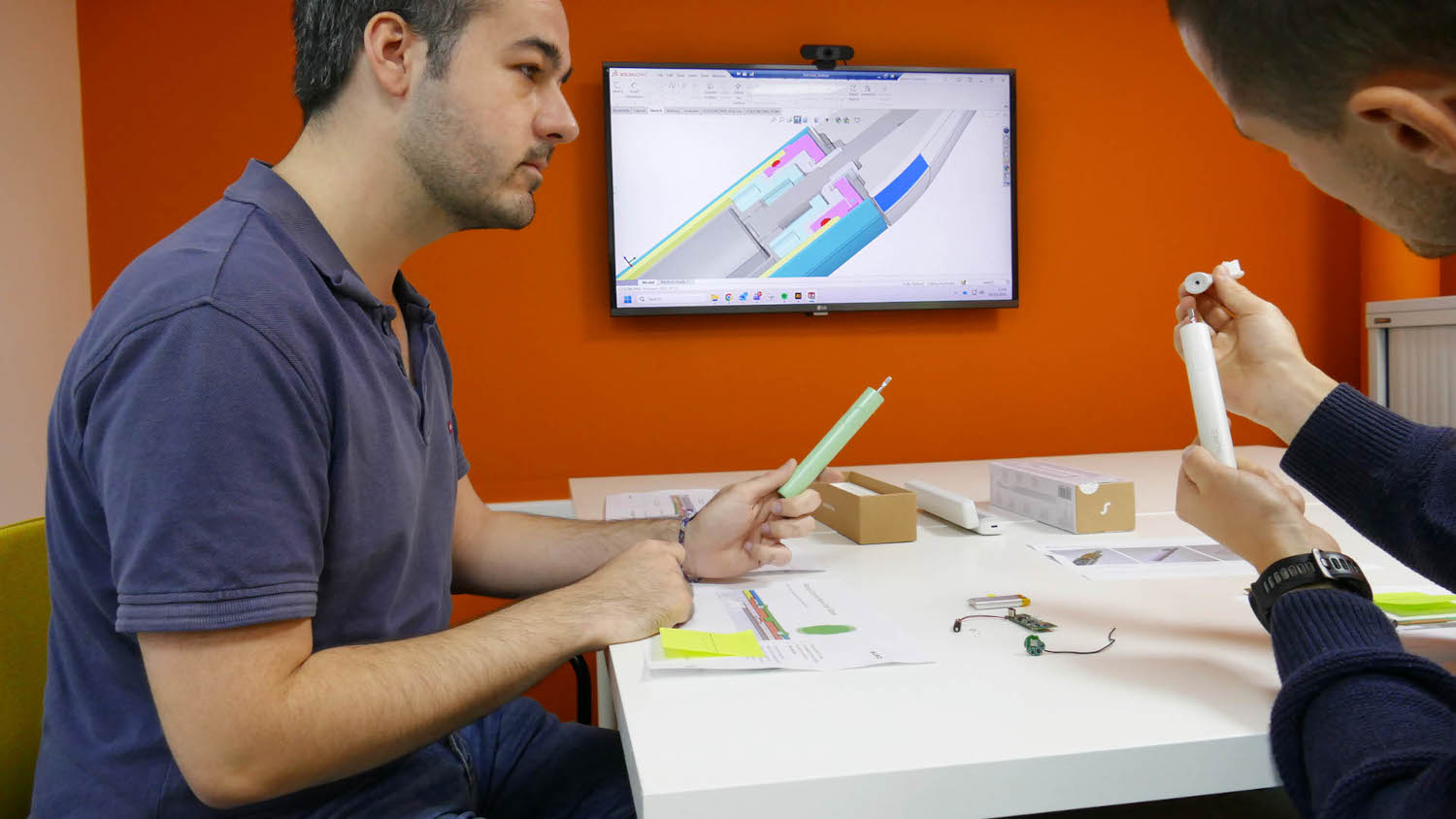
Working alongside its production partner based in China, the Suri design team had already reached the Engineering Validation Test stage and the factory was beginning to produce prototypes. However, it was still felt that the engineering could be honed further. Design and engineering consultancy IDC was enlisted to help further develop the technical elements of the toothbrush.
IDC is based on London’s outskirts in Datchet, Berkshire, but with a longstanding 10-person office in Shanghai, China, the firm was perfectly placed to liaise with Suri’s UK headquartered team and have boots on the ground in China to interrogate suppliers and parts.

Toothbrush troubleshooting
Here, IDC managing director Stephen Knowles takes up the story. Minor problems with the Suri second-generation product prototypes still needed to be tackled, he says. The more powerful motor generated more vibration and noise than was desirable, while battery life still needed extending.
What was required was not simply design work, but extra support around the technical specifications of the toothbrush and improved testing to demonstrate it could meet expectations for the launch.
In China, IDC senior design engineer Xiaoya Bao oversaw much of the project in that region and her expertise proved a big advantage, Knowles explains. “Our team in China are engineers. They’re designing products, they understand what needs to be done, exactly the same way as the UK team – but they’re on the ground, they speak the language, and they can go into the factories and resolve any issues.
” In the UK, IDC offers electronics design capabilities, alongside mechanical and industrial design. In China, it doesn’t have that capability in-house. So with the search for improvements focused on electromechanical interactions, a lot of work had to switch physically back and forth between IDC’s UK and Chinese sites.
Numerous battery and motor samples were tested, with the electronics team analysing the signals that were being sent to the motors, the current and the waveforms.
“We realised that the electronics [originally chosen by the factory] were driving the toothbrush fairly inefficiently,” says Knowles. “And, at the same time, Xiaoya was visiting the factories, testing lots of different motors, seeing which ones had the right kind of response and vibration.”
Bao also made visits to other supplier factory sites, as well as Suri’s manufacturing partners, in order to assess parts – from the electronics to the injection moulding – to verify that they followed the design requirement.
“The suppliers are relatively quite close,” she says. “In one day, you can travel to three different suppliers to look at their OEM parts or customised parts and make sure that all the electronics or mechanical parts are following the right standards and fulfilling the right requirements.”
But in addition to better battery life and improved performance, the product also had to feel right in the hand. “There’s a certain sort of intuitive feeling [for these devices],” says Knowles. “And so, the balance between it feeling like it was doing the job and having the right level of noise, plus not having too much vibration in the hand, so it feels harsh – yeah, it was tricky!”
Focus on user experience
A focus on user experience has been a critical success factor for Suri. That presented IDC with the challenge of defining the measures of a good product experience in analytical terms, so that it can be tested repeatedly.
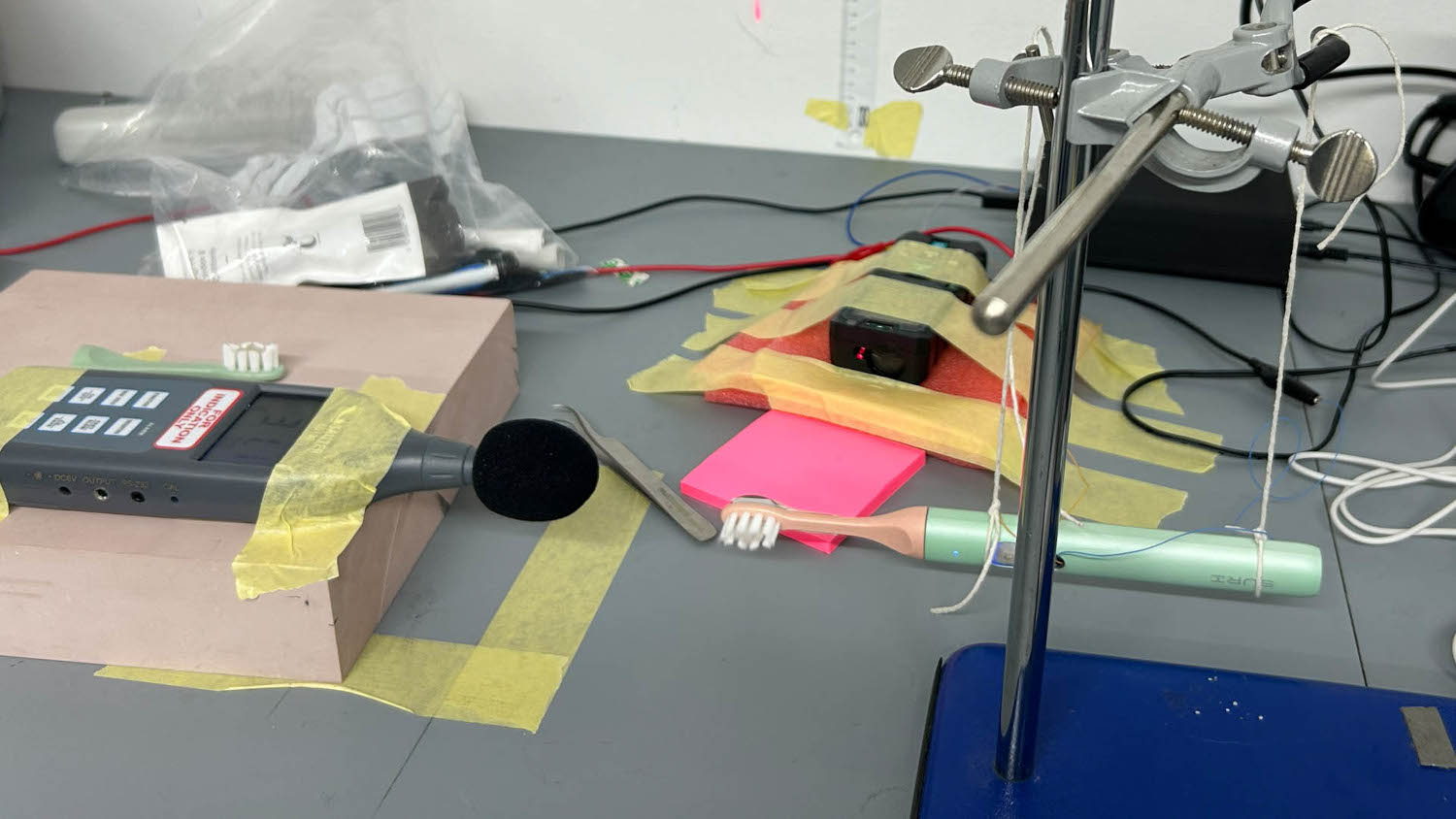
Much of this testing focused on decibel readings relating to motor noise, but other methods needed to be developed. To test and quantify the tiny sonic movements of the toothbrush, for example, the team placed a mirror on the back of the toothbrush head and then shone a laser at it, in order to record how far it deflected the beam onto the wall. Those movements are very fast, notes Knowles, “but by using this laser technique, we could amplify them and see quite a big difference between different settings and motors – almost visualising the vibration.”
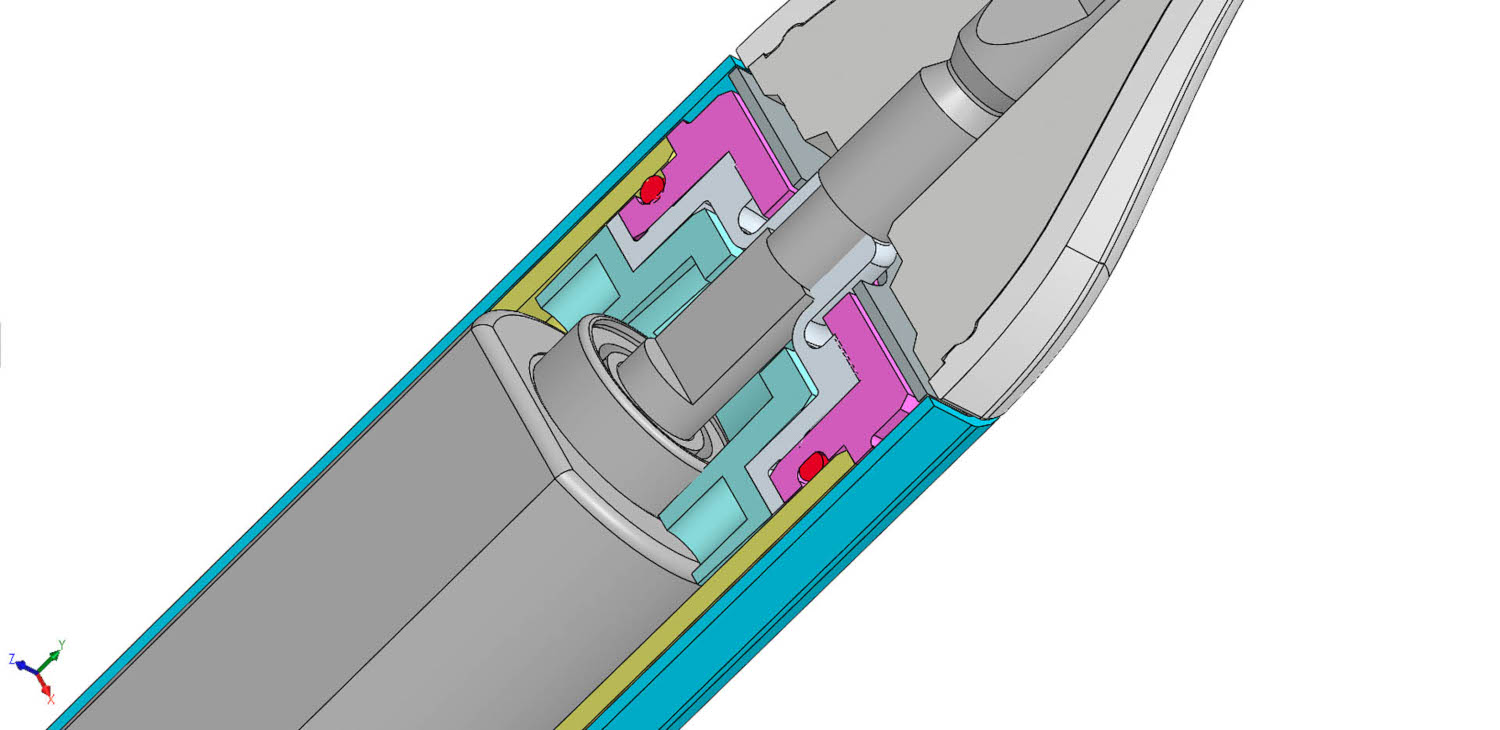
With access to the Solidworks CAD file of the original design from Suri, the IDC team set about helping to reengineer the model so that new electrical and mechanical elements could be mounted and connected.
Changes to the power meant that the design had to be correctly dampened internally, so that power transfers to the head and not the handle, which could negatively impact user experience.
Using in-house SLA 3D printing, the IDC team was able to produce mock-ups and test several alternatives out at the same time.
With its architecture and electronics optimised, today’s Suri Pro 2.0 delivers up to 33,000 sonic vibrations per minute, yet still operates quietly at 50 decibels and sits comfortably in the user’s hand.
Growth and circularity
The team at Suri designs with both company growth and circularity in mind, according to Seb Wetherall. “Obviously you’re thinking about the future territories you want to go into and future-proofi ng the product architecture, design and the engineering,” he says.
Each market into which the company expands brings it the challenge of navigating a potential minefield of new and unfamiliar regulations. For example, an electric toothbrush is classified as a Class I medical device in the US and must pass the fundamentals set out by the US Food and Drug Administration (FDA). However, it is still 510(k) exempt in the eyes of the FDA, meaning that Suri doesn’t need to submit a pre-market notification before commercial distribution.
And in many jurisdictions, the company needs to satisfy Good Manufacturing Practice (GMP) standards, as well as the ISO 13 485 standard for medical devices.
Says Wetherall: “Building all of those best principles, quality management systems, you name it, they’re all going to be built into our development framework.”
This level of foresight also applies to the toothbrush’s design for disassembly at end of life. Using nonpermanent adhesives in the assembly process allows toothbrush components to be recovered and recycled (and possibly even repaired or replaced in the future), but balance is key – the humble toothbrush faces a tough life.
Drops tend to be onto hard, tiled bathroom floors. Then there’s the tribulations of water ingress, abrasive toothpaste and internal heat to consider, “so, material choice and inspection is really, really key,” Wetherall stresses.
“Even though it’s a toothbrush, there’s a lot in a small package to make sure it doesn’t go wrong. If you think about our DFMEAs [Design Failure Mode and Effects Analysis], they’re huge in terms of how we go through it.”
Post-consumer waste
With an electric toothbrush, reusing post-consumer waste remains tricky, both for certification purposes and in the minds of consumers. While Suri plans to use more recycled aluminium in the body unit in future models, using recycled PLA from the toothbrush heads proves a tougher sell in the minds of consumers.
Putting a stranger’s toothbrush in your mouth is such a strong image that it’s hard to shake – even after it has been ground down to base materials, remoulded and remade.
This has meant exploring new avenues, and 2026 saw the first products built from Suri recycled materials come to market, including a soap dish manufactured using reused polymer from 18 toothbrush heads.
Further new products in the Suri line also look to make good use of post-consumer plastic. A new refillable toothpaste system has an elegant countertop body built from 50% recycled plastic.
Using an airless pump creates a great user experience, according to Wetherall, while expelling as much toothpaste as possible from the consumable refill so that there’s little waste.
The refill cartridge itself is fully biodegradable and home compostable, rather than going back into the recycling stream or landfill. Suri worked on this directly with Shellworks, developers of the material Vivomer, a PHA-based biopolymer that can break down cleanly into water and CO2 over a period of six months.
IDC once again stepped in to help develop the product, engineering the pump to achieve the right dispense force and consistency for a perfect, repeatable pea-sized amount of toothpaste. Running a cycle of iteration from digital Solidworks models and from physical 3D printed prototypes, the IDC team strove to build the perfect pump action.
While Keyshot is used by both the Suri and IDC teams during the design process, Suri still relies on traditional photography more than rendering when it takes its products to market. This is despite the huge number of social media and digital campaigns that the company runs, a pressure that often sees other brands turn to a mix of rendered visuals blended with AI-generated output.
This marketing approach was decided on mainly because the product requires a human to hold it naturally, which AI still struggles with, but it also lends itself well to Suri’s brand identity.
The desire is to take its users behind the scenes, create more meaningful content and take people on a journey with the products, says Wetherall.
Interestingly, he adds, it’s also to show that they’re not using AI too extensively or rashly in a marketplace awash with the medium. “It’s about the brand trust, the brand authenticity,” he explains.
“We sweat the details when it comes to our product. We want that to then be communicated through touchpoints with our audiences.”
So, when you brush your teeth tonight, try to think of how much waste there is as part of your routine, and maybe consider that there might be a better option out there – both for your teeth and for the environment.
This article first appeared in DEVELOP3D Magazine
DEVELOP3D is a publication dedicated to product design + development, from concept to manufacture and the technologies behind it all.
To receive the physical publication or digital issue free, as well as exclusive news and offers, subscribe to DEVELOP3D Magazine here