
Robots don’t just perform tasks in factories and warehouses. They’re increasingly hard at work on farms, too. Gabrielle Brown learns how automation is transforming UK strawberry production
Agriculture is one of humanity’s oldest activities, but that doesn’t mean that modern farmers aren’t looking to the latest technologies to help them increase the volume and quality of harvests. From autonomous tractors to drone imaging, farming is undergoing rapid modernisation.
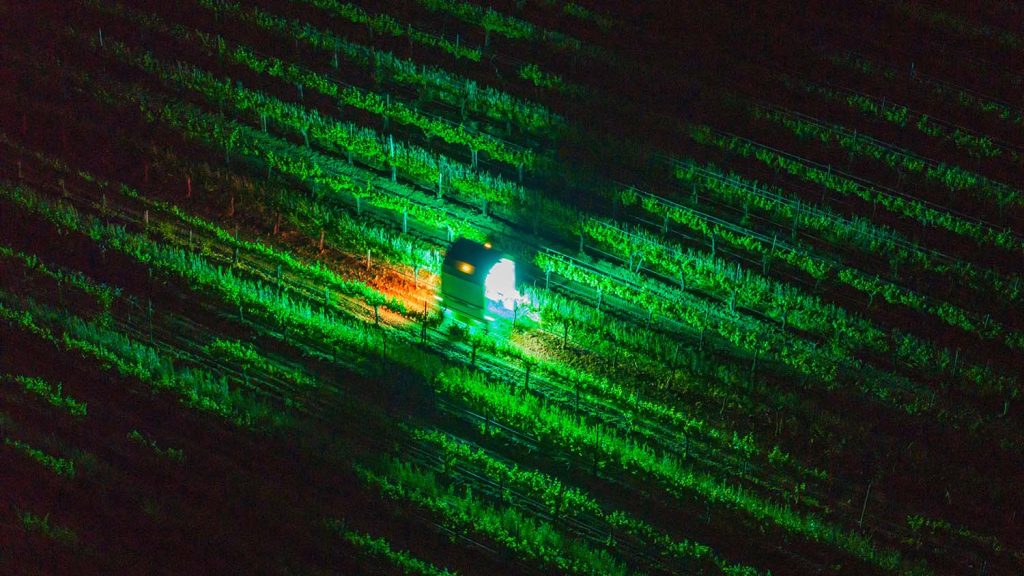
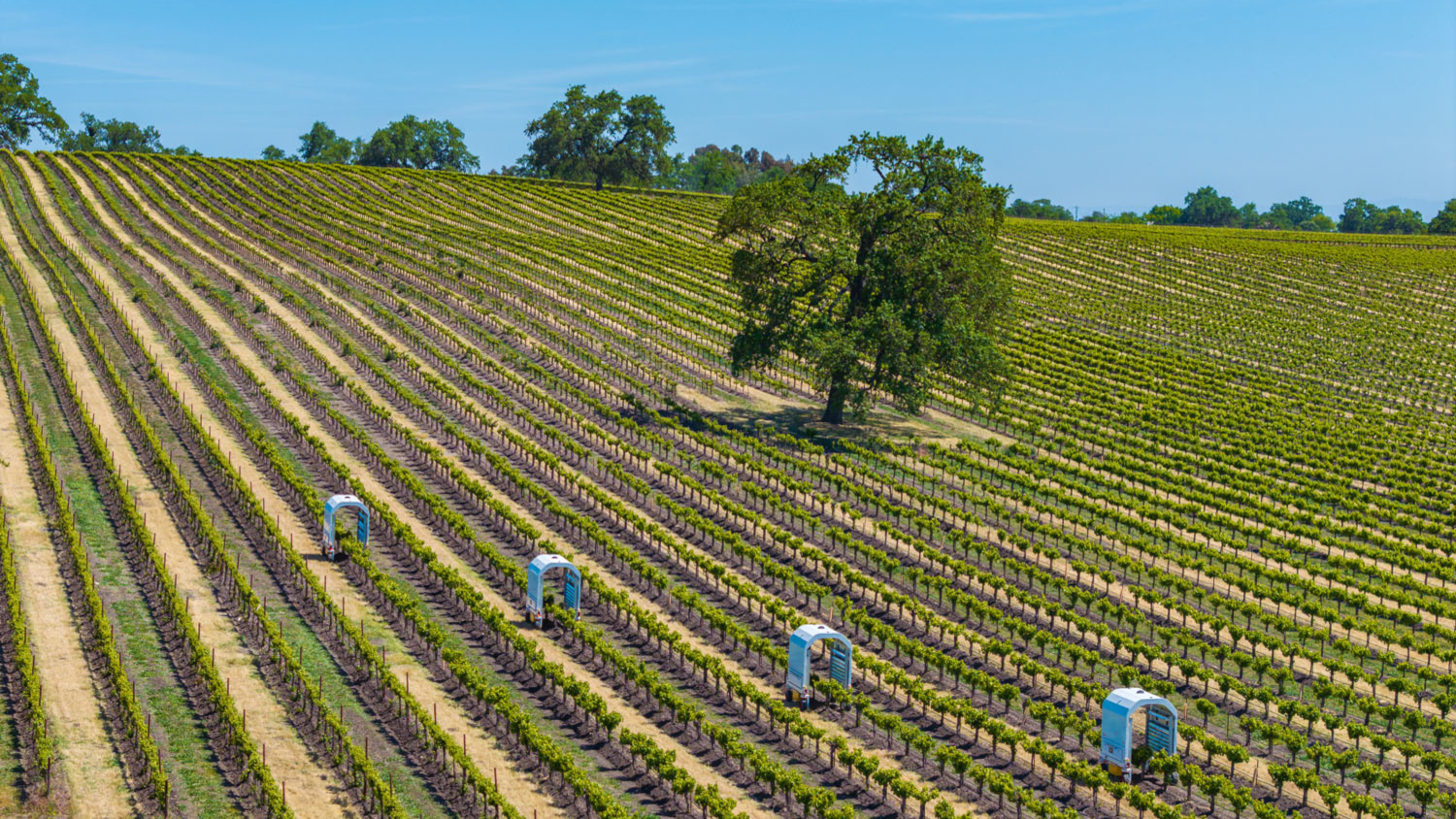
Saga Robotics is just one company working to drive this change. With headquarters in Norway and offices in the UK and US, it develops technology that delivers for both growers and the planet. The company’s autonomous robot Thorvald uses UV-C light as a replacement for pesticide sprays on strawberry plants. It also collects data on every strawberry it passes. Today, some 200 Thorvald robots treat over 30% of the strawberries grown in the UK.
A sweet start
The Thorvald robot began life in 2014 as a Master’s project at the Norwegian University of Life Sciences, when student Lars Grimstad and supervisor Dr Pål Johan From set out to tackle the issue of sustainable food production using a combination of UV-C light and robotics.
The pair launched their company in 2016 and have since rolled out the Thorvald platform to major UK strawberry farms.
“I truly believe that robotics can transform farming for the better. More and more tasks on the farm can now be handled by robots, which frees up time, reduces costs, and lets farmers focus on what truly needs a human touch,” says From, now founder and CEO of Saga Robotics.
His colleague Damian Flynn, the company’s chief product officer, describes the design process behind Thorvald as very iterative. A farm is constantly changing, he says, and so are the company’s designs. It’s not a predictable environment like a warehouse or factory; instead, acres of rough terrain hosts small, delicate polytunnels filled with hundreds of plants. Much can go wrong, and if it does, huge losses are often the result.
“I’m a big believer that your designs are never finished, especially in agriculture, where there isn’t really a limit to reliability,” Flynn explains.
“Your customers expect ‘tractor-level’ reliability, and we’ve been able to achieve that in a really short space of time, and that’s partly to the design process that we have, and Onshape as a significant tool contributes to that.”
Using Onshape, the cloud-native CAD and PDM package from PTC, Saga Robotics’ design team can alter their designs while out in the field, using their phone. They can also collaborate with colleagues back in the studio and those working in other functions at the company. Despite not being trained as a designer, Flynn finds Onshape easy to use.
Tackling mildew
Strawberry powdery mildew (Podosphaera aphanis) is a common fungal disease that attacks the leaves, flowers and fruit of strawberry plants. It can cause major yield losses of 20% to 70% and costs the farming industry millions.
Traditionally, fungicide sprays were used to prevent and kill powdery mildew. But these can be expensive and the labour to apply those sprays also comes at a cost. Over time, powdery mildew can become resistant or develop reduced sensibility to chemical fungicides.
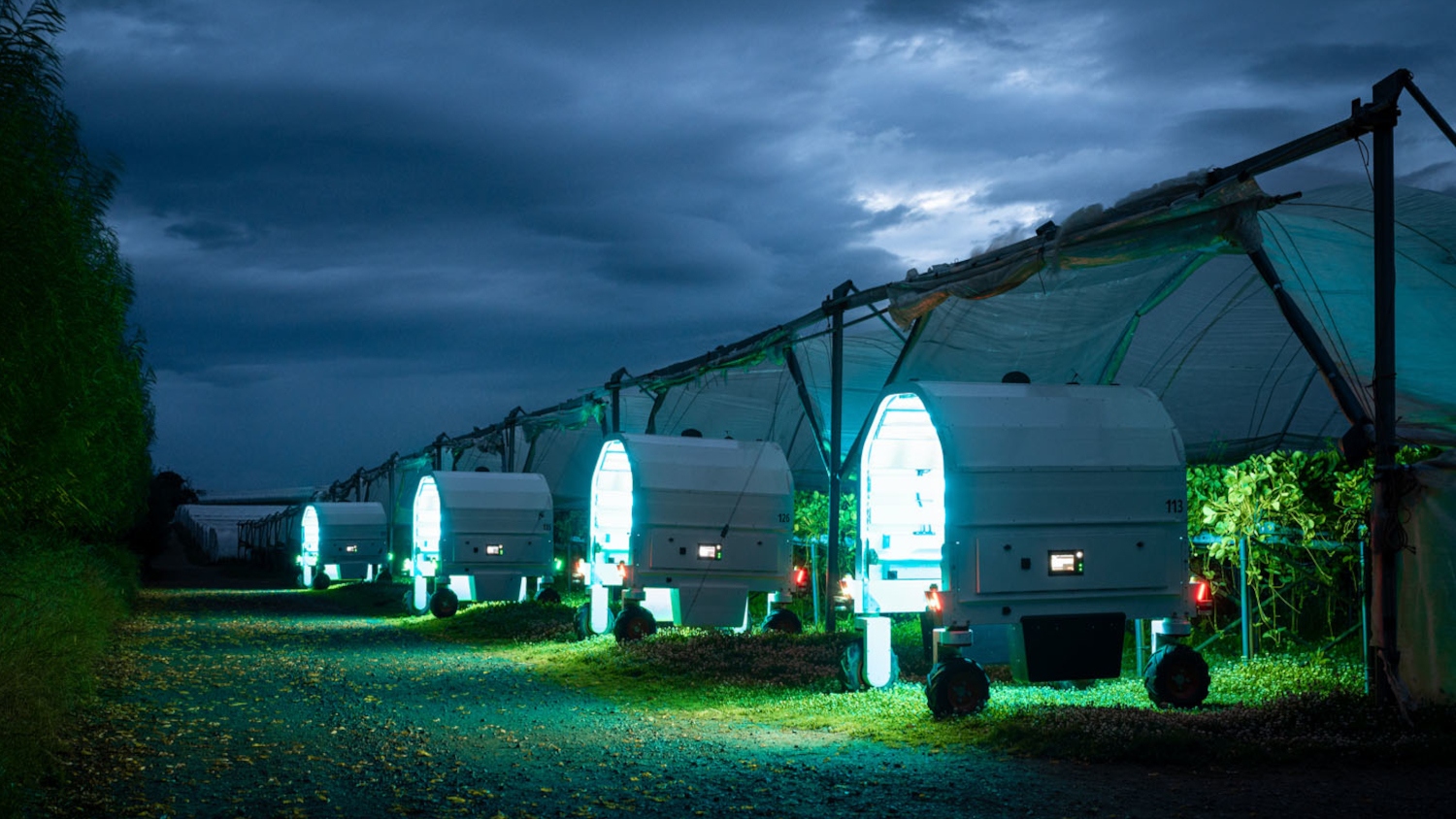
By contrast, Thorvald works by using UV-C light treatment for more precise fungus control, reducing the use of pesticides and the cost of labour. One worker can typically manage between six and 10 robots via the dedicated app. “We have some growers who don’t use any sprays now,” says Flynn.
UV-C is a portion of the electromagnetic spectrum usually filtered out by the Earth’s atmosphere, but Saga Robotics Thorvald can artificially create it in order to kill mould.
The plants exposed to this light simply don’t develop mould, says Flynn, “So that, for growers, is a really great alternative, because it’s clean, it doesn’t have an detrimental environmental effects, it doesn’t go outside of the direct treatment area and it’s a really effective treatment against powdery mildew and other diseases,” says Flynn.
Thorvald is designed to be modular so that it can be adapted to suit specific needs. There’s a low, narrow version for greenhouses, for example, a three-wheeled version, and a tall version for phenotyping.
Saga Robotics’ proprietary Dual-axis Drive (DAD) module replaces complex drivetrain maintenance with a simple module swap. This design minimises field downtime and secures continuous, reliable operations in demanding environments like remote farms and vineyards.
The open rectangular frame is made from lightweight aluminium and straddles crop rows without damaging plants. It is equipped with cameras, LIDAR and GPS.
In its standard configuration, Thorvald has four-wheel drive and four-wheel steering capabilities with passive suspension to ensure good traction in rough terrain. It has a track width of 1.5 metres, a mass of under 200 kg and a low centre of gravity. It is fully electric, running on 48 VDC lithium batteries with the main computer inside one of the battery enclosures.
Thorvald in action
Profit margins in farming are often razor-thin, so it’s no surprise that farmers can be pretty risk-averse when it comes to acquiring new equipment and adopting new processes.
“They also have year-after-year contracts, so that one bad year, one bad harvest, can be pretty devastating,” says Flynn. “Growers want to be more sustainable, but they also need to make money as well, and they recognise that this is a way of doing both.”
Thorvald asks growers to make two significant changes: an end to spraying and a shift to automation. That might at first seem daunting, which is why Saga offers a farming-as-a-service model. This enables farmers to lease Thorvald robots on a per-acre, per-season fee structure, in order to mitigate some of the risks of changing growing processes.
Thorvald also has a fully integrated data tool, which captures produce data while treating the field with UV-C. It counts each fruit while measuring its ripeness, plans out labour and picking schedules, forecasts yields and optimises margins.
When there are hectares of strawberry plants to manage, this is insight that farmers wouldn’t have without Thorvald feeding data to the app.
With a cleaner, more sustainable solution to achieving higher strawberry yields, while simultaneously addressing the challenge of labour shortages, Saga Robotics is driving the evolution of farming technology for another generation.
This article first appeared in DEVELOP3D Magazine
DEVELOP3D is a publication dedicated to product design + development, from concept to manufacture and the technologies behind it all.
To receive the physical publication or digital issue free, as well as exclusive news and offers, subscribe to DEVELOP3D Magazine here