
When you’re creating a blended-wing body aircraft, one small tweak can impact multiple other aspects of your design. Stephen Holmes speaks to the team at aerospace start-up JetZero about how its use of the latest modelling, simulation and AI technologies is helping to address this challenge
Much of the current debate around the future of passenger flight focuses on fuel and powertrains, but the team at California-based aerospace start-up JetZero is approaching the topic from a very different angle.
When it comes to aerodynamics, blended-wing body (BWB) aircraft are far more ‘slippery’ in the air than designs that follow the ‘tube with wings’ convention.
By merging the fuselage and wings to create a single, continuous lifting surface, the benefits in terms of improved fuel efficiency, interior space and aerodynamic drag are substantial.
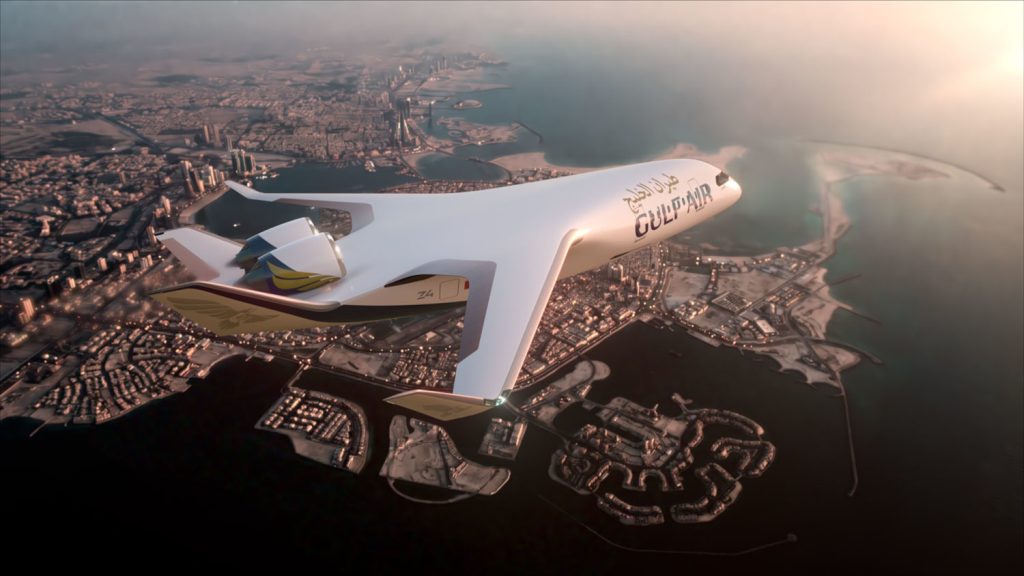
JetZero is leading the way in developing these forms and the sculptural form of the company’s low-drag, lightweight, all-wing Z4 is able to reduce drag by some 30%, leading to a 50% reduction in fuel consumption, according to some studies.
Other BWB benefits include the ability to cruise at higher altitudes, thus meeting less resistance in the thinner air – some 5,000 feet higher than many of today’s airliners. It can also achieve a 22:1 glide ratio (a measure of the horizontal distance an aircraft travels forward divided by the vertical altitude it loses during unpowered flight), a steep upgrade on the 3:1 ratio managed by typical narrowbody aircraft.
Although still a concept, JetZero’s design is rooted firmly in the present. For example, it uses already certified high-bypass turbofan engines from supplier Pratt & Whitney, eliminating the need to wait for new hydrogen or battery technologies.
Despite a wide 58-meter wingspan, some 20+ meters longer than the Boeing 757, the Z4’s body length is slightly shorter, meaning it remains within the parameters for current airport gates and taxiways without requiring infrastructure changes.
The versatile design has attracted investment from both commercial passenger airlines and the US Air Force, with investors viewing it as a modern strategic refuelling tanker. For travellers, the unique wide-body interior promises a layout with shorter, wider rows, rather than a single, long aisle. And since the engines are located on top of the airframe, their noise is deflected upwards and away from the cabin and ground, resulting in a quieter flight.
Mounting anticipation
Excitement around the opportunities afforded by a BWB form is nothing new. It’s over 100 years since the first BWB monoplane, the Westland Dreadnought, took off – albeit briefly – over Britain. Designed as a mail-carrying concept, the Dreadnought’s lift-generating centre section blended into the wings, but on its maiden flight, it stalled and crashed, badly injuring the pilot.
No full-size commercial example has made it to the runway since that time. The number of large, rapidly moving, trailing-edge surfaces needed to simultaneously handle trim, pitch and roll makes for a complex engineering challenge. Meanwhile, the lack of a conventional tail makes the design susceptible to aerodynamic instability, especially at angles of attack between four and 10 degrees.
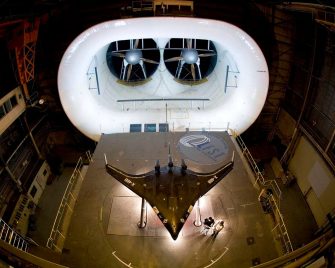
None of this means that interest has waned entirely, though. NASA has been exploring BWB designs since 2000. Alongside Boeing, it launched a X-48 concept that underwent test flights between 2007 and 2013. This concept was a scale, remote-controlled experimental aircraft that was at least able to prove the low-speed flight dynamics and structural efficiency of a BWB design.
We feel that, with the additional AI and automation that exists today, we can build these things and so much more Florentina Viscotchi, JetZero
With the adoption and advancement of 3D CAD tools and simulation in the aerospace sector over recent decades, the technology is now available to perfect BWB designs, according to Florentina Viscotchi, chief of engineering and head of product development technology and innovation at JetZero.
“With the evolution lately, being able to take all of that and build upon it even more, this is why we feel we’re ready now, and this is where we feel that – especially with the additional AI and automation that exists today – we can build these things and so much more,” she says.
Plane geometry
Design exploration for plane geometry is a key challenge for the JetZero engineering team, which has split the process into three defined pathways.
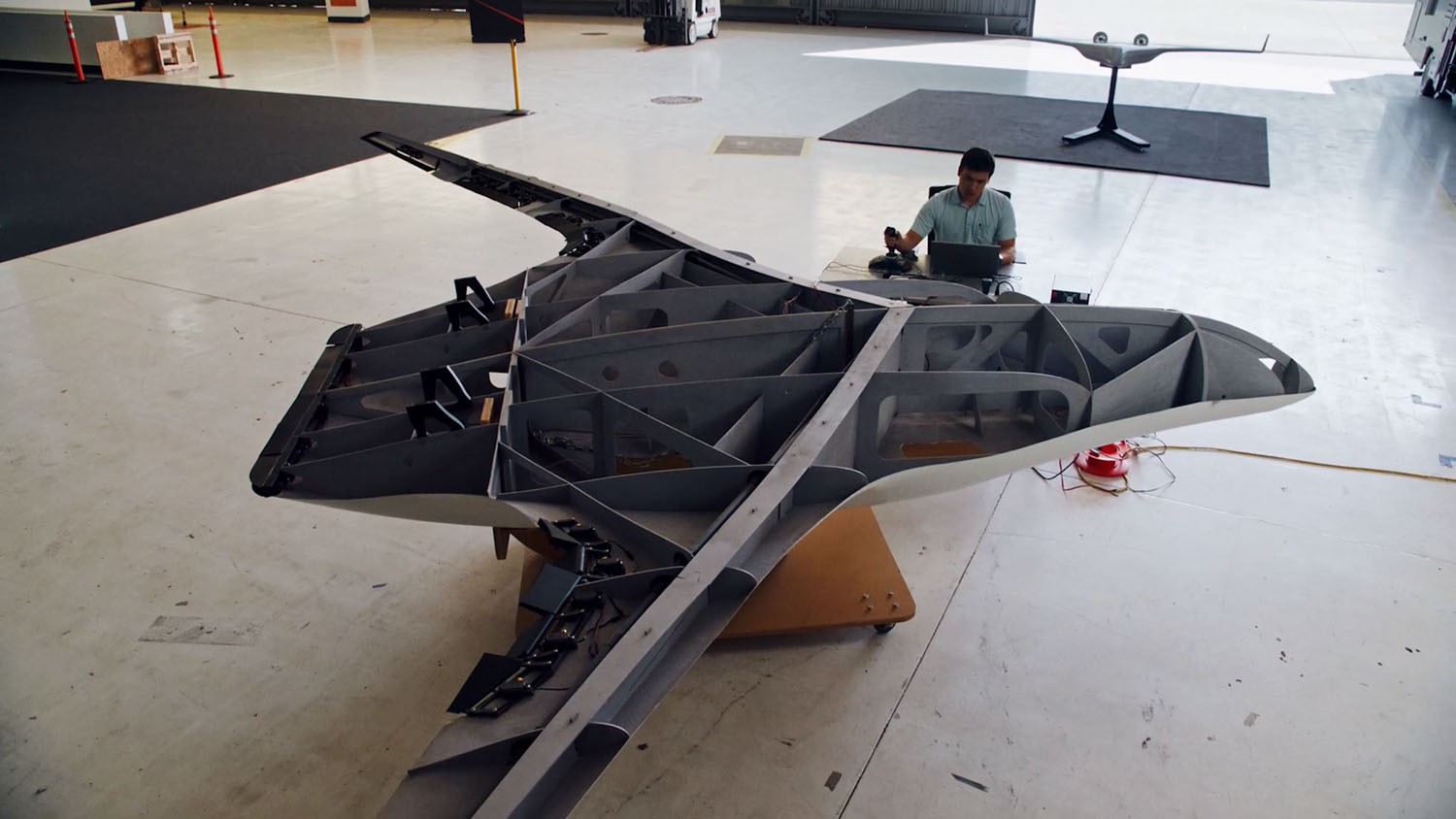
The nimblest is the Pathfinder; a series of scale vehicles where the engineering team validates the aerodynamics, neutral point and centre of gravity of the aircraft, among other features. Pathfinder vehicles range between 4% and 12.5% scale, with five generations of scaled aircraft built and flown over 30 flights, says Viscotchi. As she explains, engineers find that 6.25% scale models provide the most efficient means of learning about the airplane and, at the same time, provide best value for money.
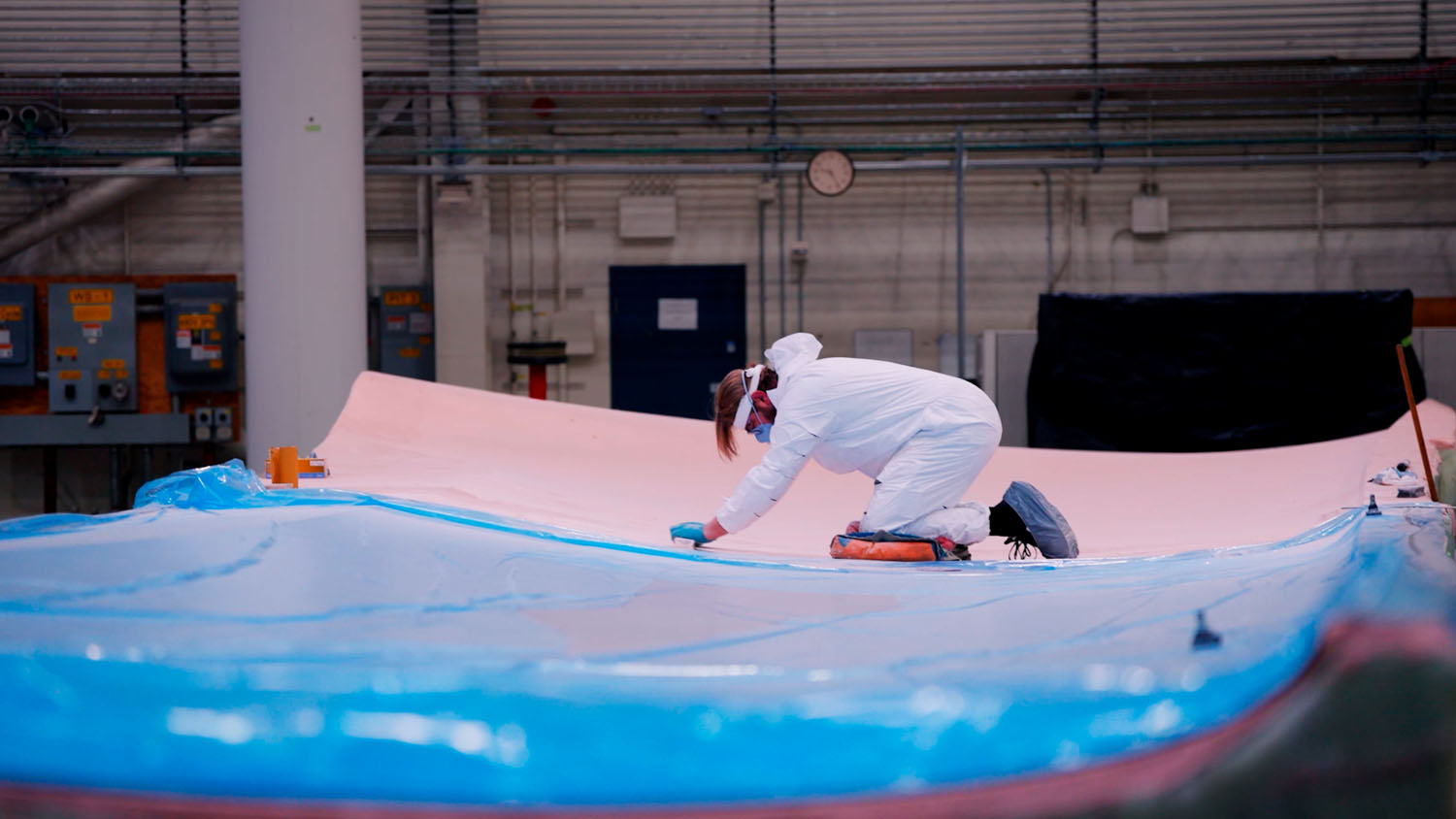
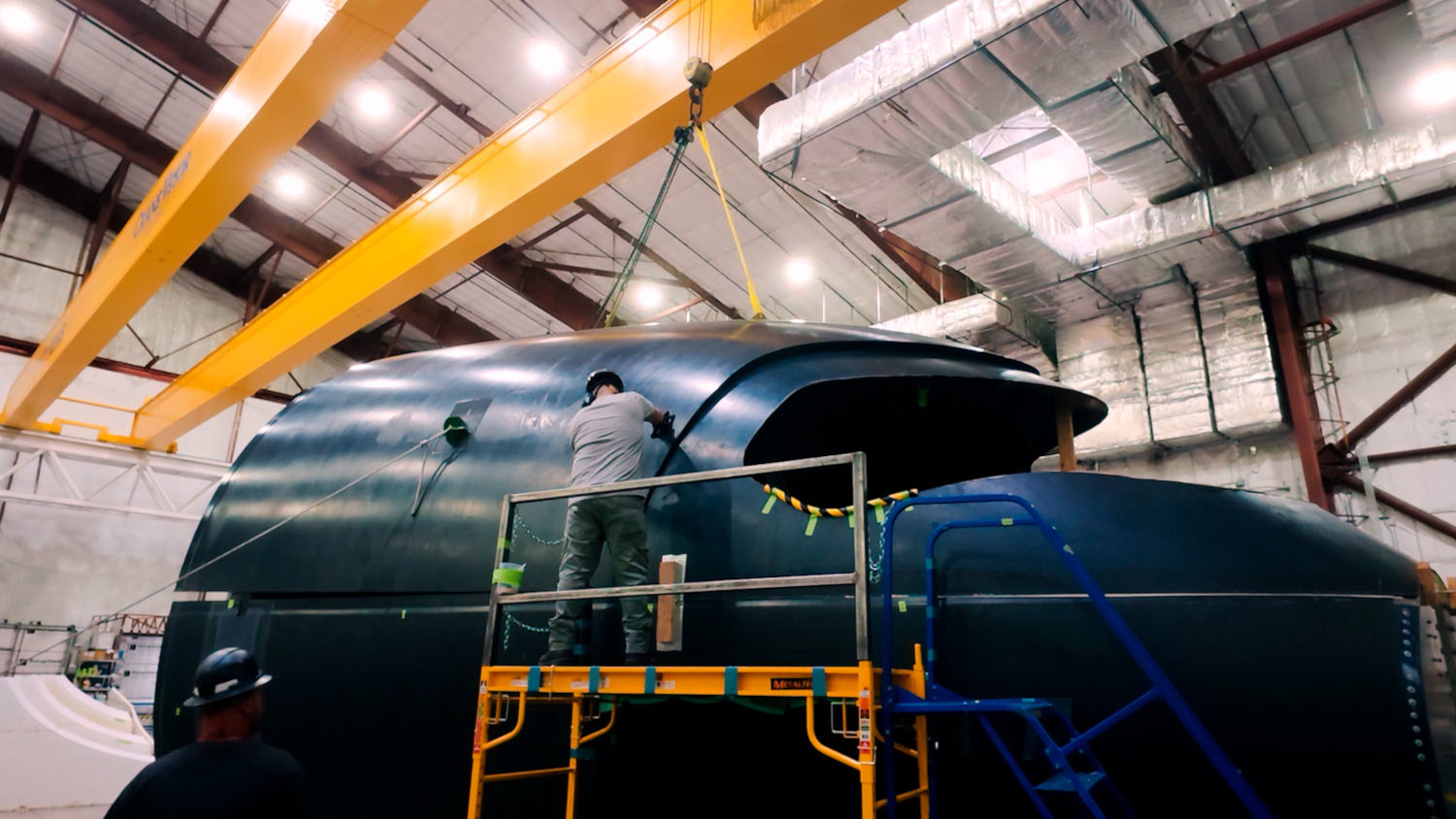
The Demonstrator, meanwhile, is the first full-scale prototype of a JetZero BWB design, which is being developed at speed with the aid of Northrop Grumman’s Scaled Composites, she says. “If you haven’t fully optimised one area, if the weight is not perfect, that’s okay.
We keep moving and we go fast because we want to fly!”
Finally, the Product represents the most optimised design and is the pathway where the engineering team is able to exercise the most digital optimisation.
“On the Product, we really don’t want to leave any of that performance on the table. We’re applying the learning from the Pathfinder and the Demonstrator, but the Product is the place where we think ten times, but we do it once, right? We are exploring thousands of possibilities [digitally], and we find that’s more valuable than perfecting one design manually,” says Viscotchi. “
And that’s why our collaboration with nTop has been phenomenal, in the sense of allowing us to explore those designs and not just one plane.”
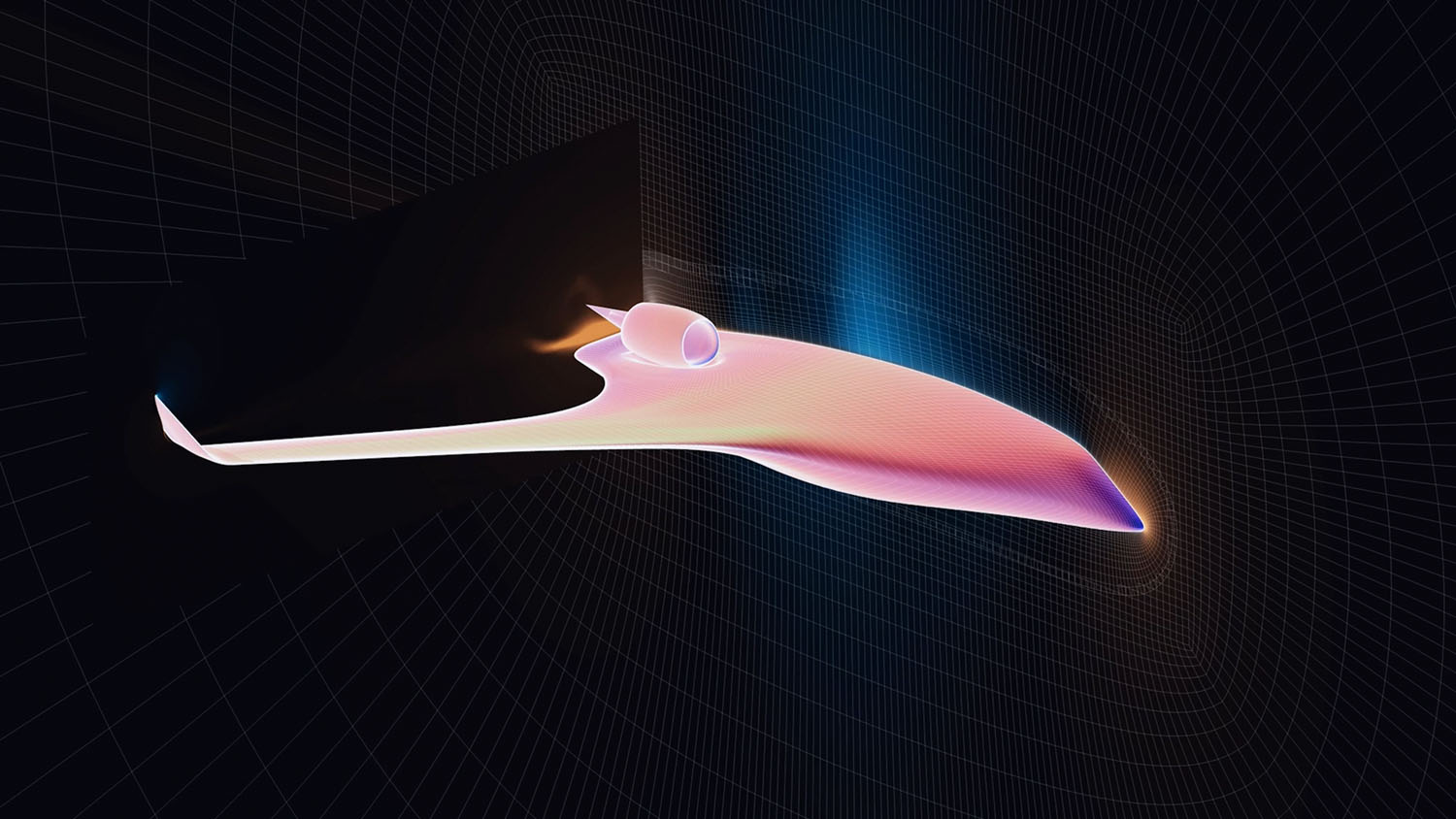
JetZero’s approach to design exploration looks to use the most automation and simulation possible, not only to interrogate all the various configurations, but also to automate the design loop, the addition of parameter changes, and to simulate the geometry one by one. The goal is to jettison traditional, time-consuming manual handovers between engineering departments in one workflow, having them run unattended as much as possible.
“Don’t get me wrong – we’re not just looking for speed,” she says. “As much as speed matters, we also need to make sure that there is reliability, which for us matters even more.”
Simulating everything upfront builds the team’s confidence in the design, she adds. “In the end, it’s not a design that you’ve just done. It’s a design that you’ve already tested and simulated a hundred times – a thousand times – as opposed to just spending all of that energy on the typical way of working, where you focus on that one design. That’s where we differ drastically.”
Compliance and constraints
Equally important to the design are existing aviation rules and regulations. The goal here is to include nothing that requires specialist infrastructure, with the design able to use standard airport jet bridges and runways and meeting all the emergency off -boarding times and technical specifications required of current aircraft today by the US Federal Aviation Administration (FAA).
“We’re not just designing freely without any of those constraints. And the reason is exactly because we recognise that adding infrastructure novelties can be very costly, and we don’t want that,” says Viscotchi.
The blended-wing body involves much tighter coupled elements and considerations, from aerodynamic structures right through to manufacturing and assembly. A big challenge for JetZero is how to integrate and perfectly balance all these systems.
“Doing it up front with the proper thoroughness is so important,” she explains, “or else you start having to reshape that airplane again. It’s not like on a tube and wing [aircraft], where you can just shift the wing forward or aft a little bit and adjust the balance.”
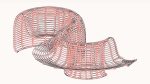
JetZero’s nTop model of the Z4 is fully parametric, encoding the entire aircraft as a single interconnected workflow: outer mould line, structural wing box, air foil sections, nacelles, winglets, landing gear and interior volumes. When parameters change, the model regenerates correctly and the output is simulation-ready every time.
“What we managed to do with nTop is to secure that multidisciplinary optimisation where success depends on balancing those competing objectives, rather than optimising one,” says Viscotchi. “It helps us to solve [faster], but it also helps us to make sure that, with the AI assisted explorations, we truly make sure that we choose the right solutions for what we need, and that’s where the difference comes.”
Recalibration challenge
The organisational shift to working with automated, optimised, intent-driven design in this way can be a difficult one for legacy companies to make, since they are typically stuck in traditional design, test, evaluate and repeat loops. It requires a recalibration for them, but not for a start-up like JetZero.
“I think CAD is extremely effective for many engineering tasks. The question for the modelling approach at every stage that we’re going through is whether CAD is the most effective way every time or should we rather set those up depending on the phase we’re in?” says Viscotchi. “So that’s where the difference is.”
The benefit of nTop, she says, lies in having geometry that is better positioned for multiphysics simulation and automated processes than traditional CAD.
“I really think that as far as how we propose the options, how we automate that repetitive work, how we orchestrate the different workflows, how we accelerate those explorations, it’s there for us. And I feel that an organisation that’s willing to embrace that – one that sets up that infrastructure upfront – is going to be the one that’s winning over others. And the beauty of JetZero is that we don’t have any of those constraints.”
The nTop geometry engine is now running as a native skill inside Nvidia’s NemoClaw, which enables the JetZero team to run secure, always-on autonomous AI agents. Enhanced with Nvidia technologies for accelerating CAE simulations, agents introspect and populate design parameters, dispatch geometry jobs to virtual machines, scaling to available compute as the design of experiments grows, and route outputs to the appropriate analysis tool, without manual intervention.
The loop from engineering requirement to analysed design variant runs autonomously, allowing a single engineer to set up a design of experiments across dozens of BWB configurations and then let the stack run overnight.
By engaging with the latest in simulation, compute and AI, the JetZero team is not limited by needing all the geometry upfront or the time needed to build all the geometry first. Instead, it can study all the options available faster than previously imaginable.
“We allow the engineers to explore vastly more possibilities,” says Viscotchi. “I really feel that the stars are aligning for what we’re trying to build here. The time is now, as far as I’m concerned.”
Company background: JetZero
JetZero is not simply about building an aircraft, but building a company set to challenge the old guard.
A giant 184-acre campus in Greensboro, North Carolina is currently under construction. This will include corporate headquarters, a main production factory and the North Carolina Composite Center.
For now, the JetZero design and engineering team is dispersed across several key strategic hubs of the North American aerospace industry. The main engineering team, for example, is currently based in Long Beach, California. Structural teams are located in Wichita, Kansas, while a further outpost is based in Montreal, Canada, where chief of engineering Florentina Viscotchi has spent the past three decades working for the likes of Bombardier and Airbus.
Being spread across these centres of competencies is not holding JetZero back from building its own company culture, Viscotchi says. An important aspect of this is the definition of design, engineering and manufacturing team boundaries being set by their objectives, not simply by the previously siloed nature of CAD, simulation and optimisation tools.
“I know that with time, they’re going to become less and less distinct,” says Viscotchi. “I think that is the key to the solution: making sure that those harder problems that we are trying to solve are in that homogeneous mix, and with a tool that we select in each area, we bring the value for the specific workflow.”
By starting with high value computational assessments, JetZero aims to automate as much of the iteration process as possible, thus freeing up the talents of staff and speeding up the entire process. “
We’re really trying to do that in an integrated product way, cross functionally, so that everybody can bring their fundamentals to the table. We’re trying to bring an entire company into this new way of working,” she says.
The challenges of building BWB aircraft require teams to evaluate different facets at the same time, not consecutively, she adds. “While every iteration we do takes time, I feel that we can realistically do things much faster, thanks to the technologies available to us.”
The plan is for each aircraft to have its own digital twin, but the extent of their complexity depends on the level of detail needed to provide useful insights. The company is doing this “in slices”, she explains.
“I don’t want to engage in something that’s mission impossible,” she laughs. “You start with the big picture, then you keep going deeper and deeper, and make sure that this complexity is carefully selected and managed. It’s not about having the same granularity everywhere. It’s about focusing on the areas that need the most attention.”
The goal of BWB flight has been around for a long time. The challenge now is having the guts to push that vision forward.
When The Demonstrator takes off in late 2027 for its maiden flight across California’s Mojave Desert, it will be the first crewed BWB in more than a century – a marker not just in the history of human flight, but also in what the latest technologies can deliver today and where they can take us in the future.
This article first appeared in DEVELOP3D Magazine
DEVELOP3D is a publication dedicated to product design + development, from concept to manufacture and the technologies behind it all.
To receive the physical publication or digital issue free, as well as exclusive news and offers, subscribe to DEVELOP3D Magazine here