
For Darron Roop of Roop Yacht, designing a great boat is about knowing exactly how it will feel on the water before it’s built. By running CFD simulations on a powerful HP Z6 G5A workstation with an AMD Ryzen™ Threadripper™ PRO processor, he is turning his instinct into engineering certainty.
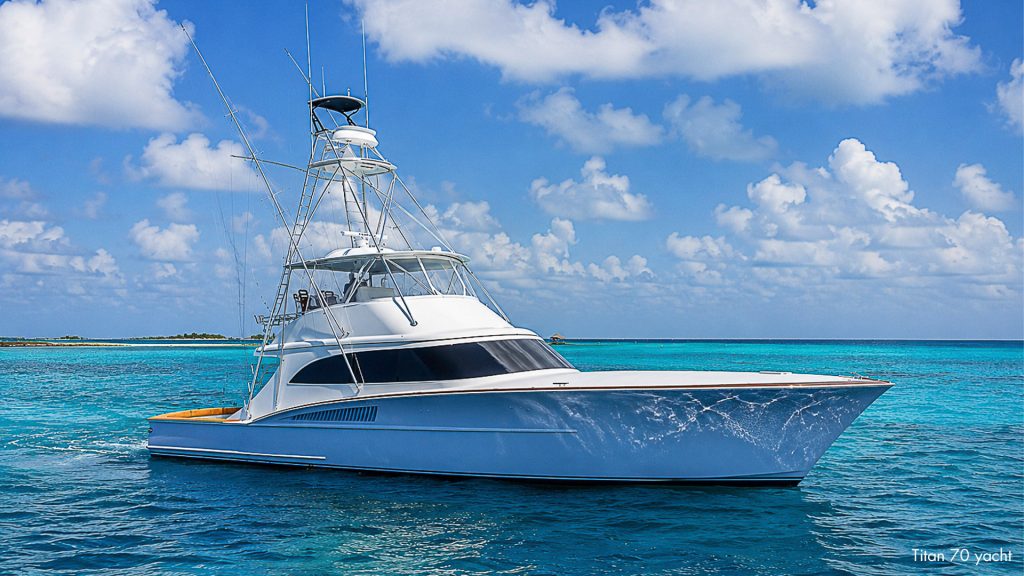
Bluewater fishing is a sport that is incredibly demanding on a boat. In order to hook massive, pelagic fish such as marlin, tuna and swordfish, participants must navigate open-ocean environments and deep waters, often in turbulent weather conditions and high sea states. The boat in which they travel should offer the range and fuel capacity to reach deep-water canyons and return safely, plus the space to comfortably accommodate equipment, crew and their catch.
Vessel stability is vital, at rest and at speed, and weight placement plays a key role. This is first tested as the captain chases the fish forwards and backwards, with the seas heaving, pitching, and rolling the boat and crew. Then hauling aboard the catch — which can weigh hundreds of pounds and put up a considerable fight — can be a ferocious business, so the boat must also be able to absorb sudden shifts in its centre of gravity without tipping.
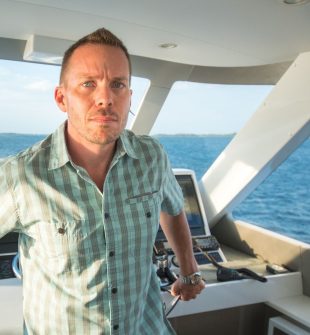
Darron Roop of Roop Yacht, a designer of recreational marine vessels, grew up in this world. Following a boyhood spent fishing with his family out of Oregon Inlet, North Carolina, he went on to study naval architecture at Virginia Tech before beginning his career as a loftsman and carpenter in the boatyards of Wanchese, North Carolina. In 2003, he launched Roop Yacht, a design company that today serves individual customers wanting custom boats, the builders of those boats, as well as manufacturers of recreational vessels.
Above the waterline
According to Roop, his personal design approach involves finding the optimum balance of performance, function, aesthetic and manufacturability. The process typically begins with capturing the conceptual elements of a boat, he says. “What are we intending to put in this boat? What is it going to look like above the waterline? We have to focus on what the hull form is likely to be, because that’s going to dictate a lot – so do we need to make the boat wider, or longer?”
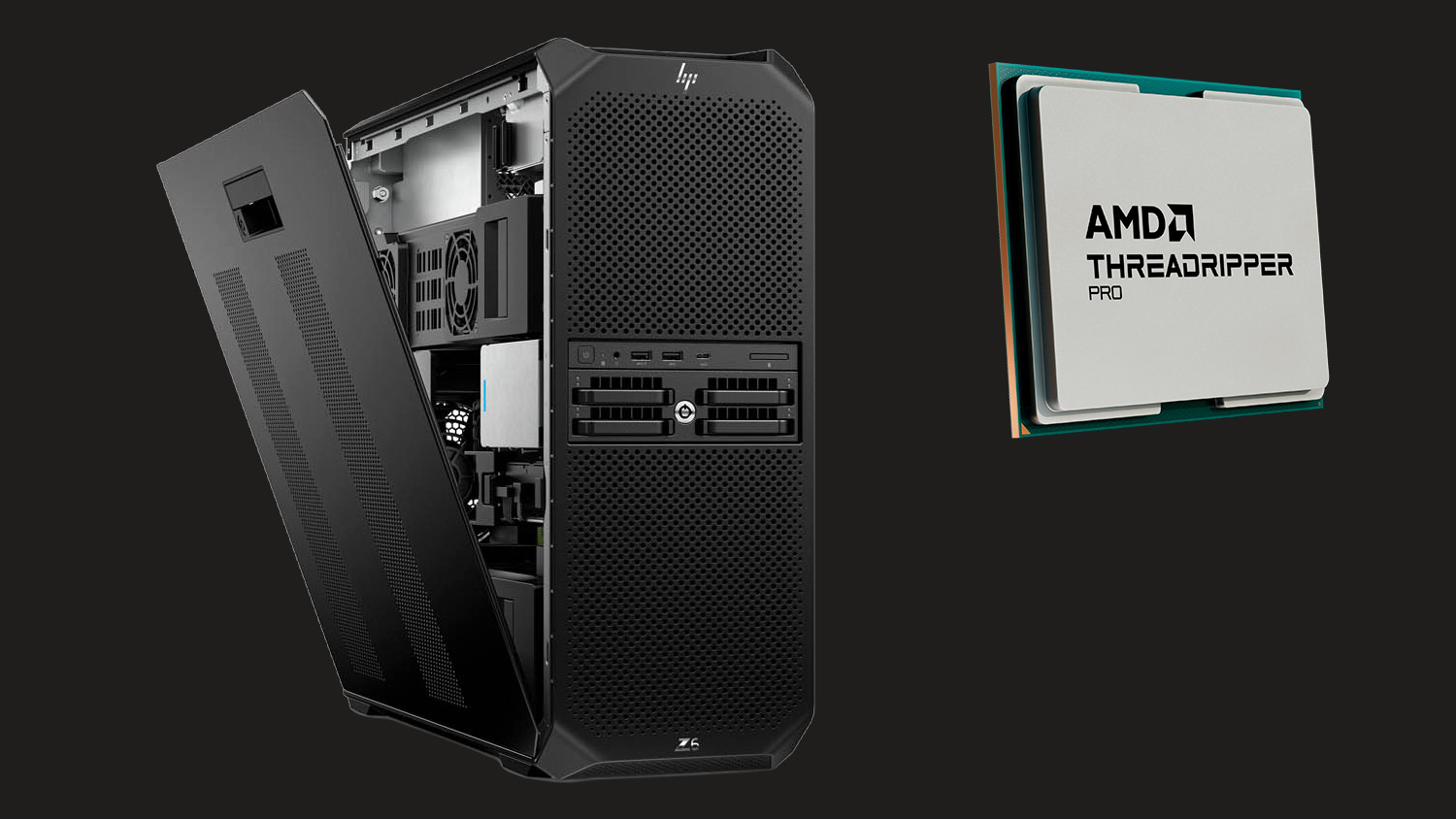
His ideas first get captured in the form of 2D drawings, which then provide the input for a weight study, to determine the weight of a boat and how that weight should be distributed. Roop then begins 3D modelling the hull with supporting analysis from Orca3D, a marine design and naval architecture plug-in for CAD software Rhino, which he runs on an HP Z6 G5A desktop workstation powered by a 24-core AMD Ryzen Threadripper PRO 9965WX processor and AMD Radeon™ AI PRO R9700 GPU. The hull design is shaped first for functionality/performance and then aesthetics, in concert with the superstructure and other contributing elements.
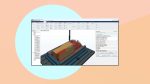
To help optimise his design, Roop uses Orca3D Marine CFD, a computational fluid dynamics software powered by Simerics-MP (Multi-Purpose) that enables boat designers to analyse and evaluate aspects of their design such as hull performance, resistance and self-propulsion, for example.
“The biggest thing we’re looking for is to identify the pattern of the water on the bottom of the boat,” says Roop. “We use Orca3D Marine CFD for a range of analyses, and I probably stack up around a dozen runs, give or take, for any hull design, just to play with different aspects of the design, understand the impact of design choices and choose the best way forward, but the biggest impact comes from seeing what the water is doing on the hull bottom, so that I can understand how the boat is going to feel.”
[Compared to my previous workstation] it’s compressing the timeline, so I can make decisions faster. When you have to walk away for three days to get one data point, you kind of lose your train of thought.
Darron Roop of Roop Yacht on how the HP Z6 G5A desktop workstation powered by an AMD Ryzen Threadripper PRO 9965WX processor is transforming the role of CFD simulation
His own experiences with his own boat – the very first he designed, over 25 years ago – directly inform this understanding. “It’s been an invaluable asset to me,” he says. “I know how a boat feels in my hands, and I can relate that to the numbers [from both calculations and simulations], so I can also relate that to a spray pattern, to a water pattern on a hull bottom, and say, ‘OK, this looks good. This is going to feel right.’
At the same time, simulation results give him the confidence to “push the envelope further” on his designs, especially in areas outside of known empirical data. “I can see that I’m achieving the dynamic stability I need, and then milk extra speed out of it, without running the risk of instability,” he says.
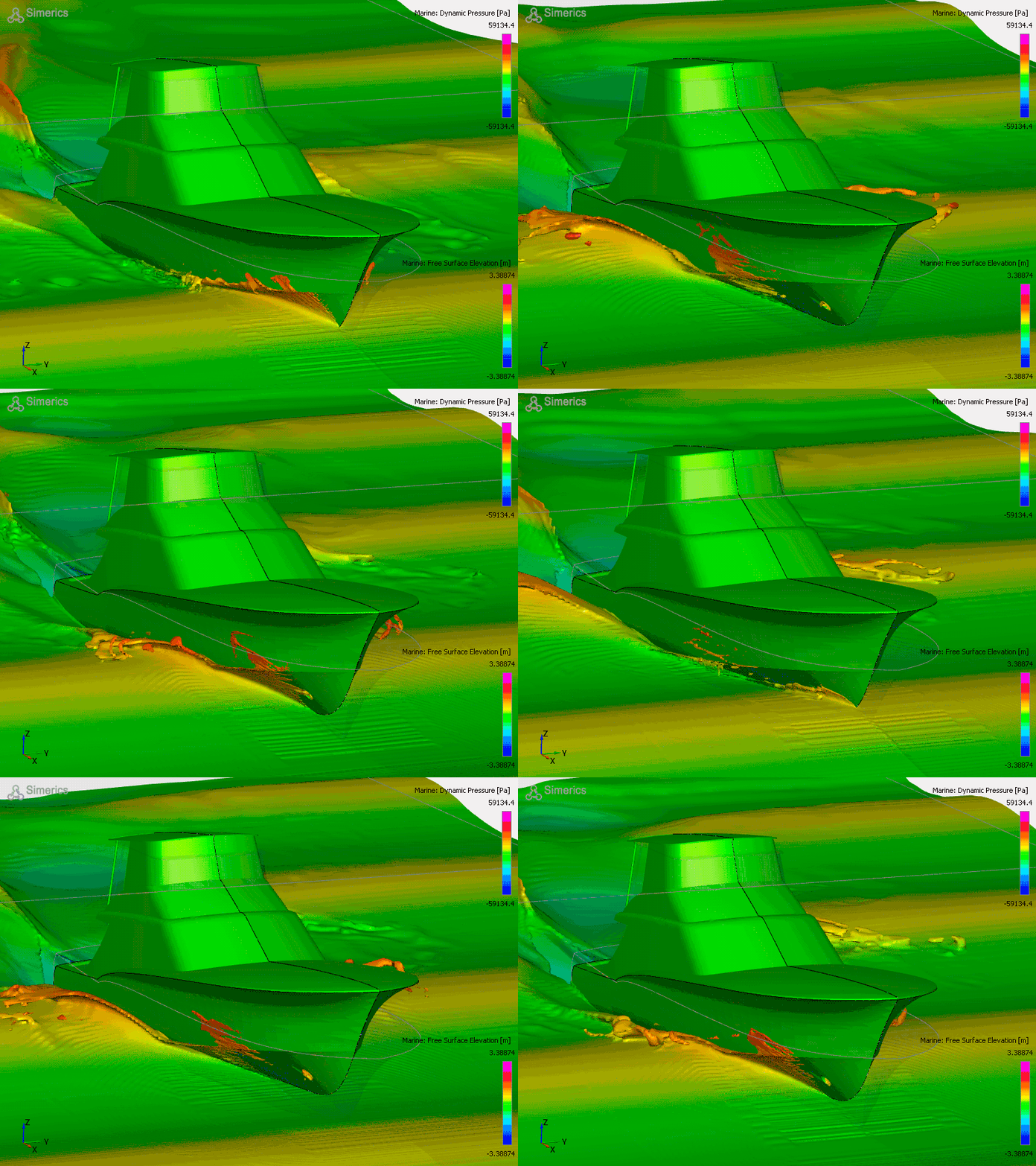
For most of his career, Roop didn’t have at his disposal a simulation technology like Orca3D Marine CFD. Back in college, he says, the only CFD he saw was carried out on a massive mainframe computer and involved bespoke code built by highly talented, expert programmers.
Today, running CFD studies himself on his HP Z6 G5A workstation, Roop has slashed the time it takes him to run complex simulations from around 72 hours to around 30 hours, compared to his previous workstation. “It’s compressing the timeline, so I can make decisions faster,” he says. “When you have to walk away for three days to get one data point, you kind of lose your train of thought.”
Roop chose AMD Ryzen Threadripper PRO over Intel Xeon at the recommendation of his software provider. But this was not just to do with the chip’s powerful high frequency multi-core architecture. Simerics has also worked closely with AMD to optimise its CFD software for the Threadripper PRO chiplet architecture, implementing a thread pinning approach that makes best use of the L3 cache, enabling simulations to run around 25% faster.
Within the Threadripper PRO range, his choice of the 24-core 9965WX specifically came down to finding a balance between price and performance – of both hardware and software, which is licensed by core – while factoring in the way he actually works day in day out. Since his license for the CFD software allows him to use up to 16 cores, it still leaves plenty of free capacity for multitasking, so that he can further develop his designs with the support of Orca3D, while running CFD simulations in the background.
When Roop travels, he takes an HP ZBook Ultra G1a mobile workstation with AMD Ryzen AI Max PRO processor and integrated Radeon GPU. From Europe, for example, he uses it to remote into his desktop workstation, putting its big compute resource to use from anywhere.
When it comes to rendering, there are still uncharted waters to navigate. Much of this work is currently outsourced, he says, although he’s working on building in-house expertise, “because we’re actively exploring ways to increase our use of rendering in the decision-making process, beyond just providing marketing materials.” With the hardware set-up he already has, he adds, he’s confident he has the performance headroom to get the best out of the GPU-accelerated Rhino Cycles rendering tool, both on his HP Z6 G5A desktop and HP ZBook Ultra G1a mobile workstation.
On the horizon
What else is on Roop’s horizon? Probably a plan to design just one of his many ‘dream boats’, for his own personal use. Hardcore boat enthusiasts feel the need to own multiple boats, just like biking enthusiasts need to own many bikes for different road surfaces and activities, he jokes.
“For me, personally, I still want to go offshore and I need a boat that can take me there and back. If it gets rough, I want to know I can get home or at least not be worried. But I also want a boat I can use to fish in shallower waters. And I want a boat that’s built for comfort, for when I take my wife and my friends out on the water. So, it’s not just one dream boat for me, but many, and when I’m working on a design, I often recognize that I’m creating something that would be a perfect fit for one of my many dream boats.”
The real magic of his work, however, lies in drilling down into exact tastes and preferences of the individual boat buyer who’s in the market for just one vessel offering a mix of capabilities. The trick is to pinpoint that mix exactly.
“I want to understand who they are, what they like to do, where they want to go and who they’d like to take. Whatever their answers, I’m aiming to exceed their expectations, to deliver a design that truly delivers on the magical experience of being out on the water.” And with CFD simulation cycles now measured in hours rather than days, Roop has more room than ever to chase that experience down to the last detail before a single hull is ever built.