
Hydrogen power will eventually become an integral part of renewable energy supplies. Gabrielle Brown learns on her visit to Toyota’s Hydrogen Hub how hydrogen power can be integrated into maritime industries
Hydrogen power produced renewably can lower emissions, create clean transport and reduce reliance on fossil fuels, all leading to a more sustainable planet.
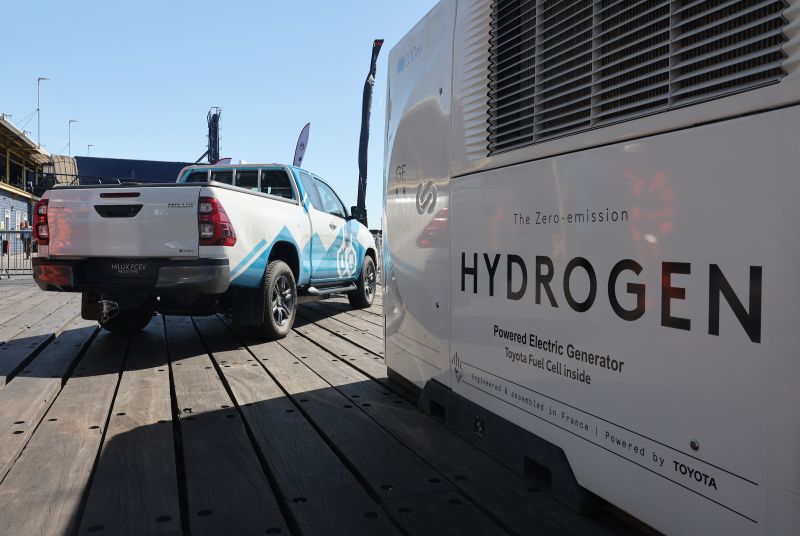
Hydrogen-powered cars, both for racing and personal use, are becoming more common, such as Toyota’s Hilux fuel cell pick-up truck.
However, a lack of infrastructure to support fuelling and concerns around accessibility can prove to be obstacles to widespread adoption outside the automotive industry.
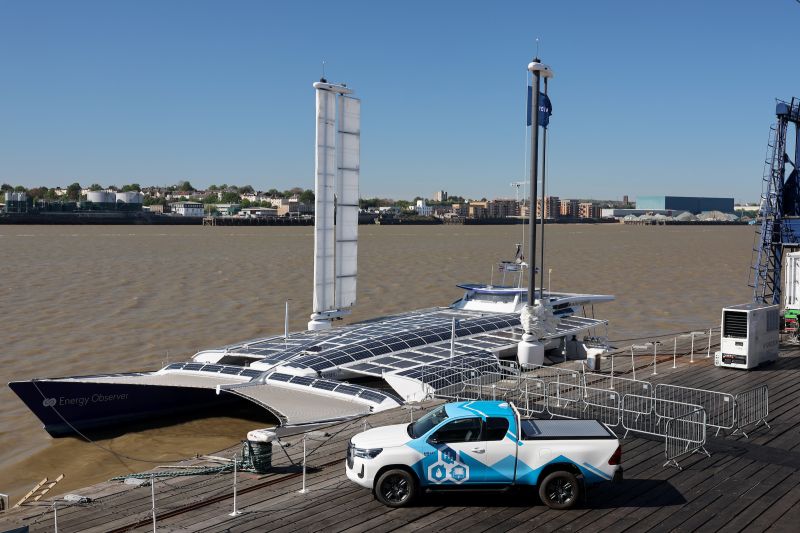
Toyota’s flagship Hydrogen Hub event at the port of Tilbury showcased how Hydrogen power can be adopted in some unexpected places.
On the water
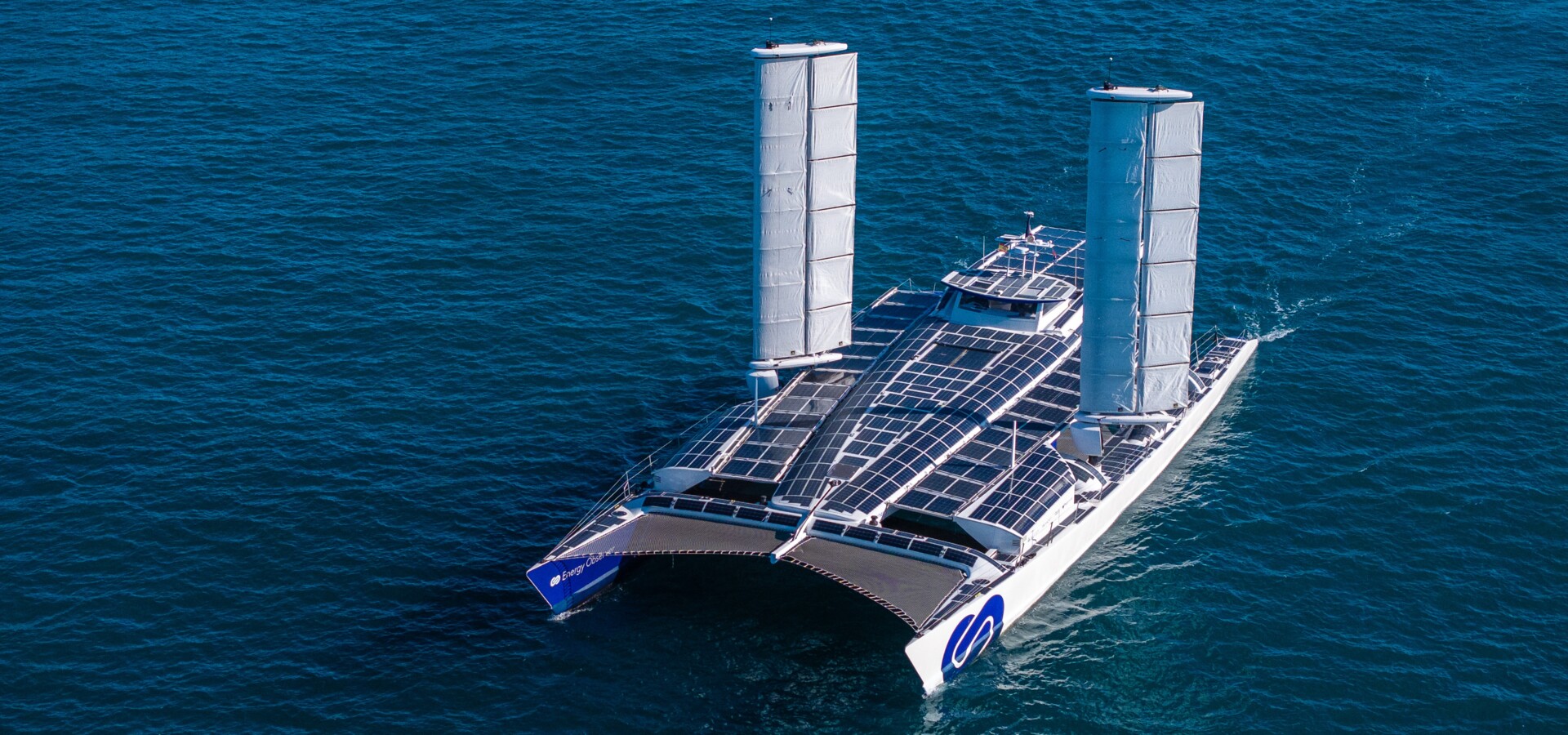
Covered in solar panels with an interior resembling a high-end yacht, it is easy to miss the fact that it isn’t just a boat but a hydrogen-powered research vessel.
The Energy Observer 1 (EO1) is the world’s first self-sufficient, hydrogen-powered vessel and floating renewable energy laboratory.
Launched in 2017, it is the first ship in history to have made a round-the-world trip using a combination of 100% renewable energies and hydrogen produced on board by electrolysing seawater.
EO1 has proven that it is possible to navigate with zero emissions, no fine particles, and no noise, by combining state-of-the-art technologies with an energy sobriety approach.
EO1 is an example of how new energy technologies perform under actual operating conditions. It is a proof of concept which, while for now, is unique in the world; it shows what could be possible for fleets in the future.
Port power
One of the biggest obstacles to the integration of hydrogen power is charging; hydrogen-powered boats and EV’s on construction sites become challenging to integrate if they cannot be easily powered or refuelled.
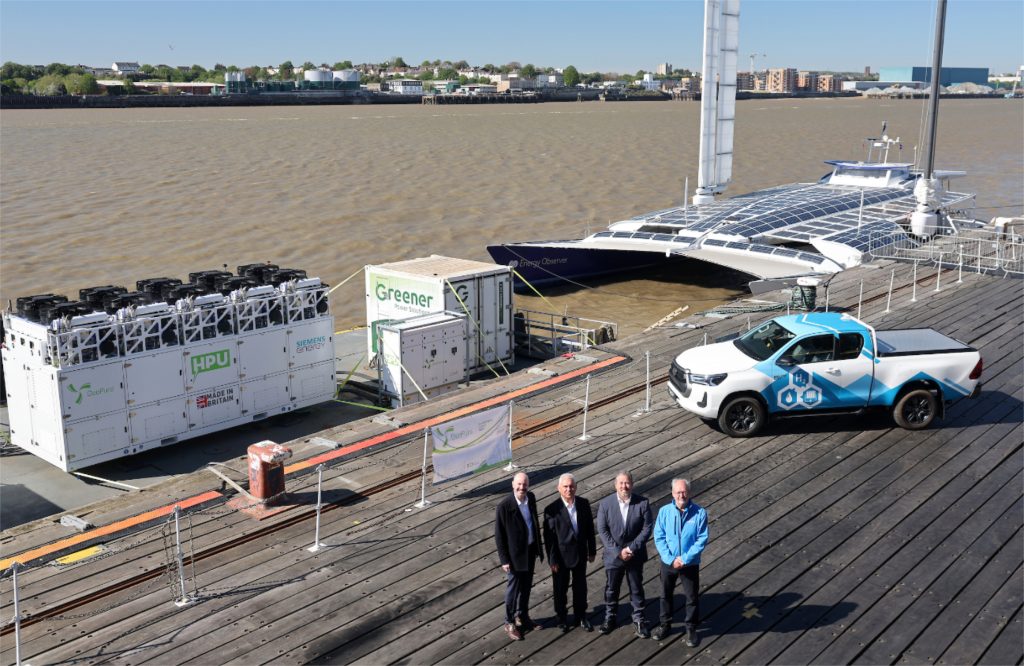
This is where GeoPura come in, demonstrating the first-ever hydrogen-powered rapid EV charging for commercial vessel docksides.
“Ports and maritime activity have very large energy requirements and will use the electricity grid network wherever possible. However, in many locations the public grid isn’t sufficient or flexible enough, and hydrogen can help bridge the gap,” explains GeoPura CEO Andrew Cunningham.
The mobile hydrogen-powered rapid EV charger can deliver shore-to-ship power for vessels.
Powered by GeoPura’s HPU2 generator, the dockside unit delivers zero-emission electricity without relying on a fixed grid, supporting maritime electrification in ports where grid infrastructure is constrained.
“Hydrogen has a critical role to play in how ports operate, from decarbonising dockside activity to enabling shore-to-ship power. It provides clean, reliable energy that strengthens operational resilience,” adds Cunningham.
HPU2 combines fuel cell technology, battery storage, and advanced power electronics to deliver 500kW of continuous zero-emission power, with the ability to scale up to 50MW. Unlike diesel or HVO generators, it operates silently, producing only water and heat as by-products.
HPU power units are also being used in construction to manage grid limitations and entirely off-grid projects. HPU power units are being used for site offices and amenities, tower cranes, and to run EV fleets on 100% sustainable power.
The Thame Valley Viaduct has entirely replaced traditional diesel generators with HPU units for 100% renewable, off-grid electricity.
Between June 2023 and June 2024, 171,458 kg of CO2 was saved from entering the atmosphere from the Thame Valley site alone.
Units like GeoPura’s help to fill the gap in infrastructure, which holds companies back from fully adopting and integrating this clean and renewable power into their business.