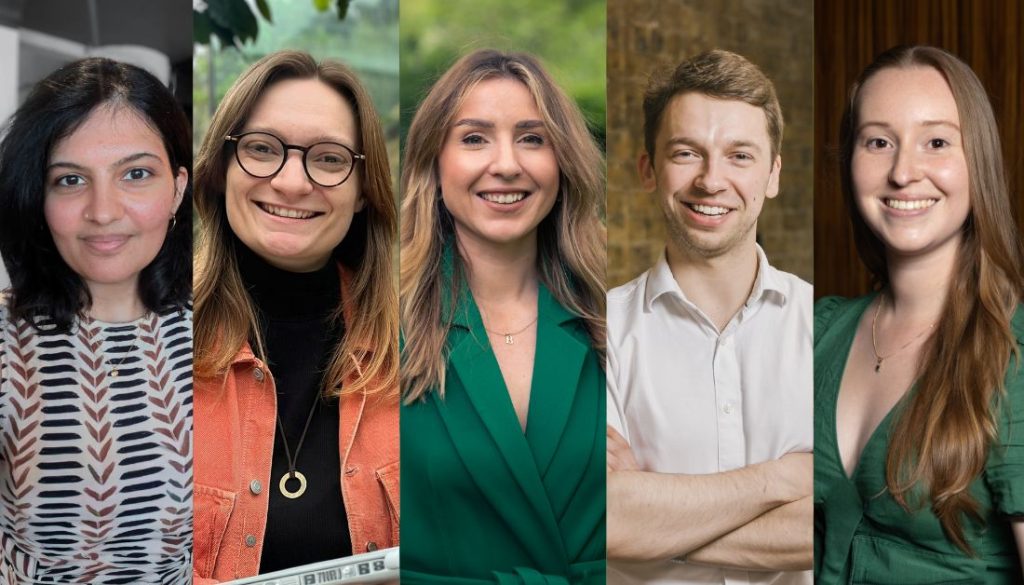

Winners of the Young Engineers award champion AI for factories, sustainability and design to promote accessibility for the 2026 awards
The five winners of the Royal Academy of Engineering’s Young Engineers of the Year award have been announced, with projects covering innovations in sustainable building and vehicle design, developing technology for those in underserved communities and integrating AI into manufacturing.
Notably, co-founder and CEO of Matta, Dr Douglas Brion, developed the Matta Agent to give factories the ability to autonomously sense defects, reason through root causes, and ultimately optimise production in real time.
This is done by industrial AI, which translates physical reality into a single, queryable intelligence platform for the entire enterprise. By deploying a network of sensors to capture ground truth, the AI automates mission-critical measurements and digitises the invaluable tacit knowledge of the workforce.
The continuous flow of real-world data powers the Matta Agent to instantly query production metrics and resolve bottlenecks. Driven by accelerating enterprise demand, Matta is now deploying into two new factories every month, backed by $14 million in seed funding.
Rolls-Royce technical lead Alexia Williams wins for organising the first-ever Rolls-Royce Defence Family Open Evening and pioneering predictive maintenance approaches using asset data and transforming it into actionable insights that are now being embedded into business-as-usual operations.
She has introduced technologies such as the Laser Doppler Vibrometer to test the safety and effectiveness of new tools and technologies, and 3D-printed tooling for validation and training, improving reliability and reducing costs.
The Washing Machine Projects research and development team lead, Laura Tuck, wins for her role in designing manual washing machines for women and girls in underserved communities who carry the workload of handwashing clothes.
The device uses a hand-cranked drum to wash clothes effectively using minimal water and without electricity. Manual washing machines have been distributed in Uganda; four machines were sent to hospitals in Gaza, and over 56,000 people have already been reached.
Ramboll UK’s head of sustainability, Brogan MacDonald, wins for her work on sustainability, which includes the creative retrofit and retention of the Westbury Hotel over four years, leading the technical design and project management.
By auditing the existing reinforced-concrete frame and challenging the demolition brief, she enabled the reuse of the existing frame and saved 5,000 tonnes of demolition material and 3,500 tonnes of embodied carbon. She also played a pivotal role in the development of Ramboll’s structural embodied-carbon calculator.
Finally, Vehical Futures Hub research manager Dr Aakeen Parikh wins for her role in bringing together academia and industry to accelerate the deployment of future vehicle technologies. Her work supports the UK’s transition to cleaner transport by helping to turn research into practical solutions that can be adopted at scale.
“By using data to shape how we build our infrastructure and make vehicles more sustainable, advocating for engineering to reach those who are underrepresented and underserved, and finding innovative ways to apply AI in the manufacturing industry, these engineers are challenging and creating new perceptions of what engineering can be and who it can help,” said Chair of the Academy’s Awards Committee Luke Logan.
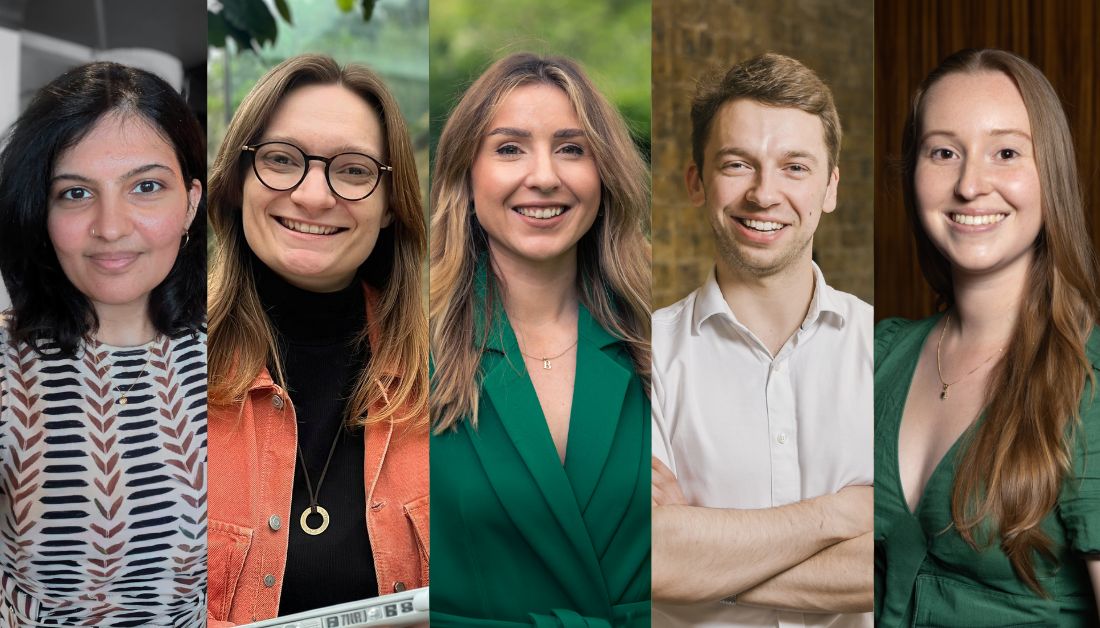
The overall winner, Brogan Macdonald, will receive the Sir George MacFarlane Medal for her work on finding the best ways to reuse building materials like concrete and steel to make the construction industry more sustainable, aiding the restoration and protection of the natural environment.
All five will receive the RAEng Engineers Trust Young Engineer of the Year and £3000, presented on July 8th.