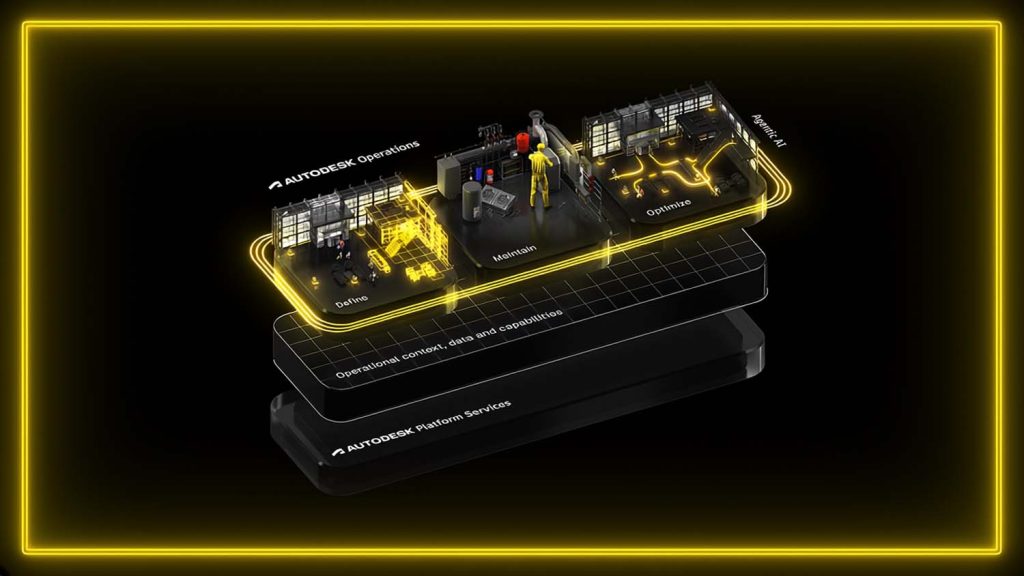

At Autodesk University (AU) 2026 Autodesk announced the full launch of its Autodesk Operations platform.
This expands its Design & Make platform into further manufacturing operations, with Autodesk Tandem – traditionally its cloud-based digital twin platform for the AEC sector and Building Information Modeling (BIM) data – providing a unified operations platform able to take products through into the world of manufacturing and assembly shop floor planning.
The goal of adding this into the Autodesk ecosystem is to give users the ability to explore options, find bottlenecks, test capacity and avoid spending money on equipment or layouts that do not improve their production performance.
The move also edges Autodesk further into the realms of Siemens Technomatix and Dassault Systèmes Delmia software, core technologies used in the design and optimisation of factories that are also directly wired into the design and engineering packages that have built the products, and in some cases also run the manufacturing equipment software.
Why is Autodesk investing in operations? With both Siemens and Dassault creeping into the realm of built environment, Autodesk – one of the biggest players in that field – is switching more towards manufacturing operations and bringing with it a swathe of tools that compliment the design and optimisation of the factory floor, as well as the manufacturing data side.
“The future isn’t about making design, construction, manufacturing, or operations better on their own. It’s about connecting them into one flow of information,” said Stephen Hooper, the senior VP of Operations Solutions and a man who knows a thing or two about product design and manufacturing. Having been embedded in Autodesk’s design and manufacturing business for over 20 years, Hooper most recently lead Design & Manufacturing Cloud Solutions, and before that Fusion.
“We see that happening in three ways: bringing construction and manufacturing data together, connecting that data to what’s actually happening on-site in real time, and feeding operational insight back into the next design.”
An example he gives is Hartsfield-Jackson Atlanta, an American international airport where, by working with engineering firm WSP, construction and manufacturing data existed in a single operations platform used by the people running the airport every day.
“They’re using Autodesk Tandem to help organise asset, model and operational data into a digital twin that can serve as a more reliable operational context for the airport,” explains Hooper. “These challenges – connecting design, build, and operations data – don’t just apply to airports, these are challenges we see across hospitals, factories, stadiums, and other complex facilities.”
AI-powered Tandem integration with Forma, Autodesk’s cloud platform for AEC, means teams can bring BIM and manufacturing data into the same project and use it as the base for an operational digital twin. Autodesk Assistant can also help connect sensor data to assets in Tandem, reducing the work required to build and maintain that operational view.
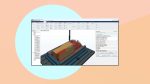
At AU a new integration between Tandem and Autodesk Flexsim can put process simulation directly inside the operations platform – using live airport data to model a TSA checkpoint flow for example, and test different screening-lane configurations, and compare equipment utilisation before a design decision is made.
So far the examples are more around the built environment, but with the requisite data, Tandem can seek out bottlenecks, test capacity and avoid spending money on equipment or layouts that do not improve performance across factories and more.
Adding in Computerised Maintenance Management System (CMMS) MaintainX to Tandem means it can also identify an asset operating outside its normal range and initiate a maintenance workflow in MaintainX before the asset fails.
The goal is for Operations data to feed back into Design & Manufacturing – every maintenance event, equipment failure, repair and performance improvement creates valuable operational knowledge.
“Too often, that knowledge stays trapped in maintenance systems or disappears when a project is complete,” continues Hooper. “Autodesk is closing that loop.
By connecting design, construction, and operations, Autodesk wants its customers to be able to leverage real-world performance data to improve maintenance today and make better design decisions tomorrow, says Hooper.
“Instead of treating every project as a fresh start, each project can build on what was learned from the last. The result is a continuous lifecycle where operational insight improves asset performance, informs future investments, and helps teams design facilities that are easier to operate and maintain from day one.”
This is only the beginning for Operations, and it will be interesting to see how it maps out. The incumbents have a big lead in terms of manufacturing, but the crossover from the AEC space suggests that a fresh take might bring new opportunities.
Want to learn more about Autodesk’s AEC portfolio and tools? Click here to visit our sister publication AEC Magazine for the very latest news and in-depth features.