
Over the summer, the marketing buzz around Siemens Digital Industries’ Xcelerator heated up, with global events held to showcase some scorching new features and partnerships that the company hopes will set the platform apart from the rest of the field. Stephen Holmes looks at how Xcelerator is shaping up in Siemens’ push for industry dominance
At a series of events held across the US, Europe and Asia this summer, Siemens Digital Industries has set out its stall for what it envisions as the future of connected product development.
The message is that the cloud – either Siemens’ cloud or your own – lies at the heart of this vision, resulting in a scalable, fully joined-up ecosystem with very few discernible weak spots.
According to Siemens executives, it’s a powerful pathway for organisations to get their design, engineering and manufacturing teams working as one, adopting AI and developing better products faster.
Together, Designcenter, Simcenter, Teamcenter and now Intelligence Center X – an industrial AI and data orchestration layer that can connect up all the workflows across engineering and manufacturing – support a coherent workflow right the way through to manufacturing and beyond.
The SaaS offering enables Siemens to ask an opening price point for NX’s design features that is aggressively competitive in the current market. Customers can then scale what they need, when they need it, using tokens within Siemens’ Value Based Licensing system. When a user opens an add-on module, a specific token cost is temporarily drawn from the pool. When they close it, unused tokens return to the pool for colleagues to use.
The idea is to open up the wider world of Siemens’ technology stack to all users, from Simcenter simulation tools through to NX’s machining and additive manufacturing capabilities.
Connectivity is only the beginning, with AI currently being added to seemingly all aspects of the platform. Siemens has invested some €25 billion so far in its integrated software portfolio, and the message from the company is clear: AI relies on quality data, as do digital twins, and your software choice for design and PLM is absolutely critical to this all working as it should.
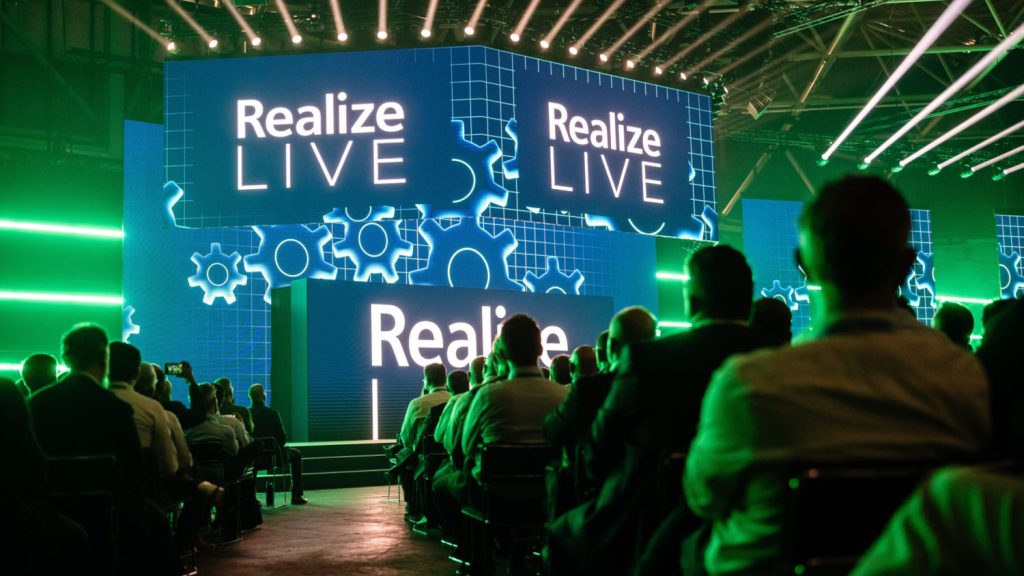
At the European Realize Live 2026 event in Amsterdam, CEO Tony Hemmelgram repeatedly used the phrase “industrial intelligence”, explaining it to attendees as the place where products are born.
Ensuring that AI can access this intelligence and work with it cleanly, precisely and securely is key to successful outputs. Another repeated phrase was that what Siemens is offering isn’t a project, but a product – not something that needs constant attention and faffing with, but something that is ready to go, straight out of the SaaS box.
The addition of Intelligence Center X is central to this, with the low-code Mendix platform enabling companies to build their own AI agents in-house with institutional insight and with the confidence of knowing they’re integrated right across CAD, simulation and PLM.
There’s also the reassurance of clearly defined guard rails for what an AI-driven agent can and can’t do and when it can interact, as well as delivering the traceability, security and governance that customers need.
Simulation updates
Simulation is an area where Siemens has made some notable investments. With Simcenter now GPU-native, the shift (alongside partner Nvidia) has been to deliver more throughput at lower cost.
The acquisition of Altair, finalised in March 2025, has only added to Siemens’ impressive range of analysis technologies, with Altair’s tech stack now smartly adopted across the entire Siemens platform.
SimSolid stands out in this regard. Its ability to eliminate meshing and deliver huge time savings in terms of set-ups has made Simcenter a truly formidable software, capable of analysing full CAD assemblies in minutes without any geometry simplification or meshing while outputting the same accuracy. And from this Autumn, every seat of Designcenter will also have access to SimSolid, bringing simulation into the product-development workflow earlier.
There’s another benefit from getting engineering insights in minutes, and that’s faster generation of synthetic simulation results used to train AI surrogate models in Simcenter PhysicsAI. By combining physicsbased simulation with AI, Siemens is creating predictive models that allow engineers to explore far more possibilities in seconds.
PhysicsAI is billed as transforming simulation from a verification tool into a powerful design exploration engine. The question is no longer, ‘Can we simulate the design?’, but ‘Which of these thousands of designs should teams pursue?’
“We’re not replacing simulation – we’re multiplying its impact,” announced Jean Claude Ercolanelli, Siemens’ senior vice president for simulation and test solutions at the European Realize Live event. “Simulation took us from weeks to hours. Simcenter PhysicsAI takes us from hours to seconds.”
Ercolanelli backed this claim up with multiple examples, a particularly impressive one being automotive supplier Magna speeding up a single crash box analysis from 14 hours to just 10 seconds.
Also teased was SimCenter PhysicsAI Generate, which lets the AI see part requirements, the assembly around them and applied conditions. From there, it can build a concept part almost instantly, with no geometry or optimisation studies needed.
If requirements change, the design updates instantly. Launching in December, SimCenter PhysicsAI Generate makes use of AI’s ability to build a diffusion model incredibly fast, but makes it editable parametric CAD, thanks to Siemens’ existing Synchronous Technology.
Powerful platform
What Siemens is offering as a platform is an impressive full package that can be tweaked for each team and user via its token system. Data moves seamlessly back and forth between CAD, simulation and PLM, now supercharged by AI. Being able to create agents swiftly and internally will remove reliance on external IT, a cost saving that businesses can reinvest into further credits and more capabilities.
Even further down the line, Siemens Supply frame, recently expanded through partnerships with digital manufacturing platforms Xometry and Volition, can now give users real-time feedback on manufacturing costs, lead times and feasibility. A partnership with IFS – an AI company focused on asset- and service-intensive industries – offers deeper enterprise resource planning, enterprise asset and field service management.
Piece it all together, and now you can quickly simulate a minor change to a part in your CAD, have an accurate cost for it being made, know when it can reach your assembly line in time to sidestep any maintenance downtime, and even plan workers’ shift patterns for that week.
But there’s a kicker: most companies use a range of software from a variety of vendors. Siemens’ executives are adamant that it will continue to work with every software provider that is open to doing so. Yet the impressive connectivity and communication across all the Siemens ‘-center’ products is such that you can see the squeeze beginning to happen.
In Hemmelgrem’s own words, existing Siemens Teamcenter customers are now looking at Altair for the first time, while Altair users are taking on Designcenter for their CAD, having seen the level of integration available.
Siemens’ point is that with its across-the-board strength and adaptable pricing, why would you choose to use software from another vendor?
One issue is cost. Designcenter X Essentials is the entry point. It includes standard 3D solid modelling, sheet metal design, basic 2.5-axis CAM milling, some CAE capabilities and a baseline of 500 GB of floating cloud storage for around $2,292 per user, per year.
That undercuts Dassault Systèmes Solidworks Design Standard, which is priced at $2,820. However, the cost of the more comparable Designcenter X Standard is $7,371, putting it firmly into entry-level Dassault Systèmes Catia territory ($7,080 per year).
Despite some attractive entry-level SaaS prices, NX remains a premium product, with a price to match. There’s no doubt that new companies looking to grow quickly will be tempted by Designcenter’s seamless scalability, but the early wins for Siemens will be those large, enterprise-level companies already reliant on Teamcenter that they can convert to using the entire platform.
AI and the cloud – and the various cost and technology issues they raise – are going to drive more companies into changing software right across the product development industry. As new abilities are added and others are democratised, it will be interesting to see competitors scramble to match the sheer scale of what Siemens is building.
Rolls-Royce – Wrestling back control
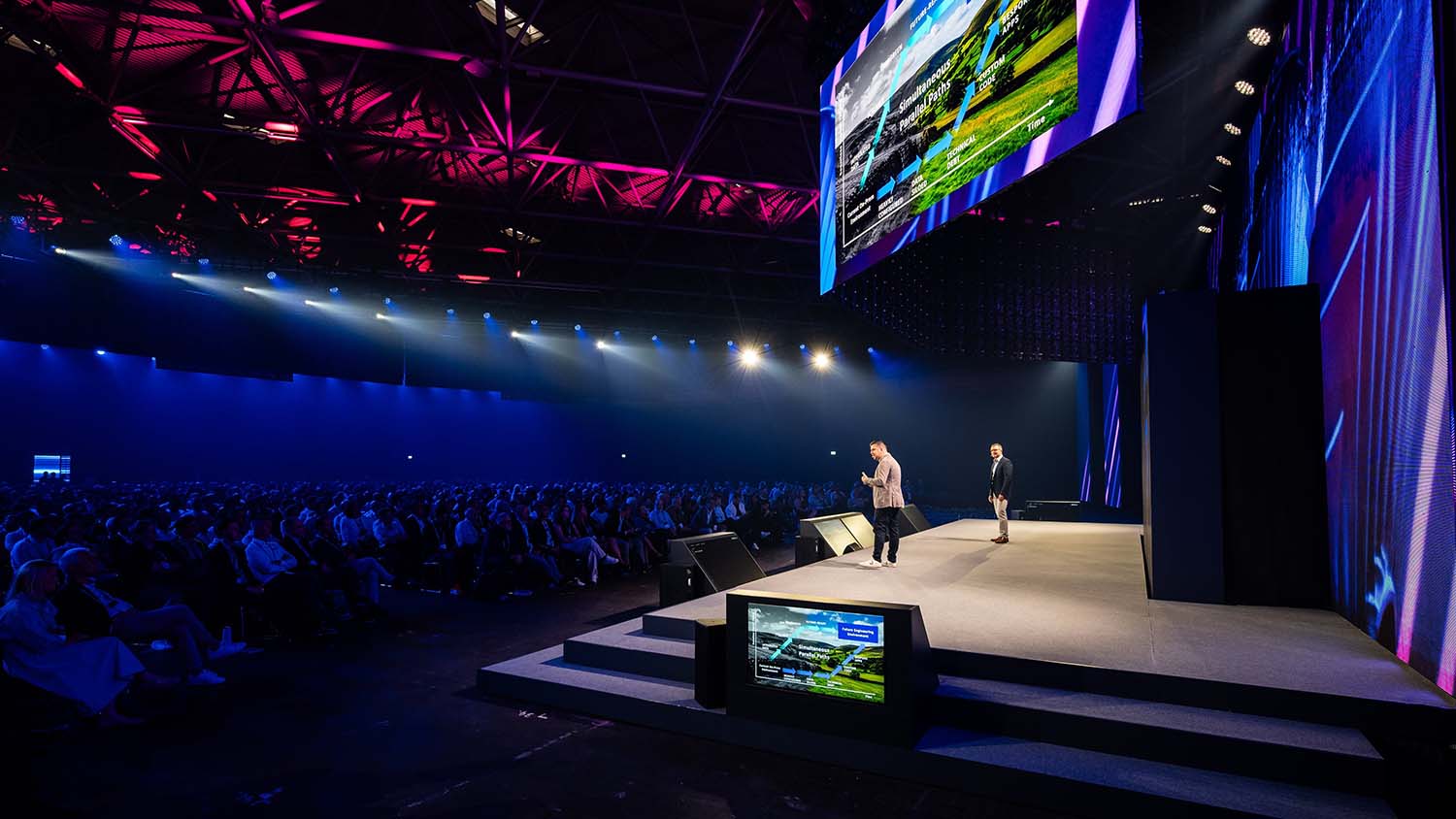
In his mainstage presentation at Siemens Realize Live on 30 June in Amsterdam, Jonathan Cooper, Rolls- Royce group head enterprise systems & digital strategy, highlighted how software options that seemed like great differentiators and advancements 10 years ago now represent a barrier to moving forwards.
Learn more on develop3d.com from an article that explores how Rolls-Royce is shifting to the latest out-of-the-box software and low-code tools in order to tackle the tech debt placed on its engineering and manufacturing teams by decades of customised software, and opening up its data to the benefits of AI.
This article first appeared in DEVELOP3D Magazine
DEVELOP3D is a publication dedicated to product design + development, from concept to manufacture and the technologies behind it all.
To receive the physical publication or digital issue free, as well as exclusive news and offers, subscribe to DEVELOP3D Magazine here