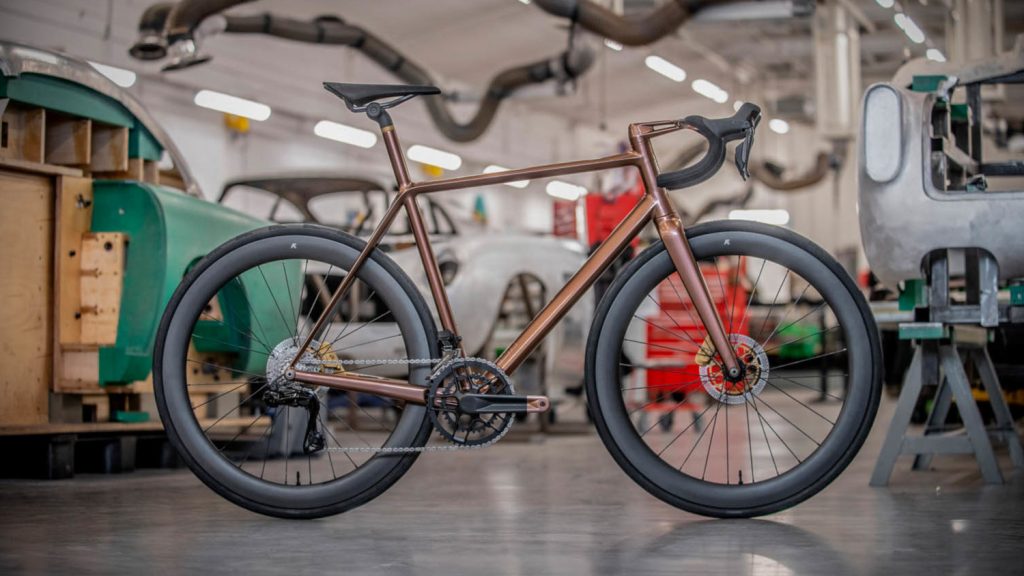

Titanium bike designer J.Laverack has teamed up with Aston Martin and Renishaw to create a bike design that defies tradition and leans on additive technologies to achieve a unique aesthetic
The team at J.Laverack, a UK-based designer and manufacturer of titanium bikes, is passionate about cycling and about how the company’s bikes look, feel and perform.
Every commission is lovingly designed by co-founders Oliver Laverack and David Clow. They obsess over every detail to ensure that each frame is technically and aesthetically perfect.
Many of the company’s creations pay homage to an era when bike races lasted 24 hours or more and when keen cyclists such as Jack Laverack, Oliver’s grandfather for whom the company is named, travelled rough, pothole-strewn roads and tracks to discover new places.
As a result, the company’s frames reflect highly detailed exercises in craftsmanship. They are exquisitely built and desirable to cyclists around the world, including Aston Martin chief creative officer Marek Reichmann.
“Our relationship with Aston Martin started when a member of the design team became a customer of ours,” says David Clow. “Because he used the bike to commute, it caught the eye of other Aston Martin team members and planted the seed for a collaboration between the two companies, and we set out to design a high-end, luxury bespoke bike together.”
Boltless bike
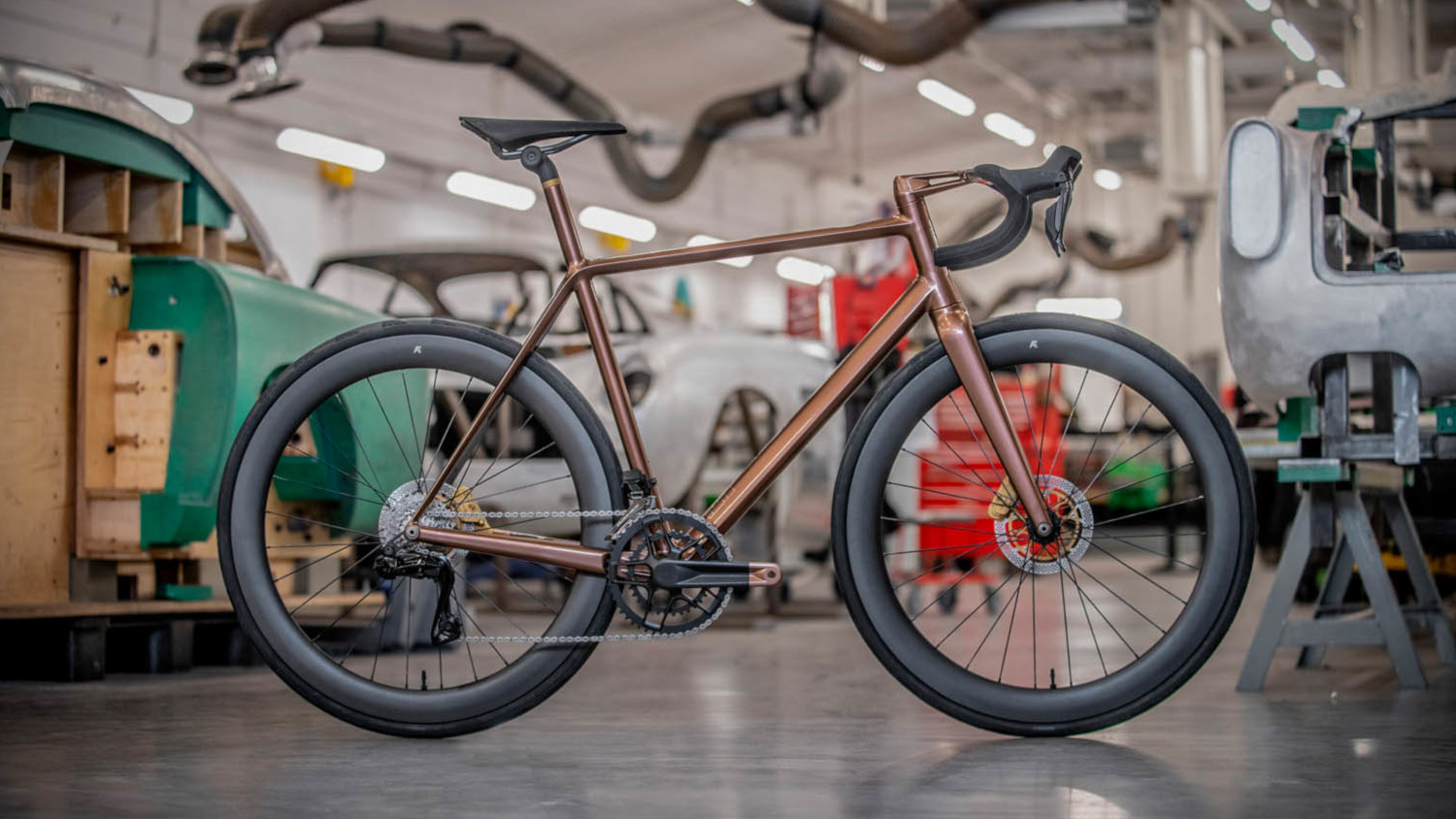
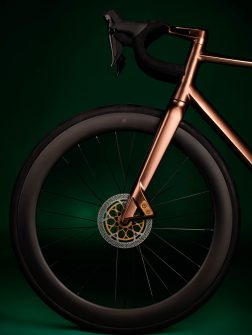
In a luxury bespoke bicycle, aesthetics are extremely important. The aim with the J.Laverack Aston Martin .1R was to make a visually ‘boltless’ bicycle from a combination of titanium lugs and carbon fibre tubes, with nearly every element tailored to the exact measurements of the rider.
From its made-to-measure handlebars to unique frame sizes, the design defies traditional bike design, allowing for components to be adjusted to accommodate different rider shapes, sizes and physical attributes.
“We started this project from a blank sheet of paper,” explains Laverack. “We wanted to totally rethink bike design to make the most bespoke, beautiful and technologically advanced bike possible. It would be made-to-measure — to the millimetre — as a series of perfect one-offs.”
During development, the team realised that 3D printing would enable high-performance, geometrically optimised one-off parts. Needing no tooling, metals 3D printing is suited to low volume, customised applications. But since J.Laverack had little experience working with the technology, the company began the search for a development partner that could support and help it with designing and manufacturing the components.
Amazing AM
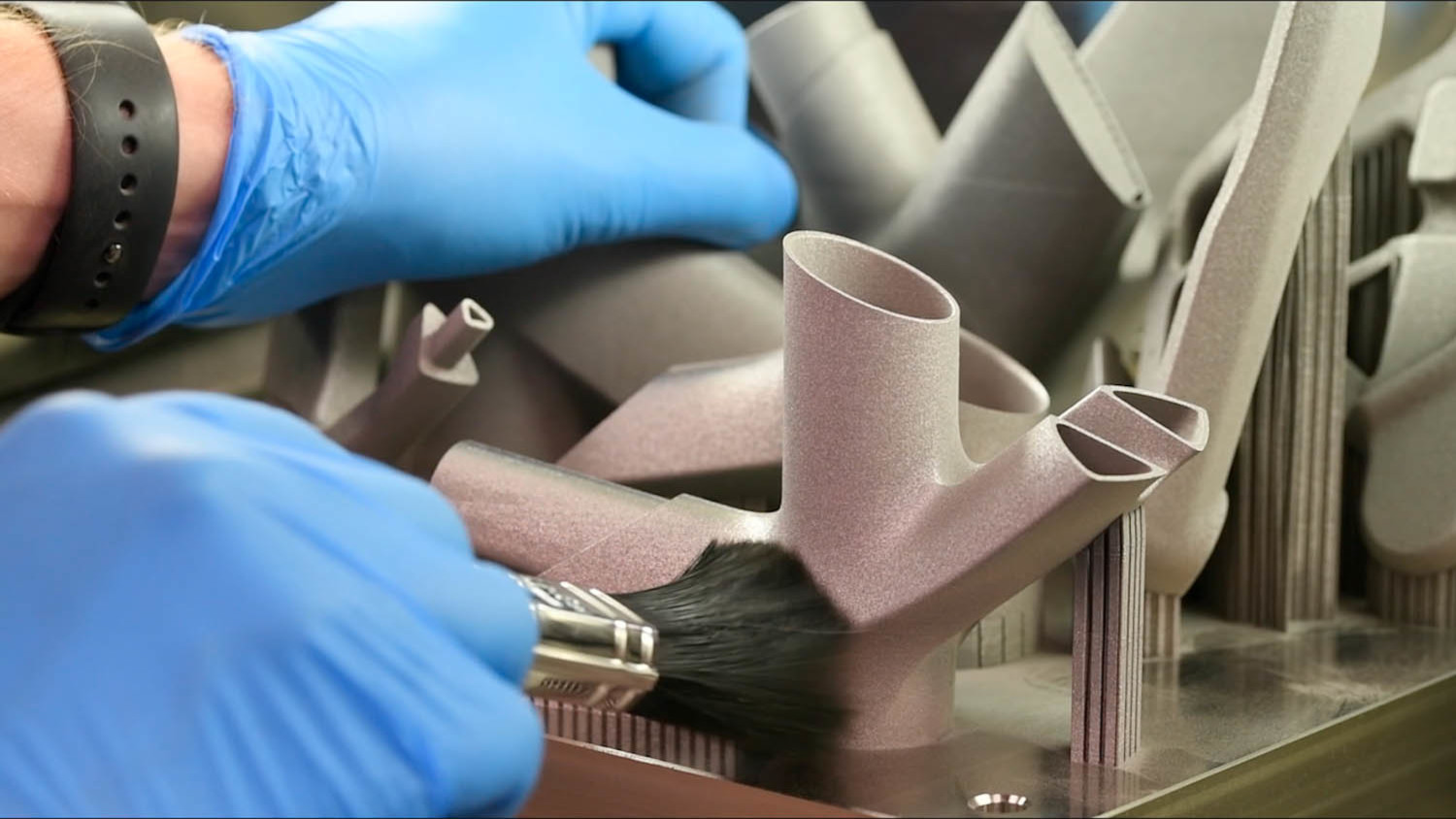
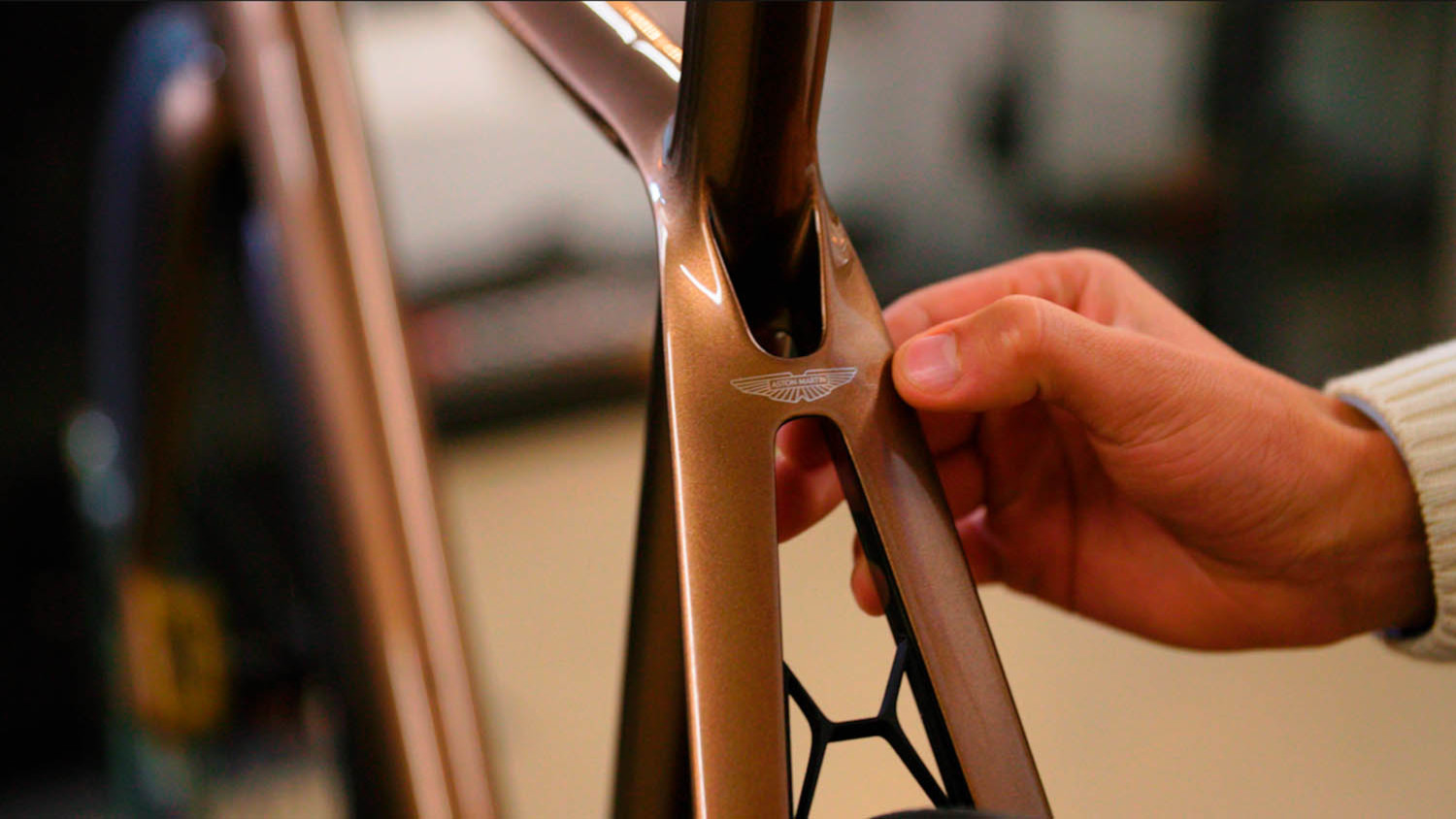
J.Laverack reached out to global engineering company Renishaw for support in manufacturing the titanium lugs, brackets, fork dropouts, head-tube, rear dropouts, seat tube lug and X-wing. The parts were assembled at Renishaw’s facility in Miskin, UK.
“Working with Renishaw on the additive manufacturing was a no-brainer,” emphasises Clow. “Not only is it a world renowned British engineering company, we were impressed by its work on the British Cycling Olympic track bikes.”
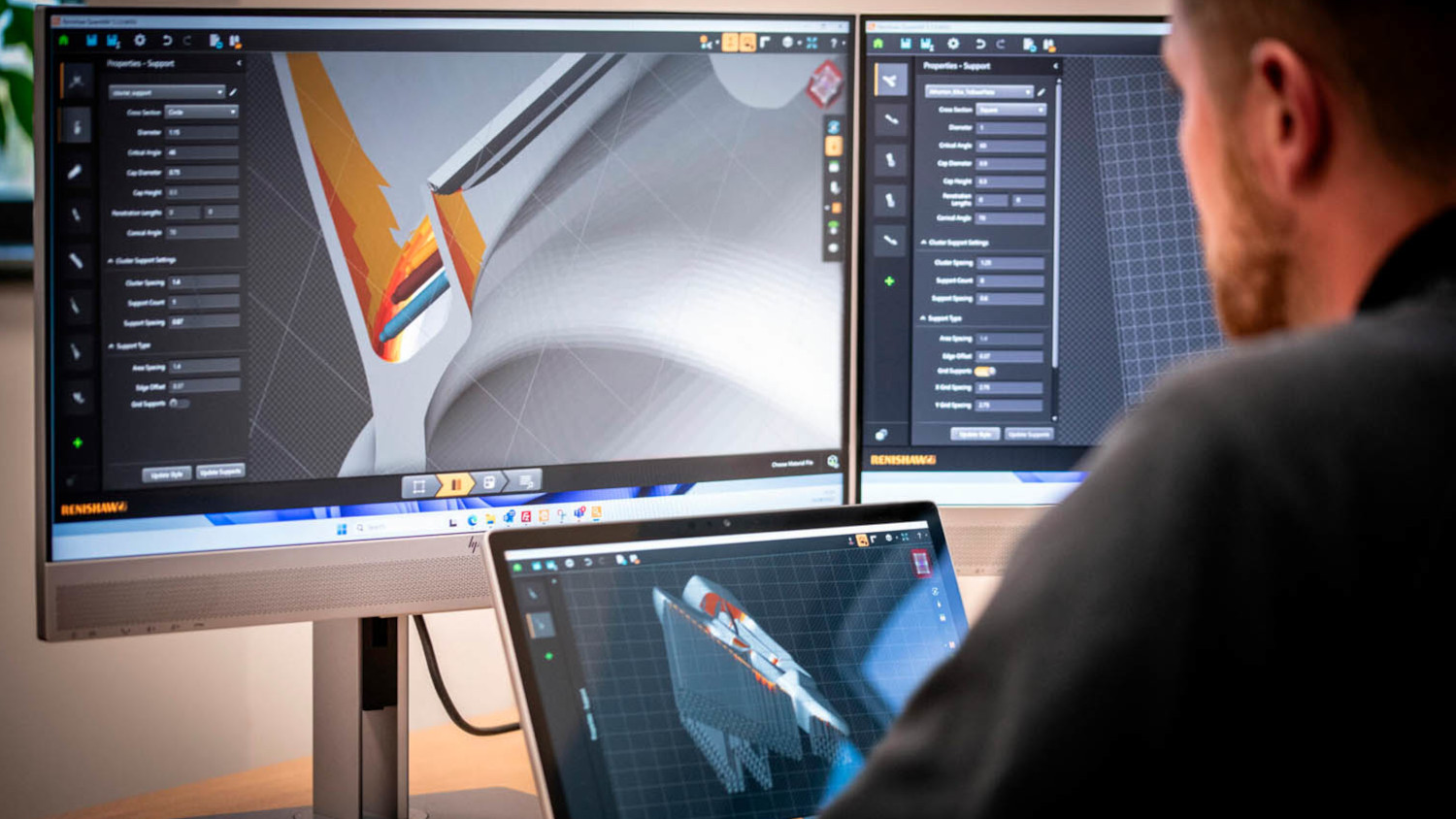
According to Joe McMurtry, mechanical engineer at Renishaw, the company got to work on assessing the best way to lay out the individual parts on the build plate, determined the best angle to orientate them and designed supports.
“Because every AM part is different, so too is the approach, and we had to adapt accordingly to achieve the highest quality components. When making the top head tube, we decided to build the part on the plate without supports, adding extra stock to be machined off later to ensure there was no possibility for error when removing the part from the build plate,” he says.
The Renishaw engineers orientated the parts at an angle that eliminated overhangs while being built on its flagship RenAM 500Q system. The geometry meant that there was no need for internal supports and offered further design freedom to make complex geometries and enable the light-weighting of components. This included internal lattice structures to reduce weight. The J.Laverack Aston Martin .1R weighs in at just 7.5 kg.
Once the design and support strategy was optimised and simulated for the RenAM 500Q system and 6AI/4V titanium, Renishaw began to print components in 30 micron layers, before applying heat treatment and postprocessing them. Each bike takes over 1,000 hours to create, including over 500 hours of CNC machine time.
“We were impressed with Renishaw’s knowledge and support throughout the project,” says Laverack. “The team was able to make recommendations and changes to ensure we ended up with the best possible parts. Now we’ve seen the power of what AM can achieve, we’d like to take the AM learnings and roll the technology out to our core product range.”
The .1R is the world’s first ‘boltless’ bicycle, with no visible bolts, screws or attachments at the headset, seat clamp, callipers or bottle cage. Brake hoses are concealed within the handlebars which is a complex part that uses the same design and manufacturing technique applied to the front splitter of a Formula One car.
The titanium lugs have an exceptional strength-to-weight ratio due to the internal lattice structures, which enhance stiffness and torsional stability.
“I think we’ve made the most beautifully designed and engineered bike in the world,” said Oliver Laverack. “It is sleek, stiff , fast, and we have the ability to make it totally bespoke to the individual.” A masterpiece of British passion for design and engineering, the .1R shows what true collaboration can achieve.
This article first appeared in DEVELOP3D Magazine
DEVELOP3D is a publication dedicated to product design + development, from concept to manufacture and the technologies behind it all.
To receive the physical publication or digital issue free, as well as exclusive news and offers, subscribe to DEVELOP3D Magazine here