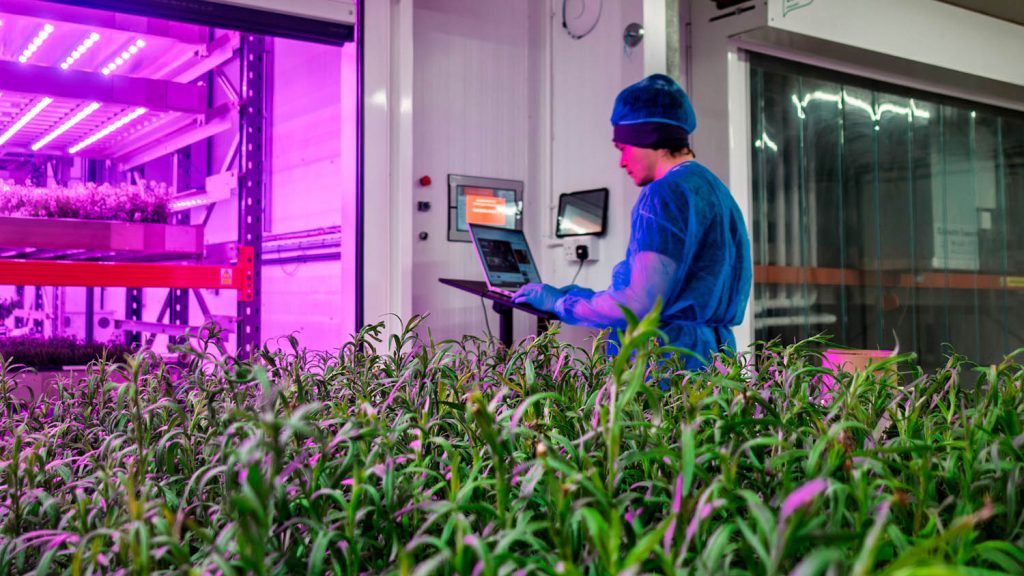

Intelligent Growth Solutions (IGS) is an agritech business focused on building vertical farms that optimise growing conditions and can quickly switch to meet demand. Stephen Holmes hears how its ideas blossomed
Blending industrial automation and agriculture, Intelligent Growth Solutions (IGS) is building commercial scale farms that target higher levels of sustainability.
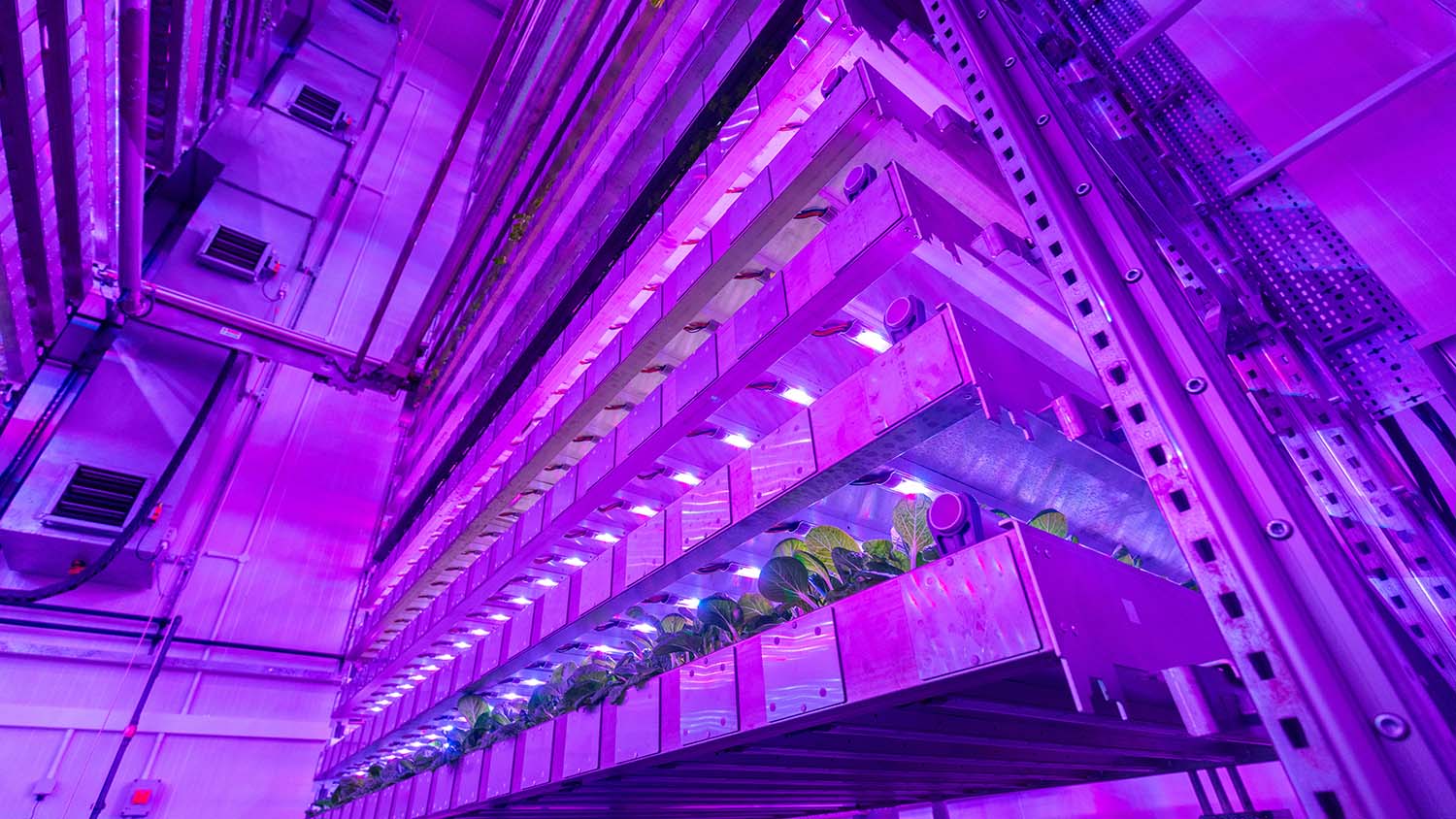
The IGS Growth Tower is modular and scalable, delivered in 6-metre, 9-metre and 12-metre configurations. It provides an optimised environment for growing high-value crops like leafy salad greens, herbs or pharmaceutical crops, giving growers the ability to change up production to meet market demand. At existing farms, the system can also act as a dependable nursery in which to produce a diverse range of highquality, healthy plants.
It was developed from an initial proof-of-concept machine to a proven set-up that today operates on customer sites globally and features high-efficiency lighting, precise HVAC technology and automation that encourages productivity.
The scalable approach enables growers to start small and expand capacity seamlessly – but while expanding the system is simple for customers, it presented significant design and engineering challenges for the IGS team based in Scotland.
“Initially, much of the way we worked leaned on the years of hands-on experience that IGS’s two cofounders had in industrial automation and agriculture, respectively,” says Cameron Williamson, mechanical team leader at IGS. “That team started off small, so keeping track of product development and managing changes was relatively straightforward.”
Cost-effective software solutions, suited to the small scale of operations, proved adequate at first, he continues, but as the systems reached maturity for market and the team expanded, IGS quickly outgrew its initial software outlay.
To accommodate work on large, complex models with robust version and access control, IGS teamed up with Concurrent Engineering to transition to PTC Creo for its design and development processes, and onboarded PTC Windchill to tackle its quickly scaling development process and lifecycle management.
Balancing cost with impact is always important, says Williamson, explaining how IGS introduced SimScale to enable FEA and CFD simulations that demonstrated how the Growth Tower equipment would react under stress and how air, water and heat would move through the system.
“We have subsequently used this system to optimise our designs and have been able to validate complex heat transfer simulations against our real-world data, giving us a high level of confidence in our further simulations,” he says.
Giving farmers confidence in their systems is key. Establishing a Total Controlled Environment Agriculture system demands a consistent growing environment, despite challenging fluctuations brought about by introducing new plants.
In order to make a profit, it is crucial that IGS customers can rely on its technology to consistently produce highquality, high-yielding plants. “We’ve got to be confident our machines can deliver this year round, meaning that operational reliability and ease of maintenance have to be front and centre,” says Williamson.
However good the software is, he continues, computer aided simulations still struggle to consider the unpredictable fluctuations that adding plants into the environment can create. “Humidity, for example, brings an added complication and is very difficult to accurately model.”
This is why the IGS crop science and engineering research sites in Dundee and Fife are so important to product development. “They allow us to rigorously test engineering changes prior to deploying to customer sites, ensuring we’ve considered all the variables,” explains Williamson.
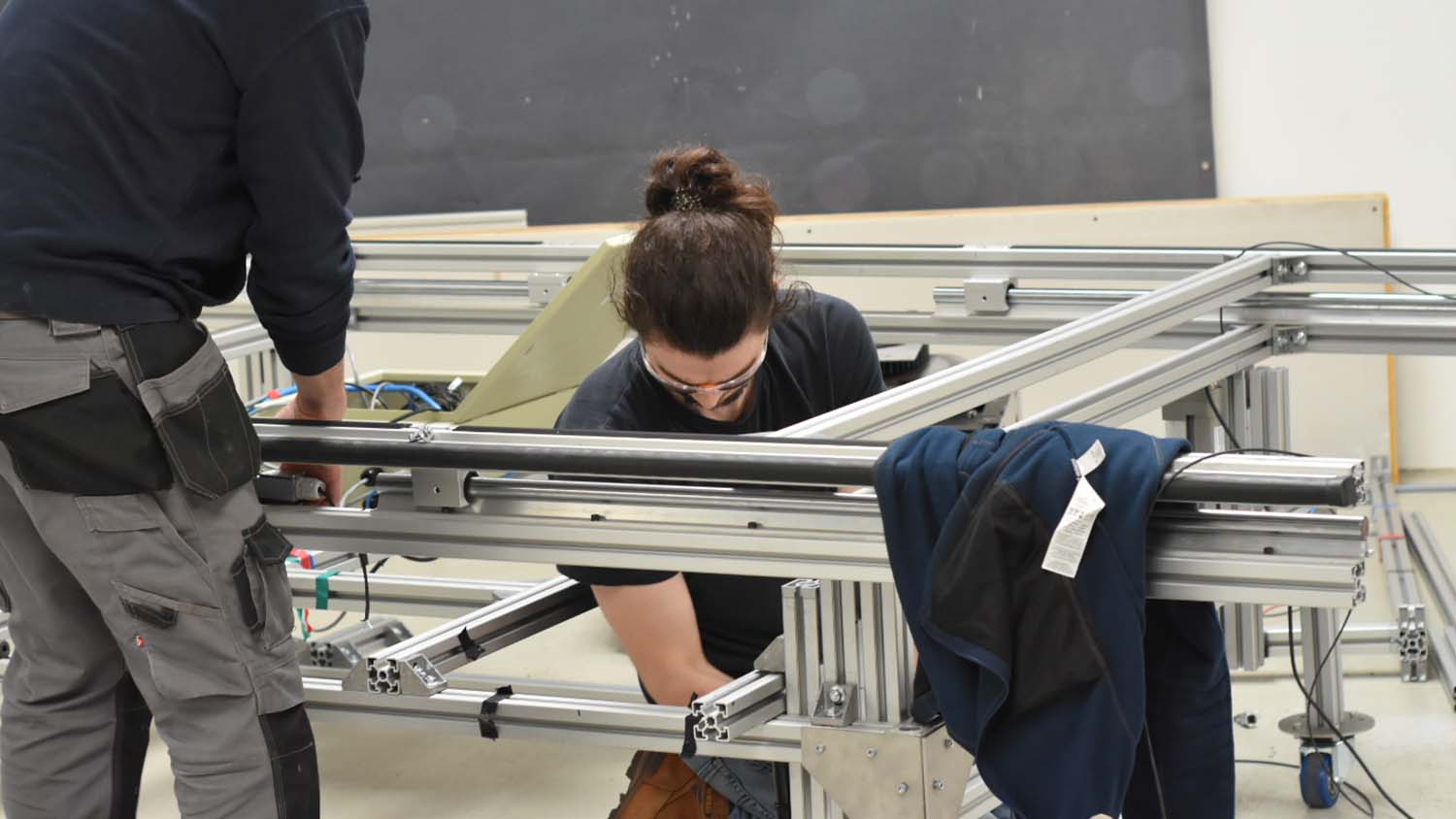
IGS’s engineering team uses a wide range of prototyping methods, depending on the progression of the design. Typically, this starts with simple FDM 3D printing, lasercut plastics or bolted-together aluminium extrusion frame, allowing the team to visualise and test designs rapidly.
But in order to get the most meaningful test data, IGS must rely on more industrial-grade prototypes, working with various local manufacturing partners, which allow it to validate designs in working Growth Towers at its research centres.
Once proven, the designs target consistent year‑round production and guaranteed yields for customers, regardless of the external weather, enabling sustainable crops anywhere in the world.