
Can manufacturing keep up as innovation accelerates and industry movements such as personalisation and sustainability gain momentum? Shapeways chief operating officer Jules Witte shares his insights with DEVELOP3D
When humans first shaped stone tools, they started a loop that continues to this day. Each new tool enables the development of the next, taking us from flint spearheads to Sora 2.
Today’s digital tools don’t just keep the loop running, though. They accelerate it. That acceleration is transforming what we make and how we make it.
The age of mass production was defined by scale and repetition: a product was designed once, made millions of times and shipped to every corner of the world.
This system has been extraordinarily efficient and has raised living standards globally, delivering longer, healthier lives. But as innovation accelerates, product design is moving in a different direction, focused on rapid iteration, more SKUs, more personalisation. Can manufacturing keep up?
For most of our history, the things we needed were made in small batches by skilled craftspeople. The Industrial Revolution brought opportunities for scale for the first time.
Fordism and the assembly line made products affordable to the masses, and lean production and global supply chains are a result of a relentless push for efficiency.
Today’s key drivers are speed, flexibility and sustainability. The old tools of mass production are increasingly insufficient
Accelerating Innovation
It’s the same story across other industries: more products, more variations, smaller batches, shorter runs. The challenge manufacturers face isn’t how to scale up to millions but how to adapt constantly to smaller shifting demands.
Drones illustrate this perfectly. UAVs have gone from novelty to necessity and now boast upgrade cycles closer to smartphones. The same pressures are shaping robotics, wearables and myriad consumer electronics. Shortened development cycles, rapid iteration and compressed product lifespans have become the norm.
The acceleration of the feedback loop means hardware is starting to look – and behave – like software: in perpetual beta, always being updated, never quite ‘finished’.
It’s not just consumer goods, either. Despite being a highly regulated environment, healthcare remains an innovative industry, with personalisation playing a central role in the next generation of clinical interventions.
Aircraft and military platforms can remain in service for decades, so appear to buck this trend, but they must be serviced for decades too and physical spare parts inventories are expensive and logistically complex. On-demand manufacturing allows parts to be recreated digitally, so they can be made when and where they are needed.
Across the vast swathe of consumer goods and fashion, seasonal runs are getting shorter while consumers have come to expect something new at all times. Footwear and eyewear brands are experimenting with mass-customised products, built to the measurements or style preferences of individual consumers. The mismatch between customer demand and the rigidities of traditional supply chains grows ever sharper.
The last five or so years have exposed the fragility of traditional supply chains. COVID-19, the Suez Canal blockage, semiconductor shortages, tariffs and trade wars and numerous geopolitical tensions have all disrupted the flow of goods. It’s stuff that keeps board members up at night and brings resilience to operations.
The cheapest option on paper is no longer the best option if it can’t adapt quickly when the next disruption comes. And it’s inevitable that it will come – we just don’t necessarily know what flavour of shock it will be.
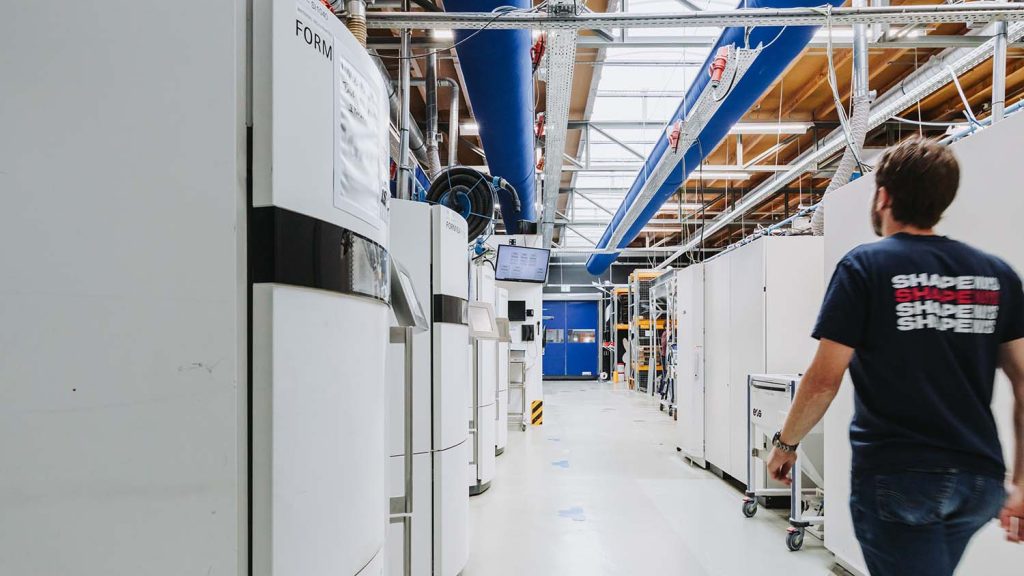
Shapeways has invested heavily in providing supply chain flexibility, integrating its own facilities with a global network of vetted partners, giving customers resilience without adding complexity and keeping a tight grip on quality.
Time for change
While seemingly under pressure from global governments, sustainability is no longer a nice-to-have, it’s a regulatory and reputational imperative. Overproduction – once the hidden cost of ‘efficiency’ – is now in the spotlight. The ‘greenest’ (and cheapest) part has always been the one you don’t make.
Regional, national and supranational legislators are tightening the screws. The EU’s Digital, on-demand production directly addresses these pressures.
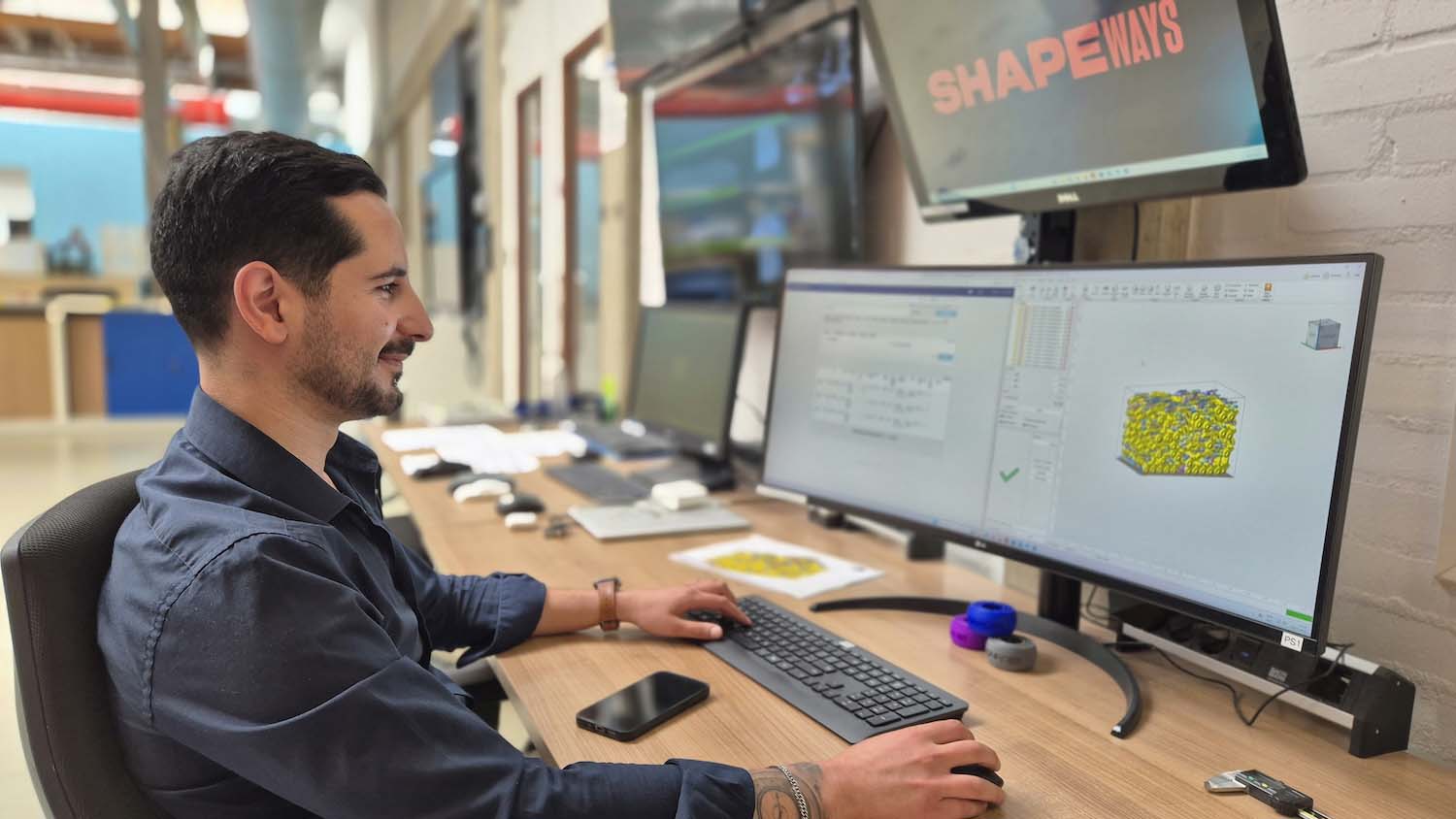
Shapeways’ digital workflows mean the right amount of parts are produced when they’re needed, reducing waste, lowering total energy use and keeping cash in the bank, rather than in parts bins.
The new reality demands manufacturing that matches the pace of design – fast, flexible and responsive to ever shifting requirements. Traditional infrastructure was built for repetition, not reinvention.
On-demand manufacturing has been a buzzword for years, but the conditions that make it essential – namely, rapid iterations, short product cycles, global supply chain pressures and sustainability mandates – are already here right now.
The winners will be those who are able to fully embrace digital workflows, on-demand production and agile supply chains. They will be able to manufacture as quickly as they innovate, meeting customers’ needs in real time, while building resilience and responsibility into their operations.
Importantly, they will also keep their focus on ideas and iterations, not on manufacturing operations.
For manufacturers, the question is no longer whether the shift will happen, but how quickly they can make it. The future belongs to those who can manufacture at the speed of innovation.
 About the author
As chief operating officer at Shapeways, Jules Witte leads global operations, focusing on building digital, on-demand manufacturing. He has a background in industrial engineering, a Master’s in Innovation Management from TU/e (Eindhoven University of Technology) and combines deep operational expertise with a strategic vision for the future of manufacturing.