
Following the launch of Onshape’s first AI tool last year, Stephen Holmes speaks to Darren Henry, SVP of general operations at the company, to learn how, as a cloud-first SaaS, Onshape has some immediate advantages when it comes to adopting AI
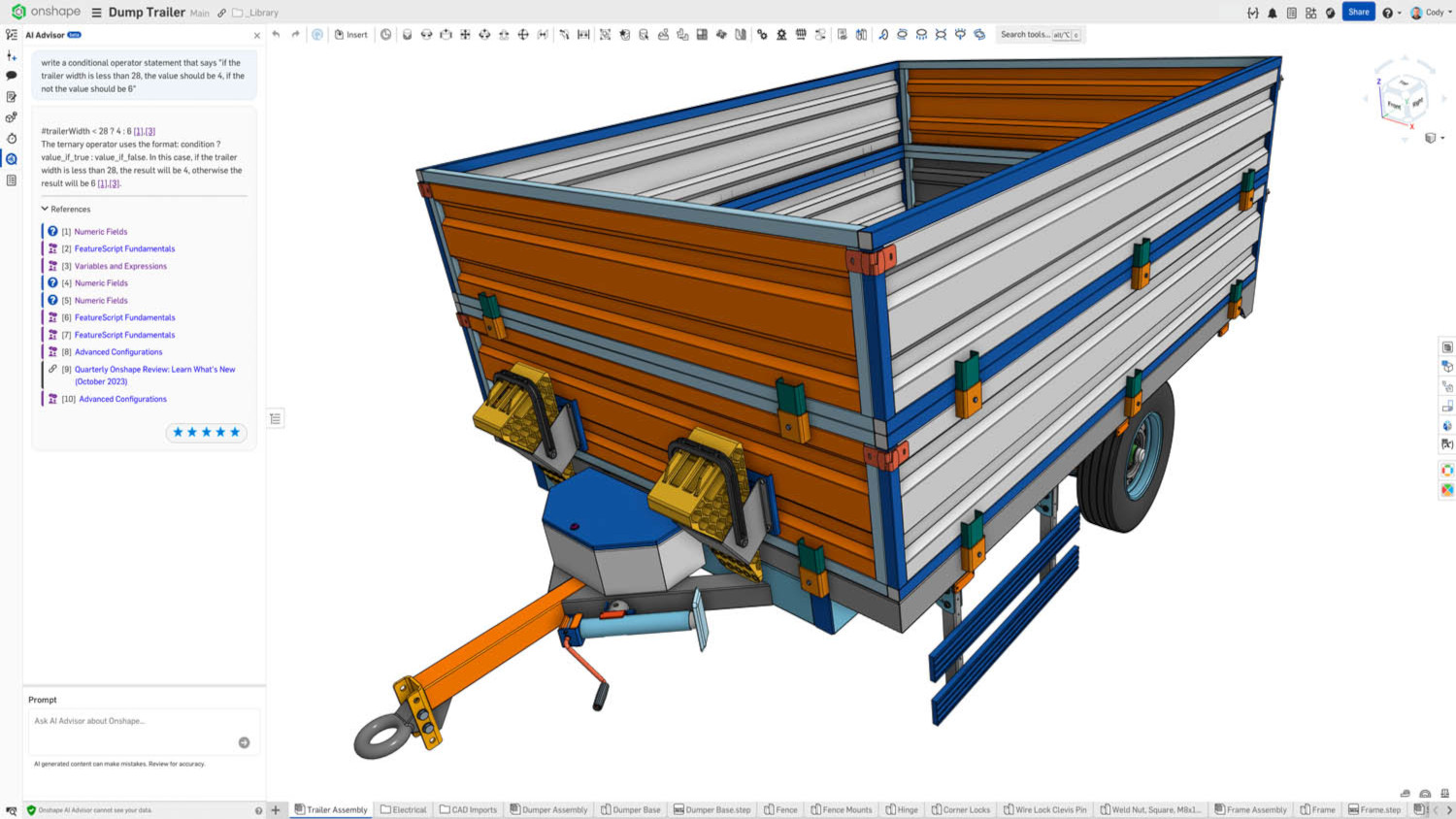
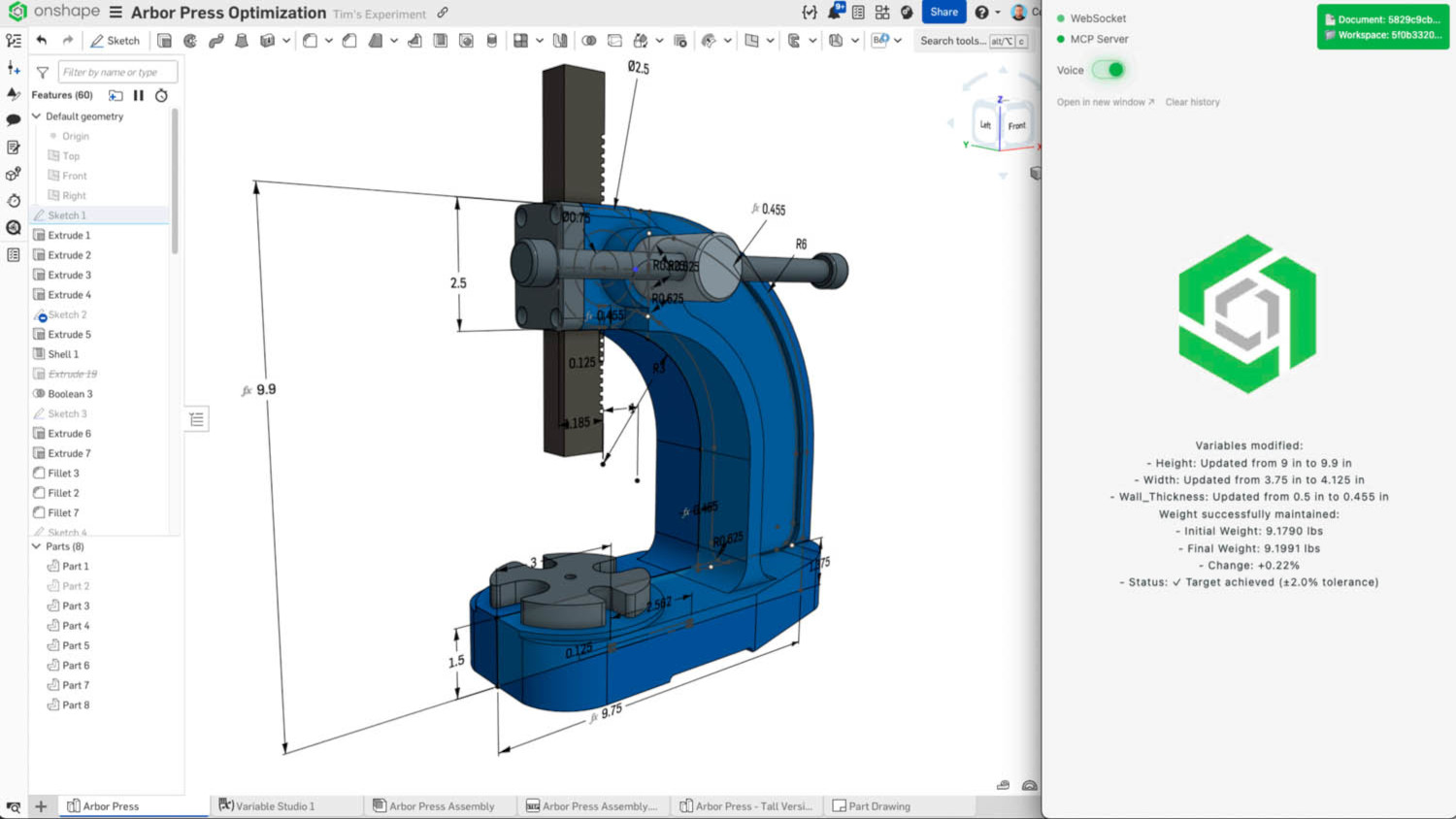
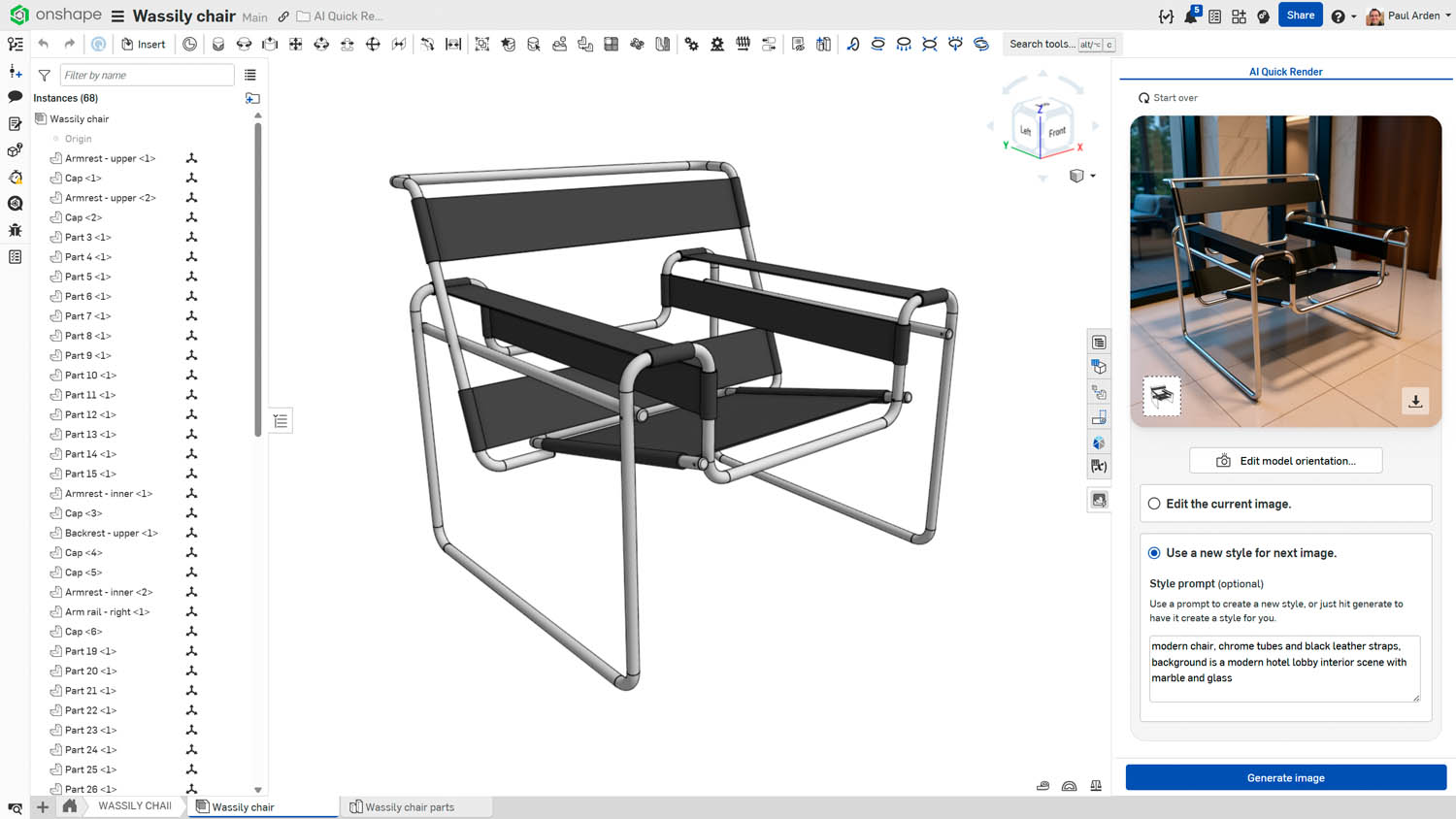
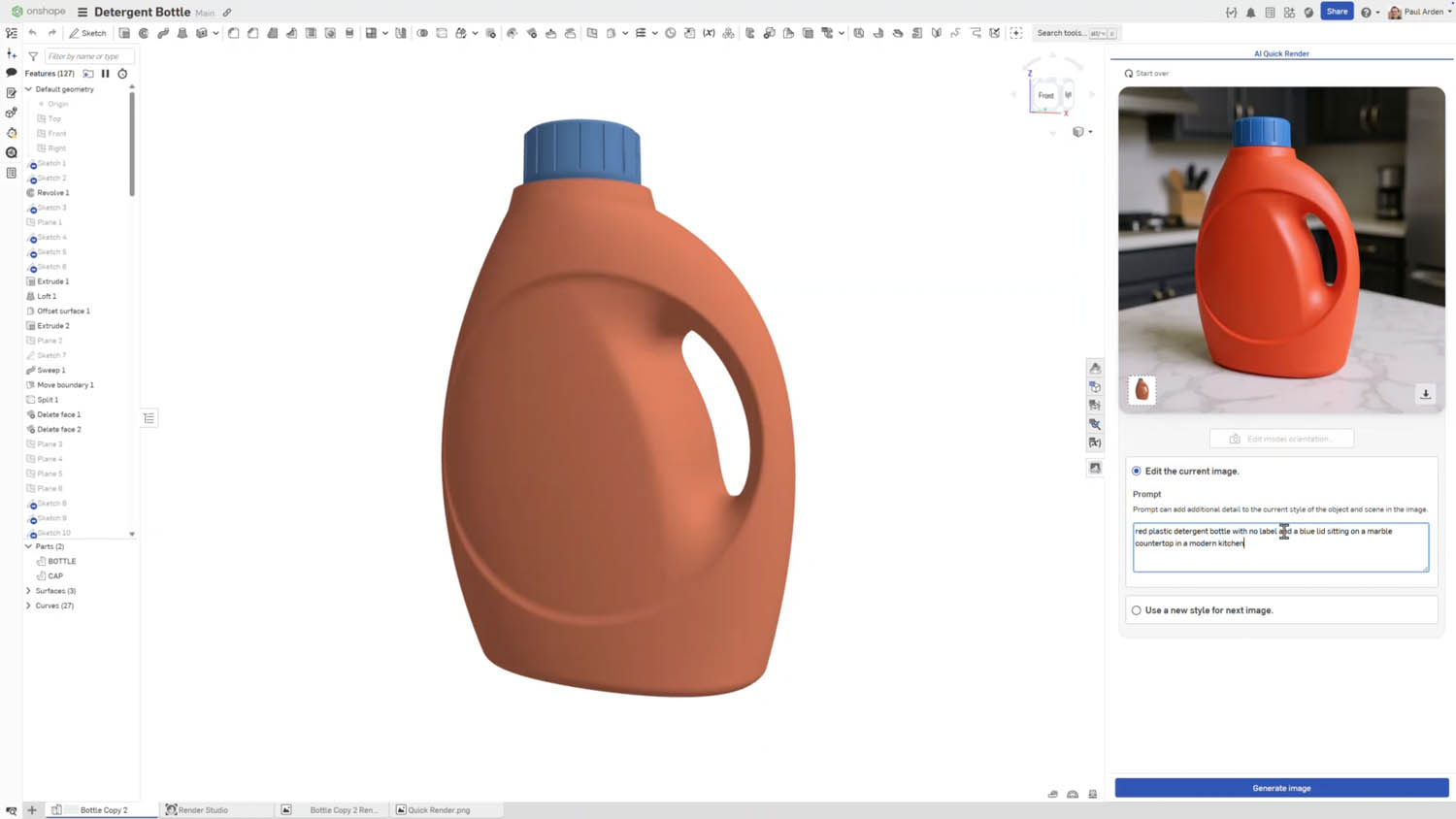
Onshape made its first moves towards tangible AI-led benefits in its cloud-based software with the addition of AI Advisor in April 2025.
While several other CAD packages have added AI co-pilots to offer users guidance and to answer their questions, as an SaaS offering, Onshape has more inquisitive minds driving its AI strategy.
The past decade has seen Onshape gradually build up its tools and capabilities. Industry perception has quickly transitioned accordingly. What was once seen as a ‘maker tool’ subsequently came to be viewed as a secondary CAD tool, and finally, a competitive, professional CAD package. Following another solid year of growth in 2025, Darren Henry, senior vice president of general operations for Onshape is full of enthusiasm for what is yet to come. It’s a sign, he says, that more designers and engineers are inclined to modernise their toolsets and workflows.
Over 80% of new business last year was driven by “rip and replace” implementations, he says, with Onshape’s data management and collaboration tools cited as a big draw for larger enterprises.
As trust in cloud compute and storage increases in the business world, Onshape has gone further still, adding a tier that runs on AWS GovCloud, with security features that adhere to US government mandates.
This trend, Henry predicts, will continue to gain momentum as business leaders look toward AI to help speed and shape design workflows – something with which legacy installed software has issues.
“If you want to come out with new AI tools, they’re only going to work with the latest version, so you’re going to have to update and install. And, as you know, that’s a big ask, especially in a large enterprise where you’ve implemented PDM and PDM servers.”
A user base confronting adoption issues like this immediately puts legacy CAD brands on the back foot and gives Onshape a distinct advantage, he adds.
Database-driven
According to Henry, it’s important to understand not just that Onshape is a full, cloud-native technology that can run on any device in a browser and on the same ‘clean’ system in which it was developed, but also that its storage is all online, with every user working from a single version of the truth.
With a datadase-driven system, you can access all of the design, even back to its origin, as well as all the steps it took to create it Darren Henry
“There’s also a huge advantage in the database-driven approach, and that determines how seamless PDM can be,” he continues. “If you have a file-based system, like the legacy systems, it’s check in, check out. You’re making copies behind the scenes. Here, with a database-driven system, you’re just accessing the database, and you can access all of the design, even back to its origin, as well as all the steps it took to create that design.
It supports the way that users work together, he adds, because “with a database-driven system, you can do that simultaneous editing.”
Database-driven means being able to design “fearlessly”, he says. “You can restore back to any point, all data is recoverable, and you actually track who did what and when it was done.”
This ability to capture every activity also feeds into AI, which gets an added boost from knowing who made a tweak to a design, when and why, not to mention what mistakes they made and how they fixed them.
Henry suggests users should think of AI not as part of the software, but as a teammate who you invite into your design.
“It gives you extreme control over how AI interacts with your design. You can control when and how it accesses your information. You have clear logs of what it changed and what it didn’t. And because it’s not based on ‘File Save As’ or ‘File Save’, it’s not the last-save version, so you can always recover from what AI has done to your model.”
This approach is significant, he says, as it highlights the amount of control and visibility you have over using AI, and reflects how using different AI agents with specific abilities can be invited into your workflow at different times, such as other team members, specialists or suppliers.
While PTC is investing heavily in developing its own AI agents, Henry is keen to highlight the growing ecosystem of partners at work here. One of the biggest is Amazon Web Services (AWS). Technology and help from AWS enabled Onshape to develop Onshape Advisor. The Onshape app store features engineering and simulation add-ons that refl ect the company’s maturing status as a tool for professionals.
At a time when many start-ups offer cloud-first technologies, and established competitors such as Solidworks have begun charging royalties to third-party software developers, Onshape is looking to capitalise on its advantages.
Online history
Onshape sees itself as the most documented CAD system, a trait that benefits the training of Onshape Advisor. Released in the age of YouTube, every three-week update to Onshape has been explained through an uploaded video and its online help centre is kept up to date.

“We feel that AI has the ability to ingest more about our application than all these legacy CAD systems,” says Henry.
And that’s before considering all the data available through the Onshape Public Repository, a library of over 15 million 3D models, collated from free-licence users.
“AI can leverage those models and look at those and utilise them to be trained. And we store all activities, so our data is more high-dimensional, in that it stores your mistakes as well as how you recovered from those mistakes. It has that topology where it will actually tell you how a model was built, step by step. Every model has that sort of data.”
Henry adds that Onshape’s architecture offers full REST API capabilities, allowing for millions of requests to be managed simultaneously by distributing requests across multiple servers and for simpler integration of complex AI models.
Its own programming language, FeatureScript, is a structured, code-based language for generative design that allows AI models to learn, generate and automate complex 3D modelling actions.
Some issues still remain. Onshape still relies on Parasolid and B-Rep geometry, which is not ideal for generative AI. But its current position, with a user base proactive about designing in the cloud and adopting the latest technologies, strongly suggest that the next decade for Onshape could be just as transformative as its first 13 years.
This article first appeared in DEVELOP3D Magazine
DEVELOP3D is a publication dedicated to product design + development, from concept to manufacture and the technologies behind it all.
To receive the physical publication or digital issue free, as well as exclusive news and offers, subscribe to DEVELOP3D Magazine here