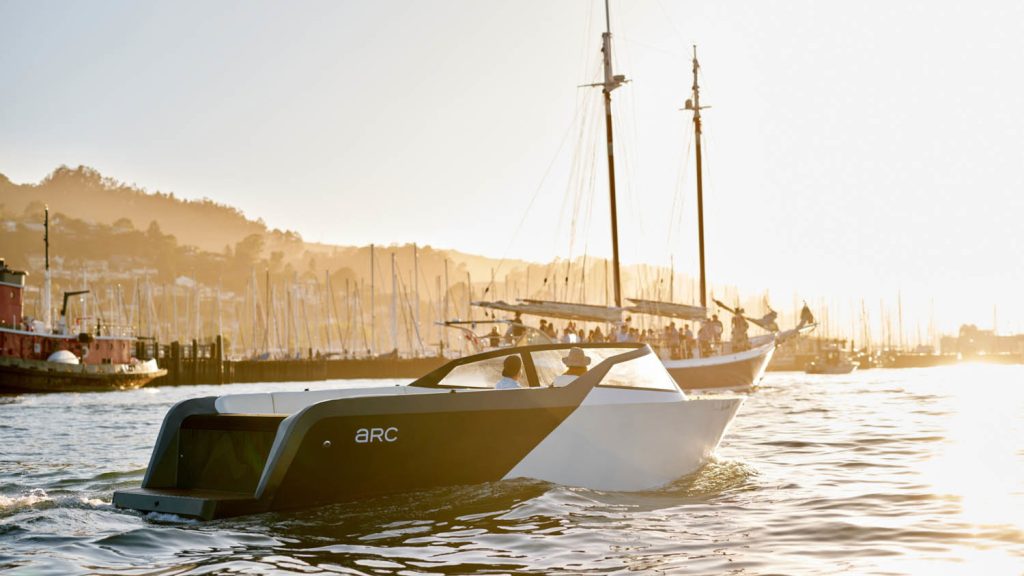

Arc is looking to create a better experience for boaters with its electric powertrain and bold rethink of marine design. The start-up turned to Siemens’ Xcelerator portfolio early in its journey to chart a rapid route to success
Building its electric boats from scratch, Arc blends modern design and manufacturing techniques with traditional marine craftsmanship. The result is a new kind of high-performance leisure craft, perfect for both lazy cruising and high-octane trips across the waves.
The company’s battery packs, powertrains, thermal control systems, hulls and software are all developed in-house. This enables the start-up’s boats to offer a cohesive feel and optimal performance, according to its founders – not to mention some unique features that they claim set it apart from all other watercraft.
Founded in 2021, Arc is based in Los Angeles, California. Its first product, Arc One, sold out its initial production run. Its next-generation Arc Sport, a 500 horsepower all-electric boat designed to create large, powerful wakes for water sports such as wakeboarding, is already generating demand.
With its bow and stern thrusters for precise, joystick-controlled manoeuvrability, its ability to quickly add or drain over 500kg of ballast to create bigger wakes, and a full lights-and-audio package that enables it to switch mode from sport to party in an instant, the Arc Sport is an exciting prospect in the fast-growing marine segment.
Changing the script
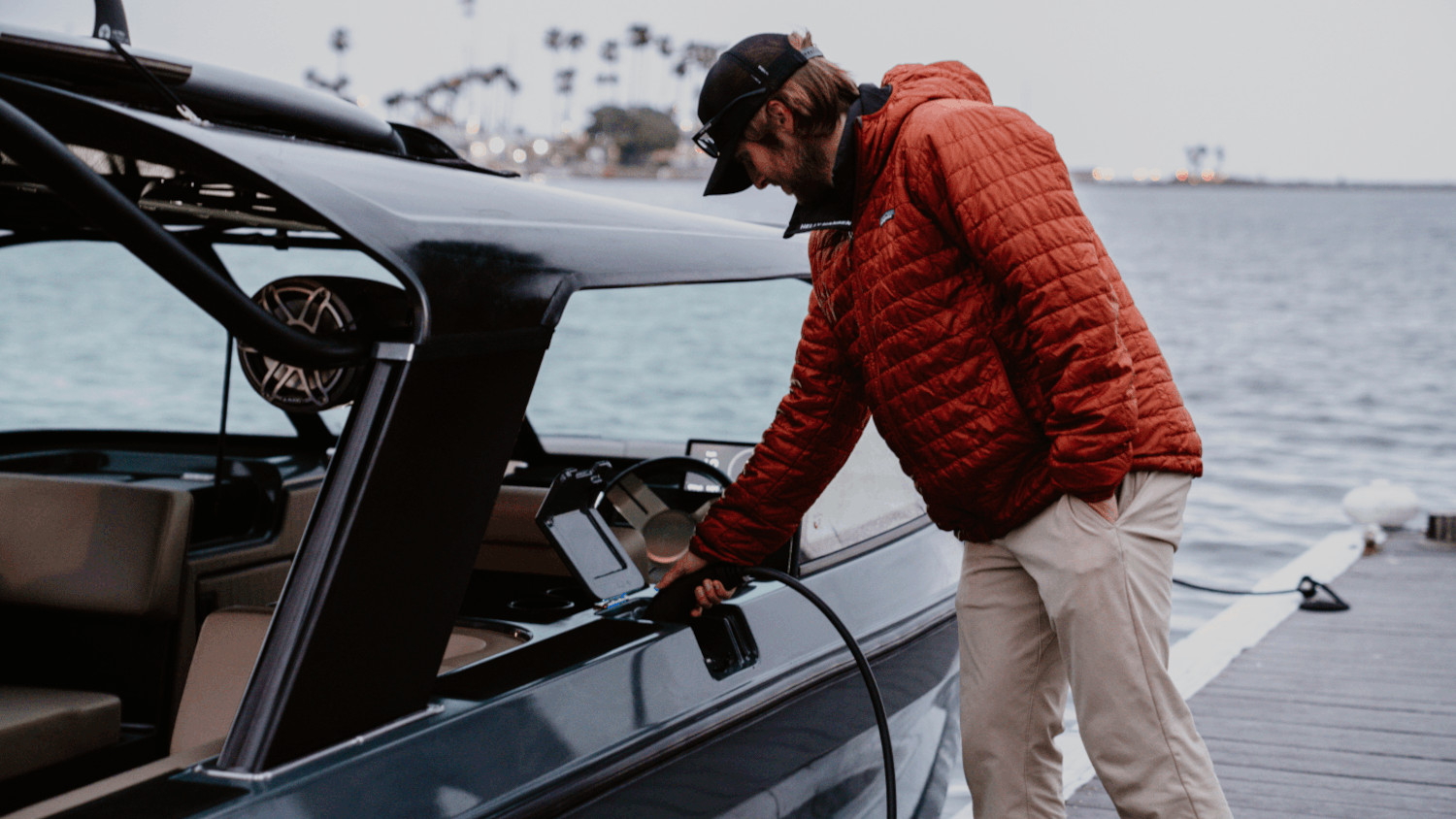
“When we started Arc, we just wanted to create a much better boating experience,” says Arc CTO Ryan Cook. “That starts with an electric powertrain. Traditional gas powertrains don’t do well in marine environments. They aren’t built to remain unused for long periods, they struggle with exposure to corrosive saltwater, and they perform poorly in humid conditions.” Going electric, he says, solves those problems.
Many would-be boatbuilders in this segment take a similar approach to getting started: they choose an engine from one of a handful of suppliers, tweak their hull design and interior, and launch their product, Cook explains.
It’s been that way “for decades and decades”, he says, but Arc has more ambitious plans. “We’re completely changing that script. Half of our staff is on the engineering side. We start from first principles.”
The effort began with the collection of data, taken from hundreds of examples, about how people use their boats and how much time they spend on them. The team at Arc then used its analysis of that data to design its battery pack and drivetrain, with the goal of designing an entire craft that delivers the best customer experience.
But it’s not just about the powertrain, continues Cook. “There are a lot of parameters involved in hull design – deadrise, beam at chine, keel angle, etcetera – so we used NX to parameterise them all.”
Once it had a fully parametric hull model in Siemens Digital Industry’s software, Arc’s design team was able to build one boat, gauge its performance, collect data and tweak a handful of parameters before building a second boat based on what it had learned.
“Fast-forward to today and we’re even more sophisticated, because we know the performance characteristics we want out of the vehicle. With a given centre of gravity and the type of shape we want to go with, we can do it in one shot with NX,” says Cook.
New tools
Arc adopted the Siemens Xcelerator portfolio to fully design and manufacture its high-performance, fully electric boats.
“We thought if Siemens Xcelerator is going to be our long-term software, we might as well just start with it, so we don’t have to migrate later,” says Cook.
That investment has meant that Arc’s engineers have access to Siemens Simcenter software to simulate its products. Simulation can be a particular challenge when you’re looking to disrupt an industry that continues to rely primarily on gas-powered propulsion systems and long-established marine engineering principles.
Arc’s focus on all-electric propulsion brings new design, engineering and manufacturing challenges, which is why it depends on Simcenter to optimise the centre of gravity, a challenge due to the craft’s heavy battery pack.
To ensure required performance, the engineering team has also used Simcenter to reduce the weight of the composite hull, deck and hard top, while the team can also carry out smaller-scale part structural, vibration and thermal analyses across the entire boat.
“We’re moving very quickly and it’s a lot of fun to try and apply some fundamental engineering principles to the marine industry and see if we can come up with something better,” adds Cook.
Arc has since added Teamcenter software for Product lifecycle Management during development of the Arc Sport, to improve its product and production data management as the complexity of both its product and supply chain increased.
The experience has set the Arc team up well for its next expansion into the commercial marine industry, with an expanded line of recreational boats including a centre console all-electric boat that targets fishing and other water activities.
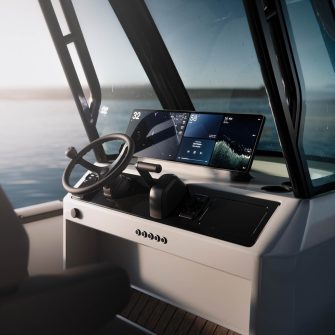
Boasting new elements like a swim deck, bow lounge and a control deck packed with new technology, this versatile craft will add further design and manufacturing challenges as well as data to manage.
With its design and engineering team already decked out for this growing task, reshaping the industry should be plain sailing.
This article first appeared in DEVELOP3D Magazine
DEVELOP3D is a publication dedicated to product design + development, from concept to manufacture and the technologies behind it all.
To receive the physical publication or digital issue free, as well as exclusive news and offers, subscribe to DEVELOP3D Magazine here